Towards a market network for a water-secure world.
Authors
Cameron Burgess
Violette Ruppanner
Astrid Scholz
Audrey Selian
Arthur Wood
Prepared for
Swiss Agency for Development and Cooperation (SDC)
Edited by
Ed Girardet
Violette Ruppanner
Dated
17 March 2018
Final draft
Written
Portland · Geneva · Lausanne
In the air · Brasília
Contents
Part I — Project report
Part II — Project plan
Part III — Appendices
This report was written for the Swiss Agency for Development and Cooperation with Violette Ruppanner, Astrid Scholz, Audrey Selian and Arthur Wood, and delivered on 17 March 2018. SDC had commissioned a group of lawyers, financiers, metrics experts and systems designers to explore how a market network could be implemented in the Senegal River Basin. It is reproduced here in full, as written.
Appendices F, G and L — the activity log, the stakeholder dinner list, and the summary timeline — are the only omissions, and they are administrative rather than substantive. Everything else is here, including the figures and the budget.
The name is not a metaphor. Eighteen hundred children under five die every day for want of basic water and sanitation. That was true when we wrote this.
Project 1800 is named after the estimated eighteen hundred children under five who die every day from a lack of basic WASH services. This makes it the biggest killer of children world-wide. This dire problem also makes it a clear moral imperative to address.
In economic terms, for us to reach target 6.1 and 6.2 of Sustainable Development Goal (SDG) 6 by 2030 means that the world will need around US$1.7 trillion (with a margin of error of US$1 trillion to US$2.5 trillion). And this is for only one of 17 SDGs. Meanwhile, traditional sources of capital of grant and aid at a global level are strikingly insufficient. Only roughly US$150bn can be expected to come from the Bretton Woods institutions, while global foundations provide another US$150bn.
Both sources, however, have been flat and are now declining in real terms. Migration to Europe has cannibalised existing aid budgets. Meanwhile, in the USA, the Trump administration has made cuts to get re-elected. This is compounded by a 40% increase in social sector organisations over the past 10 years.
Individual country giving tends to be focused on domestic issues and generally, only a small part is dedicated to development cooperation. Add to this the fact that market valuations are the highest since 1900. A downturn is likely to have a dire impact on funding for development and social issues. Despite governments’ expectations to the contrary, impact investment will also not “pick up the bill”.
The bottom line is that to achieve the SDGs, between 5–10% of all annual global capital flows will need to be mobilised. The current funding paradigm will not achieve that aim. This means that we will fail to achieve the SDGs by a significant margin
The solution: what if we turned the costs of inaction into an opportunity?
The cost of inaction in water and sanitation is estimated between US$300 to US$600 billion per year. This figure represents the damage (‘negative externalities’) that the society will have to bear if we are not able to redress the situation. Another way of looking at this is the annual cost of inaction to an economy. In the case of India, this amounts to 3% of its annual gross national product.
Perhaps the solution lies in thinking about these social costs in a different light. As The Lancet has noted, investments in water and sanitations are the most impactful public health investments that can be made, both in the economic and social sense. So, what if we viewed these negative externalities as future cash flows lost by society’s stakeholders? Seen like this, social sector interventions could be perceived as investments to reduce externalities. These include the loss to stakeholders or, alternatively, missed future business opportunities (‘positive externalities’). Looked at this globally, the potential return on investment becomes interesting. In other words: investing US$140m per year until 2030 could create a minimum cash flow of $300bn every year.
If this can be achieved, we would have created a market out of the social problem. Moreover, this would become a desirable investment opportunity for pension funds and investments by financial institutions. This could include the US$1 trillion that sits on the balance sheets of global foundations, 98% of which is unaligned with their social missions. Ultimately, one could even align the current US$2 trillion (estimated to rise to $17 trillion by 2050 according to the World Bank) in local currency pension funds in the developing world to realise the SDGs.
For the banking sector, this would represent a much larger market that would carry higher margin products. It would also mean that the quicker the social outcomes are achieved, the higher the financial return would be. Note that this model could be applied beyond water and sanitation to most social issues, such as education — according to research done by Accenture, Brookings and Total Impact Capital, a US$1 investment in education in India generates US$53 of future economic returns.
What lies at the heart of Project 1800?
Project 1800 is both a vision and a process to monetise social problems by transforming them into tradable market opportunities. It seeks to create a direct link, defined by the views of the actual consumers, between a social intervention and the overall value it has created for society as a whole. We must recognise that these social issues are systemic and thus need a systemic response. It is time to move beyond our bipolar vision of “for-profit” and “not-for-profit” to envision structures that have diverse stakeholders taking diverse risks and returns. Stakeholders need to be incentivised in multiple ways. These include capturing not only the value of innovation, but also the value of collaboration and scale in both manufacture and delivery.
We used the Senegal River Basin to root our case in reality. We then framed it as a ‘market network’ and tied it to technology. We placed communities at the centre of a granular and modular process, whereby individual innovation (which can be process, entrepreneurial or finance-related) is plugged and played, and then tracked and paid by the incremental impact it has on the negative externalities when the damage created is resolved.
The building blocks
Project 1800 convened 19 experts from around the globe in four work streams — legal, finance, metrics and technology — over five months, including a two-day design workshop. Led by the Arthur Wood and the team from Sphaera, the experts unanimously concluded that the vision was “doable”, thanks to four major innovations. The work to be done has been identified as follows:
Metrics: creating a standard social cost of capital, by noting the incremental impact of a social intervention on all externalities. Feedback is rooted in and priced by communities in a comparable and competitive way that is integrated with the SDGs.
Finance: develop a structure that captures and compliantly manages both economic return and value of the social intervention. A standardised structure where social equity (or blue equity) equals financial equity, thus becoming tradable and reflecting both the financial value of the intervention and the (almost real time) achievement of the social outcomes.
Legal: design a legal setting that identifies clear roles for each stakeholder and that ensures that the interests of the social stakeholders are inalienable. It:
— Aggregates partners: a market network of collaborating partners, where for-profit, government and not-for-profit entities collaborate and where the value created in the value chain by all stakeholders is tracked and paid.
— Aggregates capital: a standard tradable blue equity that trades the achievement of the systems outcome and that is compliant to manufacture and to distribute; and the (tactical) ability to plug and play other financial impact tools on a cost-effective platform.
— Aggregates process: an umbrella entity with an embedded social mission that provides the “plug and play” tools to marry capital with the partners who wish to drive systems solutions. The entity provides a cost-effective, adaptable and open technology infrastructure that can be expanded to include other social issues.
Technology: applying the same technologies that have rationalised other sectors of the economy (cloud, mobile, distributed ledger technology) to the development sector.
Conclusion
This document seeks to demonstrate that, to collectively fulfil the promise the SDGs, we have to change the way we are operating. We need to create inter-, intra- and cross-country collaboration and scaling mechanisms that are driven by the same factors like the ones that create market efficiencies. And, critically, we need to make communities equitable participants in the economic value and upside that social interventions create for society. This will benefit both the social sector, which will get paid for its economic & social role; and the corporate and banking sector. Or in other words, build win-win partnerships through creating market demand out of social need.
“By 2030, over 40% of the world’s population will be living in severely water-stressed river basins.”
SDC, Global Programme Water: Strategic Framework 2017–2020
According to the Swiss Agency for Development and Cooperation (SDC), more than 3.4 billion people lack access to safe water today, making it a truly global, urgent issue with serious implications for people living at the ‘base of the pyramid’ (BoP). In particular, this concerns rural livelihoods, food and energy production, supporting economic growth, and ensuring the integrity of ecosystems.
The implications for global health, economics and security are profound and well understood: After climate change, water, sanitation and hygiene (WASH) generates the highest ‘negative externalities’, estimated conservatively between US$300 billion and US$600 billion annually.
Switzerland is committed to accelerating progress towards achieving Sustainable Development Goal (SDG) 6, “Ensure Access to Water and Sanitation for All”. Among others, it is emphasising innovative approaches for service delivery, sustainable financing, private sector involvement and basin-level governance.
Given an estimated funding need of US$1.5+ trillion to address SDG 6, Switzerland’s leadership is as timely as it is welcome. It is clear that novel, replicable and scalable approaches to governance, policy, advocacy and funding are required if we are to successfully intervene in what is arguably one of the greatest existential threats to human survival.
Project 1800 seeks to resolve the tension between the moral imperative to achieve the Sustainable Development Goals by 2030 and the inability of existing mechanisms to do so. Its basic premise is:
The analytical, financial, legal and technological tools now exist to effectively monetise the externalities of WASH to create a people-centred, outcomes-driven, multi-stakeholder framework for facilitating the scale of collaboration required for achieving SDG 6
Project 1800 is named as homage to the 1,800 children under five who perish each day because they do not have access to basic WASH services.
In this report, we develop this framework, using a series of design principles that put citizens at the centre and that build on the recommendations from expert consultations and a design workshop held at the Château de Bossey from 14–15 December 2017.
We do this in the context of the Senegal River Basin (SRB) in western Africa. The SRB provides a major, ecologically defined example, given the combination of WASH needs in local communities; the number and diversity of local, regional, national, and international development actors in the basin and the interest from governments, (social) entrepreneurs as well as private funders and investors (hereafter referred to as ‘stakeholders’).
In the following sections, we demonstrate:
How we generate data on outcomes that make it possible to monetise externalities, both positive and negative (Section 4).
How we create a financial model that makes these externalities tradable and provides incentives to stakeholders to coordinate their actions around outcomes (Section 5).
How we create a legal and governance framework that places the community and social stakeholders in the middle, and organises and rewards all stakeholders (Section 6) and
How we build a digital and financial infrastructure to make the operation of the framework cost-efficient (Section 7).
Building a sophisticated platform capable of serving the needs of a wide range of stakeholders has required listening to the needs of not only the SDC, but of a consortium of organisations implicated in the SRB. We know that such a system needs the support of legal, financial and technical mechanisms that will help each person engaged to clearly see “what’s in it for them.”
We call this system a market network, an open, modular, distributed framework designed for accessible participation and engagement from a range of dispersed actors, including those referred to as ‘beneficiaries’.
This market network combines:
the incentives and mechanisms for collaboration at the scale and stability required for attracting mainstream finance;
a methodology for measuring and valuing the delta of improvement over baseline conditions in the WASH sector;
a system for allowing the contributions of various players to be captured, valued and rewarded and
a governance that ensures that the interests of all participants are reflected appropriately to attain the social mission.
The market network is designed to be open, making it adaptable to the requirements of multiple stakeholders in multiple contexts as well as to future developments. We believe this will make the framework applicable to other SDGs.
As is inevitable when describing complex novel approaches, we introduce several new concepts and ideas along the way. We have endeavoured to define these when they first occur. Also included is a list of abbreviations and acronyms (Appendix A), a glossary that defines technical terms used throughout the report (Appendix B) as well as a list of tables, figures and boxes (Appendix C).
Note that Project 1800 models the very behaviour this report recommends, that of a multi-stakeholder project, with differing contributions and differing expectations of a return to its members. As such, the international project team, in partnership with recognised experts in their field and on-the-ground actors in the SRB is the core of a broader consortium that will collaborate on the global infrastructure required to successfully address SDG 6.
We would like to explicitly refer to the systems thinking approach already in evidence at SDC, which has identified water as a key lever of national and global security. The Blue Peace Initiative outlines the commitment of Switzerland to a shared political vision that takes into account specific terms of data sharing, supply and demand management, measures for saving water, water treatment and distribution channels. This is framed in the context of the ‘cost of conflict’ and the idea that water and sanitation, when delivered successfully and impact is real, are a tool of diplomacy. It corresponds to the logic that informs our thinking about the value of externalities.
We are inspired by this work and thank SDC for the opportunity to do so. Also, this document would not have been possible without the generous pro bono contributions from Jacqueline Barendse, Tom Brunner, Renaud de Watteville, Badara Diom, Sjef Ernes, Fredrik Galtung, Edward (Ed) Girardet, Michael Green, Guy Hutton, Clémence Langone, Olivier Magnin, Cantwell F. (Chuck) Muckenfuss III and Marc Owens. They have helped us keep the costs small, while achieving a major advance in conceptualising the legal, financial, analytical and technical mechanisms that will need to work in concert to achieve breakthrough WASH outcomes.
The authors (in alphabetical order, by last name): Cameron Burgess, Violette Ruppanner, Astrid Scholz, Audrey Selian, Arthur Wood; with generous contributions from Linzi Fidelin, Guy Hutton and William C. (Bill) Kelly. Edited by Ed Girardet and Violette Ruppanner.
In September 2015, the United Nations made 17 promises to the world, the Sustainable Development Goals (SDGs). Among them was the promise to provide access to clean water and safe sanitation that is affordable and managed sustainably to all people on this planet: SDG 6.
Target
Indicator
6.1
By 2030, achieve universal and equitable access to safe and affordable drinking water for all
6.1.1 Proportion of population using safely managed drinking water services
6.2
By 2030, achieve access to adequate and equitable sanitation and hygiene for all and end open defecation, paying special attention to the needs of women and girls and those in vulnerable situations
6.2.1 Proportion of population using safely managed sanitation services, including a hand-washing facility with soap and water
6.3
By 2030, improve water quality by reducing pollution, eliminating dumping and minimizing release of hazardous chemicals and materials, halving the proportion of untreated wastewater and substantially increasing recycling and safe reuse globally
6.3.1 Proportion of wastewater safely treated
6.3.2 Proportion of bodies of water with good ambient water quality
6.4
By 2030, substantially increase water-use efficiency across all sectors and ensure sustainable withdrawals and supply of freshwater to address water scarcity and substantially reduce the number of people suffering from water scarcity
6.4.1 Change in water-use efficiency over time
6.4.2 Level of water stress: freshwater withdrawal as a proportion of available freshwater resources
6.5
By 2030, implement integrated water resources management at all levels, including through transboundary cooperation as appropriate
6.5.1 Degree of integrated water resources management implementation (0–100)
6.5.2 Proportion of transboundary basin area with an operational arrangement for water cooperation
6.6
By 2020, protect and restore water-related ecosystems, including mountains, forests, wetlands, rivers, aquifers and lakes
6.6.1 Change in the extent of water-related ecosystems over time
6.A
By 2030, expand international cooperation and capacity-building support to developing countries in water- and sanitation-related activities and programmes, including water harvesting, desalination, water efficiency, wastewater treatment, recycling and reuse technologies
6.A.1 Amount of water- and sanitation-related official development assistance that is part of a government-coordinated spending plan
6.B
Support and strengthen the participation of local communities in improving water and sanitation management
6.B.1 Proportion of local administrative units with established and operational policies and procedures for participation of local communities in water and sanitation management
Table 1 — Sustainable Development Goal Nr 6: key targets and indicators
However, the GLASS 2017 report notes that one of the greatest barriers to achieving this promise is a huge financing gap. Just to meet the targets of this SDG, capital financing would need to triple to US$114 billion per annum (or US$1.5+ trillion in total from 2018 onwards), to which operating and maintenance costs would have to be added.
The first challenge of Project 1800
How to bridge the US$1.5+ trillion SDG 6 funding gap?
The GLASS 2017 report also highlights that the WASH sector is highly fragmented. Numerous government entities, organisations, platforms, events and individuals are currently seeking to solve this complex and critical (or ‘wicked’) problem. These include:
The water activities of UN agencies have been coordinated since 1977, when the Intersecretariat Group for Water Resources was formed, the predecessor of today’s UN Water. The latter coordinates over 30 UN organisations involved with water and sanitation programmes.
Sanitation and Water for All (SWA) is a global partnership platform bringing together 200 partners from donor and recipient country governments, private sector and civil society organisations, external support agencies, research and learning institutions plus other development actors. It organised its first High Level Meeting in 2010. Five such meetings have taken place since.
Every year since 1991, the Stockholm International Water Institute (SIWI) has organised the World Water Week, bringing together scientists, policy makers as well as private sector and civil society actors.
Every third year since 1997, the World Water Council (WWC) has organised the World Water Forum, the world’s largest water-related event, to do the same.
Networks such as the Sustainable Sanitation Alliance (SuSanA) and The Water Network connect tens of thousands of WASH practitioners and entrepreneurs from around the world in online forums and platforms.
The overall problem, however, is hardly resolved despite these and thousands of other world-wide platforms and events seeking “to work together to catalyse political leadership and action, improve accountability and use scarce resources more effectively…” Many aim “to ‘deliver as one’ in response to water related challenges”; “to coordinate, exchange and learn” and “to focus on new thinking and positive action toward water-related challenges”.
On the contrary, the world-wide problem only seems to grow bigger:
Since 2012, water has been referred as one of the top five global risks in terms of impact in the annual Global Risks Report of World Economic Forum.
In 2016, researchers from the Netherlands challenged the assumption that large-scale water shortages are for future generations. They demonstrated that about two-thirds of Earth’s population, that is 3.97 billion people, already experience severe water scarcity at some point during the year. About half, 1.78 billion, experience severe water scarcity for at least six months every year.
In 2018, Cape Town might become the first in a series of major cities to run out of drinking water. According to the BBC, the others are São Paolo, Bangalore, Beijing, Cairo, Jakarta, Moscow, Istanbul, Mexico City, London, Tokyo and Miami.
The second challenge of Project 1800
How to overcome fragmentation and achieve a much greater level of cohesion, collaboration, efficiency and scale?
In reality, both challenges are not limited to the WASH sector. They concern most, if not all of the development industry. Its organisations and people work in silos. Collaboration is not rewarded. Instead, novelty is valued over utility, competition over collaboration and financial return over positive impact (or the equally damaging opposite). Thus, many efforts are replicated and there is unnecessary, if not wasteful and destructive, competition. These common inefficiencies have been estimated at upwards of US$100 billion.
Another major challenge of the development sector is that there are no royalty, annuity or other on-going revenue payments. Social innovators rarely benefit financially from the value they create. Every non-profit and social enterprise must absorb its own research and development (R&D) costs, with little or no hope of protecting its intellectual property. Nor do these actors receive system-level rewards for discovering cost-effective solutions for the people they serve, even if impact metrics validate their work. Despite recognising WASH as a systems issue, the dominant financing mechanisms result in a focus on innovation over collaboration and scale.
Today, under the auspices of a wide range of organisational and academic programming, numerous individual innovations are produced. But what works is not catalogued and analysed effectively. Nor are successful innovations deployed in a coordinated and aggregated fashion.
Hence, true collaboration, is rarely achieved; true scale even less so
Against this background, not only do existing financing mechanisms for development create a misalignment of incentives. They also lead to an insufficient proportion of available funding if we are to reach the SDGs by 2030:
Official development assistance (around US$150 billion per year) is coming under pressure from the financial liabilities attached to two potential population ‘tsunamis’: young people in the ‘developing’ world and the aging population in the ‘developed’ world.
Philanthropic money is one of the most underused types of capital on the planet. Despite owning assets of over US$1 trillion globally, philanthropic organisations deploy, after frictional costs, only an estimated 1–2% per annum of their available capital in ways that support their mission.
While the impact investing market has grown to over US$75 billion, it has institutional arrangements that create its own inefficiencies. Given the prevailing focus on venture capital, it puts bankers at the centre of transactions. The latter delegate the risks to the social sector and the affected communities. Such capital also thrives on asymmetries of information and access.
In the corporate sector, senior management generally understands the strategic framework of the SDGs. But at the tactical level, where budgets are usually held, it is constrained by siloed views.
Among UN agencies and other development players, there is much hope that private capital will participate in filling the SDG financing gap. There is indeed an estimated US$218 trillion of private capital available in global financial markets to bridge this funding gap. However, because the social impact market is unstructured, unstable and illiquid, asset managers have no easy ways to participate in funding solutions to difficult problems, such as SDG 6 and others.
Achieving the SDGs requires old and new sources of financing. The original artwork is not reproduced in this edition.
2.1 Why water, sanitation and hygiene?
Against such institutional and financial challenges in the development space, the sector of water, sanitation and hygiene sector (WASH) emerges as a leading candidate for piloting a new model to scale innovation and collaboration. And, more critically, to mobilise private finance in support of it:
After climate, WASH has the highest negative externalities, estimated conservatively at between US$300bn and US$600bn annually.
Unlike other international development sectors, the major players — WHO, UNICEF, World Bank, WSP — have reached a consensus about the cost of these externalities, providing the basis for a clear metrics framework.
Water and sanitation are crucial to public health. They also affect a wide range of people and issues, including children, women, education, health, environment and economic development.
If not addressed properly, WASH issues could lead to major political instability.
These characteristics become apparent when we consider a particular ecosystem, such as the Senegal River Basin. These can help us develop a viable framework for addressing them.
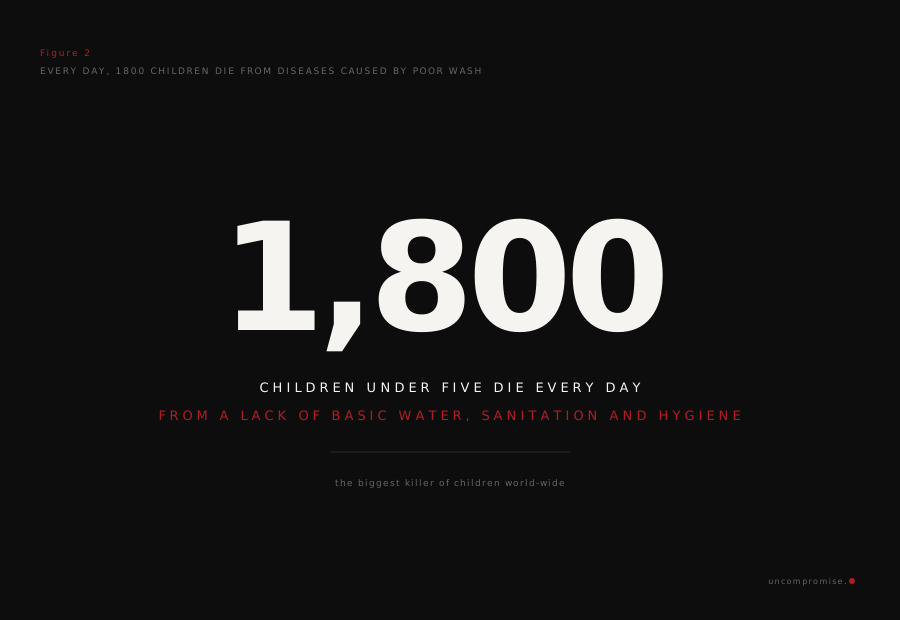
Every day, 1800 children die from diseases caused by poor WASH.
2.2 The Senegal River Basin
Based on SDC’s guidance, we are using the Senegal River Basin (SRB) to illustrate how the proposed framework could be applied on the ground. As an ecologically-defined region, the SRB goes beyond national boundaries: it is shared by Guinea, Mali, Mauritania and Senegal. While the political, legal, economic, environmental and social situations of the four countries differ, all of them rank among the 20 economically-poorest countries in the world.
These four countries have a total population of 35 million inhabitants, of whom 12 million live in or around the river basin. Local governments in the SRB include some 13 sub-national regions, over 50 departments and nearly 400 communes. The region is experiencing persistent challenges with drought cycles and food shortages. It is also highly vulnerable to climate change.
The SRB occupies a total area of 289,000 km². It includes three main regions — the upper basin, valley and delta — with each region clearly characterized by distinct environmental conditions.
The SRB is governed by an international treaty among the four countries. The Organisation pour la Mise en Valeur du fleuve Sénégal (OMVS — in English Senegal River Basin Development Authority) was established in 1972 “to implement an integrated and concerted management program of water resources and ecosystems for a sustainable development of the basin.”
The challenges faced by the people living in the SRB are both natural and man-made. They include:
variable rainfall, often provoking droughts and floods
scarce water resources and competing uses
an environment that is degrading (both deforestation and erosion)
inadequate land tenure in the Valley
water weeds and waterborne diseases in the Delta
lack of public awareness and outreach
In addition to the OMVS as well as national and local governments, many private and public organisations are working in the SRB to improve the well-being of local populations in the basin and to make ecosystems more resilient. These include:
Swiss non-governmental organisations (NGOs) doing development work in the basin, such as the aid organisation of the Swiss Protestant Churches (HEKS/EPER) and the Swiss branch of Médecins sans frontières (MSF Suisse)
UN agencies such as UNICEF
Local NGOs such as ENDA-EAU
Bilateral donor agencies such as USAID
Private foreign or local corporate actors such as Swiss Fresh Water and Senegal’s water company, Sénégalaise des Eaux (SDE)
Philanthropic actors such as the Bill and Melinda Gates Foundation
Programs of the World Bank and other multilateral institutions, such as PGIRE II
Inter-governmental organisations such as the Global Water Partnership (GWP), and
WASH programs of international civil society bodies, such as WaterAID and Community-Led Total Sanitation (CLTS).
To illustrate our cases, we will use the SRB, first in each of the elements and then for the whole system design. We do this with the limitation that during this phase, we did not interview any of these actors extensively, except for Swiss Fresh Water and its local partner. Neither did we do any fieldwork. As such, the SRB case intends to give an outline for how multiple stakeholder interests could interact in the proposed framework. It is not meant as a detailed recommendation for implementation. Appendix D provides more details on the Senegal River Basin.

Map of the Senegal River Basin.
3.1 Guiding principles
Overall, there are 10 guiding (or ‘design’) principles that Project 1800 is using because we consider them essential for this work. These principles, illustrated in Figure 4, are used to develop the framework to address the challenges mentioned in Section 2 and to inform how it will evolve.
These principles, while philosophical in nature, have a direct bearing on the way in which an SDG 6 market network is built, deployed and governed. They inform the legal, financial and technical structures defined in the market network described below, and serve as standards against which we continually evaluate the performance of that network.
These 10 design principles are explained in more detail in Appendix E.
In addition to incorporating the philosophical principles mentioned above, the case of the SRB provides specific functional requirements that will have to be added to develop the framework. These functional requirements flow out of our discovery process, which is described in more detail in Section 3, and which focus on the metrics, financial and legal mechanisms that we further elaborate on in Sections 4, 5 and 6, and integrate in Section 7.

Ten design principles inform the work of Project 1800.
3.2 Putting citizens at the centre for better WASH outcomes
This then puts the individual citizens at the centre of the system designed for achieving better WASH outcomes. Citizens live in communities. They interact with and are part of governments, markets and civil society. They bring their physical, intellectual and other forms of capital to bear on different functions and mechanisms that create outcomes within the SDG 6 market. Figure 5 shows how the market network is structured to achieve this end.
This model contains seven primary elements. From the centre out, these are:
Citizens: every human individual interacting with the system
Communities: comprising (social, geographical and political) citizens
Capital: financial, material, intellectual, human and natural capital
Sectors: government, business, civil society
Functions: financing, convening, educating, catalysing, implementing, measuring, insuring, publishing, researching, commercialising, advocating, governing
Mechanisms: through which these functions operate
Markets: in this case, individual and collective markets represented by the SDGs
While SDG 6 is the focus of Project 1800, this model makes it possible to construct market networks for any of the 17 UN goals. We detail the specific configuration of the market network for SDG 6 through the lens of the SRB in Section 7 below.
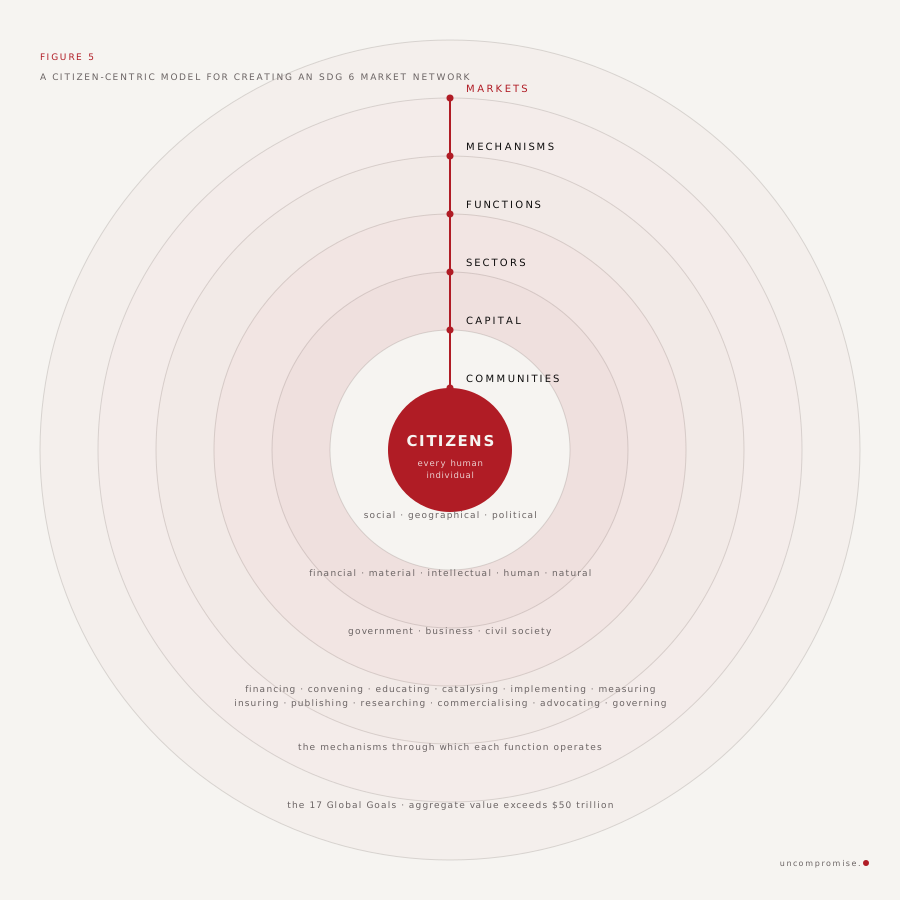
A citizen-centric model for creating an SDG 6 market network.
To apply these principles in the context of the SRB means working closely with people and communities on the ground throughout the entire lifecycle of designing, deploying, monitoring and financing interventions as well as receiving payment for outcomes. The information infrastructure developed to collect data and feedback as well as to track the relative contributions of multiple stakeholders will be designed for local bandwidth and technology usage conditions so that local citizens can participate effectively.
3.3 Process
This scoping phase for Project 1800 included many different activities to form gradually a picture of the whole. The work was organised into four major work streams, on which we expand in the next sections. The participants in each work stream are listed in Table 2.
Work stream
Participants
Metrics
Fredrik Galtung, Michael Green, Guy Hutton, Violette Ruppanner, Arthur Wood
Finance
Jacqueline Barendse, Sjef Ernes, Audrey Selian, Arthur Wood
Legal
Bill Kelly, Chuck Muckenfuss, Marc Owens, Tom Brunner, Arthur Wood
Communications
Edward (Ed) Giradet, Violette Ruppanner
Table 2 — Work streams and their participants
Linzi Fidelin and Violette Ruppanner ensured project management. The activities are summarized in Appendix F, except for the immersion workshop, described in more detail below.
This two-day workshop, held from 14 to 15 December 2017 in the Château de Bossey near Bogey-Bossey (Switzerland), was an important moment of Project 1800. Nineteen experts participated: development practitioners and water entrepreneurs from Switzerland and Senegal as well as technical experts with backgrounds in economics, monitoring and evaluation, finance, law and digital technologies. SDC was represented directly through Pierre Kistler (day 1) and indirectly through Violette Ruppanner and Olivier Magnin (day 2). The UN was represented through Guy Hutton, its metrics expert. For the full list of the participants in the workshop, including short bios, please refer to Appendix H.
The market network model was used to frame the second day of the immersion workshop. Participants were guided through a comprehensive design thinking exercise. They were invited to consider how best to apply these principles and the market network model, in the context of the Senegal River Basin.
Box 1 — Design thinking
Design thinking is a process to solve problems creatively. It “utilizes elements from the designer’s toolkit, like empathy and experimentation, to arrive at innovative solutions.” In this way, decisions are made based on what (future) customers really want, instead of relying on historical data or making risky bets based on instinct rather than evidence.
Each team had an expert from finance, legal, metrics and implementation. The exercise was designed to ensure that the three teams consider all aspects of a market network. The nature of the financial instruments, legal forms, governance and metrics required to ensure success were emphasised. The practical aspects of design were tested against one another whenever this was possible, based on the feedback from participants who work in Senegal. To conclude the exercise, the team presented different configurations of a design solution. The outputs collected inform the SDG 6 market network described in Section 7.
To be able to select and prioritise investments, one must understand and be able to quantify the social, environmental and economic benefits of social and development interventions.
As a baseline, the WASH sector is blessed with a broad consensus on what constitutes appropriate WASH service levels in different rural and urban contexts. The cost of inaction and the socio-economic benefits of WASH interventions respectively also have been calculated at a relatively detailed level. These externalities are conservatively estimated at over US$300 billion per year just considering health benefits and time savings.
To better illustrate this, we moved the financing prism beyond a purely WASH focus to capture the full social and economic impact of such an intervention. When a WASH intervention creates positive outcomes, such as access to safe water, it reduces negative externalities (for example, time lost due to sickness) or creates positive externalities (better school attendance). This means that the intervention can, in principle, be tied to the financial upside generated for governments, corporations and other parties, who have an interest in healthy and educated citizens.
The first step in monetising externalities, therefore, requires answering the question
How do we measure outcomes and link them to known externalities?
To make the connection between specific WASH interventions, their outcomes and their value linked to reduced negative externalities, we foresee the following three steps:
4.1 A phased impact assessment
In Project 1800, with the focus on water, sanitation and hygiene (WASH) interventions, the impacts of any intervention need to be assessed at three successive stages:
Planning
Execution
Evaluation and dissemination
4.1.1 The planning stage: estimating the costs and benefits
It is necessary to estimate the value of different intervention options to assess:
where overall benefits exceed the intervention costs, and which one bring the greatest return and/or the greatest benefit-cost ratio;
the financing options, in terms of which citizens can pay, and which ones need financial support;
Which benefits can be monetised and measured over time for the next phase of measurement.
In the citizen-centric model that we propose, the options are informed by community needs, especially those at the BoP. Economic and financial analyses are well established techniques to quantify and compare the major costs and benefits associated with development interventions.
Economic analysis is broader than financial analysis as it captures social, environmental and productive values that do not have direct financial consequences. This includes, for example, putting a value on premature deaths avoided, reduced pollution loads on water bodies and social values that might not have direct financial consequences. Hence, economic analysis is fundamental for social impact investors interested in the complete and long-term picture of how a WASH intervention benefits households and societies more broadly.
Previous studies have identified the main costs and benefits associated with water and sanitation interventions at global and country levels. The two most widely evaluated economic impacts are health and time saving benefits. Other benefits include reduced water pollution and their impact on fisheries and other environmental aspects, resource reuse and social consequences.
4.1.2 The execution phase: monitoring the intervention
This phase includes more detailed monitoring of the observed outcomes and impacts at the sites where the intervention is taking place, again centring on communities where interventions are implemented. This entails:
A baseline survey to validate the values used in the planning phase 1 for specific populations with the interventions, based on a mixture of quantitative and qualitative indicators.
Continuous monitoring of the intervention sites as a basis to determine payments to implementers and financiers, and for ensuring that the intervention is implemented in a manner with maximum benefit. Monitoring continues until it is decided to end this phase. To ensure sustainability, this can last several years after the initial intervention.
Critically, this data is sourced directly from the community, establishing beneficiaries as citizens with power.
The monitoring by the community is supported by and reported on an application (app) that can be used on smartphones, tablets and computers. This allows adapting to different levels of literacy, degree of smartphone penetration and local languages.
Training and supporting citizens to monitor WASH interventions using smartphones to record key indicators creates a near real-time feedback loop on the outcomes generated by such interventions. These indicators form the basis of community-led activities to address and fix any problems with the WASH intervention. They also can be aggregated to assess how projects in a particular region are performing. A list of potential indicators is provided in Appendix I.
Note that this citizen-centred, near real-time feedback departs significantly from current monitoring and evaluation (M&E) practices prevalent in international development. The techniques outlined here already have been tested with nearly 10,000 community monitors across a dozen countries in Africa, Asia and the Middle East. Among them, they have monitored nearly 800 projects, including in WASH, with a combined value of over US$1 billion, and achieving a ‘fix rate’ of 50%.
The fix rate is an important innovation to measure impact and outcomes of development projects. It uses community-based feedback to get to quantitatively assess a problem that was fixed by an intervention. Importantly, fix rates can be observed to increase over time. Since the rate itself is agnostic about the underlying sector or type of intervention, it creates a ‘likes-to-likes’ measure for comparing development projects across sectors. This is a significant improvement on the piecemeal and anecdote-based evidence that is pervasive in development.
4.1.3 The evaluation and dissemination phase
This phase includes:
assessing the final costs and benefits after the intervention and
linking them with related indicators in the Social Progress Index (SPI) to indicate the overall (macroeconomic) development impacts the intervention has had.
The costs and benefits of the intervention can be measured using established economic techniques. In addition, the SPI is used to situate the impacts of the WASH outcomes in a broader context of human well-being.
The Social Progress Index is a holistic measurement tool. It complements traditional indicators such as economic growth and unemployment, as it measures the things people really care about: health, literacy, freedom and safety. The index is actionable, meaning that every component of the index represents an area where stakeholders can take concrete steps based on what the data tells them. It only includes social and environmental factors. This makes it possible to compare social and economic performance side-by-side and to delve into the relationship between the two. It only measures outcomes to ensure that it captures the actual experiences of everyday people.
The SPI can be applied on any scale to create, for example, actionable subnational indexes. While the basic framework and definition of success do not change, stakeholders have the freedom to define what social progress looks like in their community. To date, 24 Social Progress Indexes have been constructed, covering 2.4 billion people across 38 countries.
The SPI can thus be adapted to the WASH context as part of a subsequent phase of Project 1800. This will be important to ensure that the variables and summary statistics are aligned among the three phases to ensure consistency between the economic analysis, the community monitoring and the SPI.
A key moment of the project is the decision on which specific WASH interventions will be implemented as these will have implications for cost-benefit measurements and financing mechanisms.
Combining these three metric interventions creates a measurement process that is driven by community feedback. Not only can it be considered holistic, as it captures all the value of the impacts from a WASH intervention, but it also creates a measurement process that becomes comparative and competitive — from project to region to national — if one can identify the incremental change for each unit of money invested.
A key element of any subsequent phase will be to refine and scale these three elements of how we measure impact. The operational systems for incorporating this measurement approach into the overall system design also will need to be developed.
4.2 Specifying the Delta (Δ) of Improvement
Working with such broad objective data sets gives us a comparative and competitive framework in which to measure and assess all impact on externalities, in WASH and beyond. Using the above phased approach, the incremental change (the ‘Delta of Improvement’) resulting from a specific WASH intervention, or suite of such interventions, becomes visible and measurable.
It is this incremental change or Delta of Improvement that will trigger an outcome payment. This becomes the key ingredient for the innovative finance approach described in the next section.
Divided by the money needed to reduce a negative economic impact, the total “true” costs of negative externalities gives us a measure of the ‘social cost’ of capital for a given development issue. It also provides the amount of ‘contingent payments’ (i.e. promise to pay) that would be triggered by achieving those outcomes. In essence, the Delta of Improvement becomes a common, universal and comparative unit of impact valuation and accounting. This is a significant departure from the current sectorial approach to measuring impact.
This measurement process combines deep analysis, contextual understanding and innovative interactive approaches. Taken together, it creates an interactive analytical framework that enables new financing mechanisms.
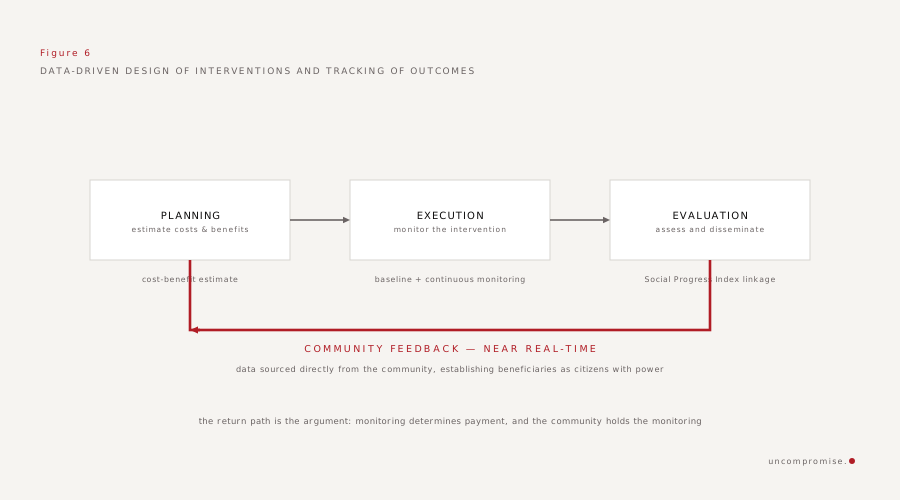
Data-driven design of interventions and tracking of outcomes.
4.3 Measuring impacts in the Senegal River Basin
In the Senegal River Basin (SRB), previous evaluations have shown that poor sanitation leads to significant negative economic impacts. These are valued at US$313 million per year (2012) for Senegal only. According to another source, it would cost Senegal US$43 million per year in capital costs to achieve improved sanitation for all households.
Similar statistics are available for some of the other countries in the SRB and where not, they could be generated fairly easily. Note that UNICEF is currently conducting financing studies in several West African countries, including Senegal and Guinea. Their focus is to identify new sources of financing for WASH. This includes help to establish the Blue Fund in Senegal. This fund would pool resources from various sources, including an earmarked tax, pension funds and grants. Its main objective would be to fund water access for the poor. It is not expected to start until 2019.
First, the specific WASH interventions need to be selected by the client and stakeholders involved before the economic and financial numbers can be generated to quantify the overall costs and benefits of WASH. For example, is it WASH for schools, WASH for communities or only sanitation for communities?
Second, the most important costs and benefits that can be monetised need to be agreed for assessment. Aspects that cannot easily be monetised but are important to reflect, such as specific social and environmental consequences of improved WASH, should be included in assessments whenever possible.
Third, an economic analysis needs to be conducted for the selected area, whether it is the entire basin, the Senegal part of the basin, a country (i.e. beyond one river basin) or an administrative area such as a province or district. This would be a desk study based on an understanding of the policy context and a review of the experiences of different stakeholders in implementing the selected interventions. Also, a consultation would be required on the optimal ways of implementing the selected WASH interventions under Project 1800 to give realistic cost and benefit figures.
Fourth, the analysis would then be used to inform the decisions about the next phase of project implementation, such as which interventions, localities and stakeholders as well as which financing modalities and sources to work with.
Building on the ability to measure incremental contributions and link them to a desired outcome as outlined in the previous section, we can answer the second question central to creating a multi-stakeholder collaborative outcome model:
The second question
How do we make externalities tradable and provide incentives to stakeholders to coordinate their actions around desired outcomes?
At its core, Project 1800 seeks to harness three specific forces to mobilise large pools of private capital to achieve SDG 6: innovation, economies of scale and collaboration. As diagnosed in Section 1, the development industry is highly fragmented. Crucial mechanisms for cross-subsidising financial and social returns of interventions are missing.
To achieve outcomes at a scale that matters requires a set-up that rises above fragmentation and bilateral transactions between funders and implementers. Instead, it should enable multiple stakeholders to take different and differing economic, financial and social returns. By making risk and return fungible, we create a systems approach, where economic and social return cross-subsidise each other. Such cross-subsidisation is what lies at the heart of the multi-stakeholder outcome model.
5.1 Turning impact into a financial product that can be traded
Project 1800 proposes to build an infrastructure that is capable of mobilising and directing both private and public capital flows towards realising the goal of universal access to safe and affordable water and sanitation. The rest, in terms of who engages in financing, who is involved in ‘packaging’ and branding and who implements a specific set of interventions, is left to market dynamics. This not only allows articulating a universal measure ‘cost of social capital’, but will become the means by which to translate and replicate such capital across sectors and geographies. Note that if successful, this infrastructure could be replicated to serve other SDGs.
The premise of this work is two-fold:
Where there is an externality that can be translated into a current or future cash flow, there exists an opportunity to create a financial product to eliminate the negative or to bring about the positive externality.
The value and potential upside or profit from such a product needs to be aligned with the interests of the citizen and the communities concerned.
This is made possible thanks to the following types of innovation:
Technology: the use of contingent smart contracts, tracked on a distributed ledger (see Section 7), as well as the use of smartphones and related technology to create real-time feedback loops on the performance of interventions (Section 4).
Legal: a new legislation in the U.S. now allows one to ring-fence (i.e. to earmark money for a specific purpose) and to pay different stakeholders in different ways during the life cycle of a financial product. In many other jurisdictions, including Switzerland, contract law can be used to achieve the same effect (Section 6).
Financial: it is possible to adapt existing instruments to create a financial product that (a) captures not only financial, but also economic and social benefits and (b) complies with contemporary regulatory requirements, both in terms of ‘manufacturing’ and selling it (Section 5).
Metrics: Payments are triggered whenever measurable improvements have been achieved (the ‘Delta of Improvement’, Section 4).
Both payments and measures will be inscribed on the distributed ledger. We call this new product ‘social’ equity or, in the context of WASH, ‘blue’ equity.
5.2 Blue equity
The notion of ‘social’ or ‘blue equity’ is rooted in our understanding of value. Holding equity or participating otherwise in a structure requires one to engage in an exercise of converting or translating the value of an asset, whatever it may be, into a unit that can be owned and thus bought, sold, and otherwise traded. Traditionally, only the owners of and investors in the structure participate financially in its outcome.
In a social or blue equity structure, all stakeholders, including citizens and social actors — not only those who provide financial means — become shareholders and participate financially in the outcome. This effectively reconciles the social justice and financial meaning of the term ‘equity’
A blue equity product is structured in a way that (a) it captures both the financial return and the monetised social return and (b) incentivises collaboration and scale on a timeline. In other words, the quicker the social impact (the Delta of Improvement) is achieved, the higher the internal rate of return (IRR). This temporal aspect of ‘urgency’ is a relatively underused tool in development finance. It also means that the greater the Delta of Improvement, the higher the IRR. Indeed, the more fragmented and inefficient a market, the higher is the potential for return, both social and economic.
In the present phase, we seek to create a ‘quasi equity’ product, whereby performance is tied rigorously to the achievement of social outcomes by multiple stakeholders, and is driven by the community. This makes a specific social problem a tradable market opportunity. From a distribution perspective, this provides replicable scale for banks on a clear platform as it gives them the opportunity to align the US$1 trillion of global foundation funds with the missions of the latter. It also helps to build a standard, non-correlated new investment class for traditional investment portfolios, whose performance is defined by the achievement of the social outcome: the quicker the improvement, the higher the return.
As mentioned throughout this document, the social mission must be hard-wired and turned into a non-negotiable priority of engagement for all involved. This is done by designing a pricing framework and process that puts the interest of the community and social stakeholders at the centre and by making them actual part equity owners. This will ensure that they will benefit from the upside created by their participation and engagement.
Critically, this creates benefits for all stakeholders, including ‘for profit’ interests, as it:
addresses a clear market failure or lack of market mechanism between who pays and who consumes social goods;
aligns incentives to collaboration and scale;
makes social R&D more replicable and reduces the unit cost of innovation;
creates transparency for all stakeholders as to how a subsidy can be applied and
creates a cost-effective architecture and process to assess other impact investment tools.
Table 3 summarises the issues addressed (the “what”), the proposed intervention (the “how”), and the resulting financial innovation in service of better WASH outcomes.
Issue
Intervention
Result
Development is a systems issue with multiple funders and stakeholders
The use of a limited liability company (LLC) or partnership (LLP) structure (these are standard international legal structures that include a social element)
Creates clean cross-subsidisation between economic and social mission, allowing multiple players to take different economic and social returns either as funders or those who are funded
Align economic and social impact and incentives
Iteration of the Social Impact Bond (SIB)
Creates a frame where the quicker the social outcome achieved by collaborating or scaling, the higher the return
Place the social stakeholder at the centre of the process
The community-driven feedback loop provides real-time data on the performance of the intervention. It thus provides a market signal on the performance of the security, whose price will fluctuate with the impact of the intervention.
Addresses the fundamental disconnect in the development marketplace, where those that consume are different from those that pay
Create a frame for multiple contingent payers — other than just government
Legal structure allows multiple contingent payers
Expands traditional SIB from dependency on government contingent payments to corporate and philanthropic actors
Create a tradable equity
Securitise the contingent offers to pay. This is done by taking the future payment and giving it a financial value today. Hence, what is the markets or bankers view that those contingent payment will be triggered — another way of thinking about this would be the pricing of an option
This creates a quasi-equity that will trade as a function of the achievement of the social outcome. Creating potentially a liquid secondary market for social investment — priced directly from the community
Ensure different stakeholders can take different economic social return
Different classes of equity or warrants-holders based on the LLC / LLP frame (see Section 6). The same concept can be most clearly seen in blended value models where a DFI or foundation takes a lower return that would be predicated by market return. At a more sophisticated level, this is what a collateral debt obligation (CDO) does
Triggered by the achievement of the social metric, this can create a multiplicity of economic and social returns; indeed this could also align stakeholders who do not want to change
Create a framework that allows a compliant distribution mechanism
The structure is effectively standard equity applicable to a range of investors and can be “wrapped” in standard ways
Phase 1 — We may wish to consider a private placement.
Phase 2 — Consider an exchange-traded fund (ETF) with a contingent return frame attached. This would provide: (1) a standard fund to manage the constituent stakeholders and the economic and financial returns; (2) an attached contingent payment mechanism that monetises the social impact achieved. An ETF logically trades as a function of both elements. It could be structured within a range of tax wrappers for global distribution.
Optional upgrades
1. Product development
The creation of a cash flow for social outcome married to an LLC framework offers the opportunity for a range of more sophisticated and/or standardised capital market tools to be eventually developed
Example: Structures such as Convertibles or Liquid Yield Notes, which would allow foundations to take different returns dependent on future unknown outcomes could be created — i.e. if it is successful, it converts to a normal investment for the foundation as a core investment. Or if it is socially effective but marginal in financial terms, it can be converted to a grant. This could change the marginal cost of capital of the whole structure, yet achieving the social outcome
2. Aligning contingent investments
Create a WASH-focused donor advised fund (DAF) to manage the contingent payment framework
This would create a DAF focused on for-profit WASH investment, yet taking on a contingent liability. Ensures outcomes are tax efficient and aligned. Opens up margin for a private bank and tax efficiency and engagement for clients
Table 3 — Building blocks of social equity
The proposed structure allows for the compliant delivery into asset management structures and ensures that the product is marketed in the context of a clear framework. The benefits of this product for those who are engaged with objectives of financial return lie in both:
The measurable impact created as a function of the financing (i.e. where causality is controlled for); and
The fact that emerging market risk of specific social players can be mitigated by first stop loss and other grant-based mechanisms, which, if leveraged correctly, can contribute to market viability over the long-term. In other words, government and philanthropy play a key role in ‘priming the pump’ in new emerging markets.
5.3 A standard manufacturing platform for any impact investment process
What makes blue equity interesting is that we are crossing the threshold from the qualitative to the quantitative in a systematic way. Also, it creates a range of non-correlated investment classes. In essence, what we hear about the ‘trade-off’ of financial return for social impact in the impact investment universe becomes obviated. Every on-the-ground intervention that contributes to a positive outcome, which is also synonymous with reducing a negative externality, has its price or value when viewed from a systemic vantage point.
Furthermore, blue equity is a product that can be applied to any issue. It is fungible in the sense that the various types of liquidity available across a wide spectrum of aligned funders creates the means by which ‘units’ of input (whether they are one-off, programmatic, for-profit, not-for-profit, entrepreneurial or led by municipality or others) are made tradable. Such a financial instrument can be set up and transacted upon like any other ‘standard’ equity, but whose performance reflects the achievement of social outcomes.
In fact, multiple-impact investment tools (e.g. Artha Network, Social Equity Fund) could become users of the infrastructure. Indeed, it provides a standard process to research, assess and implement a financial tool (for an example, see Appendix K — Aqua for All).
Given the standardisation, this may ultimately provide better portfolio risk management and lower levels of risk to stakeholders such as SDC. It also could be used to objectively compare the efficiency of capital deployed to a social issue and as a framework for identifying how government subsidies can be applied to draw in commercial capital through blended value models.
Finally, using community feedback mechanisms to price a security and linking it to the needs of the contingent payers who provide cash as a function of the positive outcomes they desire creates a three-way check against corruption by the:
community (who has a greater incentive to have good WASH services)
contingent payer (unless it is working, one does not pay) and
financial regulator (as a function of being a standard equity with relevant reporting requirements and transparency)
Now that we have laid out a financial mechanism for incentivising multiple stakeholders to collaborate to create WASH outcomes, the next question is:
The third question
What is the optimal legal and governance framework for organising all stakeholders and raising investing capital?
In answering this question, we use several legal innovations that allow us to anchor the social mission in corporate entities at the global, regional / sectorial, and local scales required to reach desired outcomes in WASH. This makes it possible to bring together the wider range of stakeholders and to aggregate capital and process. And finally, this allows one to address potential conflicts of interest.
6.1 Stakeholders
Table 4 articulates the specific and differentiated roles played by different types of organisations.
Type
Description
Role
Aggregation of process — broker between partners and money, matching the required capability to market need
Umbrella organisation
A public benefit structure or a foundation that provides the integrated digital infrastructure and financial tools for all stakeholders
Assures mission-lock of sponsored funds; integrity assurance; guarding against corruption and conflicts of interest; regulatory compliance and audit; data standards, harmonisation & analytics; R&D and investment into digital infrastructure; administration of distributed ledger
Advisory
Umbrella organisation stakeholders & shareholders advisory committee
Provides guidance and advice around social mission
Metrics facilitators
Entities such as Social Progress Imperative, Integrity Action and UNICEF that provide related services
Standards, monitoring and evaluation
Service providers
Platform service businesses (e.g. Sphaera or Induct)
Intermediaries
Consultants
Data mobilisation and user experience (UX) design
Matchmaking of investors and projects
Technical, legal, business services for success of interventions
Aggregation of partners (clients) — partners are the organisations that are convened to act on an issue
Implementation
For-profit social enterprises
Recipients of capital investment, implementation, shareholders or recipients of success payments
Not-for-profit implementers (e.g. NGOs)
Recipients of capital investment, implementation, shareholders or recipients of success payments
Multi-stakeholder initiatives or networked or collective impact organisations (e.g. Swiss Water Partnership, WSSCC, IFRC)
Recipients of capital investments, implementation, shareholder or recipients of success payments
Local governments
Recipients of capital investment or parallel activities, implementation, shareholders or recipients of success payments
Local communities
Recipients of capital investment or parallel activities, implementation, shareholders or recipients of success payments
Citizens
Advice, feedback, monitoring, possible financial participation in success payments
Aggregation of capital
Sources of finance
Regional / sectorial sponsored special purpose vehicle (SPV) — a sponsored fund organised by an important institution(s) in the field and imbued with a mission lock; form an entity similar to a U.S. limited liability company (LLC), but likely formed in Europe, including fund manager (‘managing member’)
Raising and investing capital; monitoring investments; paying returns to investors and financial incentives to providers; the intermediary and coordinator of projects, funds, metrics and payments for a given use case
Investors with differing and different returns, (in jargon: class A, B, etc.), or blended value structures
Investing capital in the sponsored fund on various terms, including subordinated terms for some investors
Contingent payers (philanthropy, corporates, governments — local, regional, national)
Making success payments to the SPV
Other asset classes / solutions (for example Artha Network)
Provide further financial solutions for clients
Grant makers
Giving away risk capital for capacity building or to price out risk
Table 4 — Different types and roles of stakeholders
6.2 Structure
We envisage a governance structure that has multiple levels, starting with an umbrella organisation that would steward the proposed financial, legal and technical infrastructure. Regional and/or sectorial initiatives would be organised broadly around the SDGs in special purpose vehicles (SPVs) that use the global infrastructure.
6.3 The umbrella organisation
The umbrella organisation needs to be mutualistic in nature, whether in the form of an actual mutual or of a foundation chartered in Switzerland or another European jurisdiction. Given its pivotal role, the social mission needs to be at the core of this entity.
This umbrella organisation establishes the narrative for regional / sectorial funds, which in turn each demonstrate the convening power of all implementing entities on a given topic and in a given region.
Only under a powerful “banner” with sponsored funds generating high levels of capital will players cluster and eventually hold one another accountable
For this to work, however, the system design needs to ensure that success payments rely on every player doing its part and receiving its weighted share of pay-out based on individual or group contributions.
6.3.1 Sectorial market networks
Using the infrastructure outlined in Sections 4, 5, 6 and 7, it becomes possible to convene, coordinate and support multi-stakeholder networks that organise around one or more SDGs. These market networks are, in equal parts, a marketplace, a social network and a workflow management tool around a shared purpose, such as advancing solutions for SDG 6. Such market networks do not necessarily form discrete entities themselves, but take the form of distributed efforts operating on a shared, digital “backbone”. One or more members of a market network could emerge as the sponsors of a special purpose vehicle (SPV) that implements a suite of interventions to advance measurable outcomes towards achieving a specific SDG goal.
6.3.2 Sponsored funds
Figure 7 shows the broad mechanics of a sample-sponsored fund for the Senegal River Basin that could equally apply to another sector or geography. It illustrates how the fund would raise and deploy capital towards an outcome with success payments to be distributed at initially-agreed proportions among investors and other stakeholders.
The fund would carry out the social impact mission under the guidelines set by the umbrella organisation described above. The latter would support the fund with a set of technical processes to measure the value of contributions. It would also manage the commitments made to investors and other stakeholders. As previously noted, certain common traits such as the social mission are to be locked in. However, the details of each sponsored fund can be tailored to the needs of investors and the community being served.
If the scale justifies the expense of a public offering, some classes of the securities could be issued as such from the outset. This would tap into a huge market of investors interested in financial and social returns.
In other cases, the securities could initially be sold to investors in a private placement and, once the volume justifies the expense, the securities could then be traded publicly through an exchange-traded fund or other investment vehicle. However, further work needs to be done to create an investment vehicle that could be applied to a range of national investment markets.

Sample structure for a regional or sectorial sponsored fund.
6.4 Governance
The market network is designed in such a manner that those individuals, enterprises, organisations, networks and funders who contribute value to a solution participate proportionally in the rewards, both reputational and financial.
The legal documents will hardwire the social mission in an unequivocal way so that it becomes possible to deliver different or indeed differing economic and financial returns to a range of funders and stakeholders whose shared goal is the achievement of SDG 6. The legal and governance structure proposed is inspired by innovative partnerships that already have achieved some success, such as GAVI, the Vaccine Alliance; the Global Alliance for Humanitarian Innovation (GAHI) and the Global Humanitarian Lab (GHL). These organisations exist to formalise and organise all of the entities in their field. They may serve as models to form a WASH equivalent.
The legal structure is held together by an interlocked (‘nested’) set of contracts that govern how (a) investors contribute to the special purpose vehicles, (b) how contributors to beneficial outcomes are rewarded, and (c) how contingent payments are released. While this may seem daunting, it is made possible by the use of ‘smart contracts’. These are contracts that self-execute, because the terms of the agreement between parties are directly written into lines of code. The code, and the agreements contained therein, are stored on a decentralised and distributed, digital ledger. How this actually works is expanded on in the next section.
We have been describing a complete framework to facilitate collaboration on WASH and other social outcomes at a scale that matters. We now turn to the question of how to operationalize such a framework. Or, in other words, to answer the question of how to stick it all together:
The fourth question
How to build a digital infrastructure that enables stakeholders to come and work together along the unified metrics, financial and legal mechanisms described and that is universally accessible, equitable, scalable, replicable, and cost-effective?
Recent advances in digital technologies make it possible to answer this question. The digital infrastructure underpinning this market network must adhere to the principles articulated in Section 3. It requires the following:
A methodology to quantify externalities and to measure and value incremental contributions to desired outcomes, i.e. the Delta of Improvement
Creation of the mechanism of blue equity, including interoperability with other funding and investment tools, so that existing financial and programme innovations in WASH may be better supported and leveraged
Efficient implementation and coordination of a nested local-to-global metrics, legal, and governance structure
A technology roadmap that enables connecting data through distributed ledgers to (a) track individual collaborative transactions, (b) ensure innovations by participants may be franchised or licensed by others, and (c) track and reward the contribution to outcomes from multiple stakeholders.
Box 2 — Distributed ledger
A distributed ledger is a consensus of replicated, shared and synchronized digital data geographically spread across multiple sites, countries or institutions. There is no central administrator or data storage. The replication of data across the system is achieved by an algorithm. Blockchain is a prominent form of design for distributed ledgers. For example, Ethereum is a Swiss-based platform and operating system using blockchain. The underlying algorithms for encrypting and validating transactions on the blockchain are scale-constrained, which is why the project team is working with an alternative distributed ledger design based on ecological design principles. The latter is called Holochain.
Note that most, if not all, components of this market network already have been developed. Also, efforts to integrate specific platforms, software and databases in support of the network are already underway, starting with the Artha Network and Sphaera. Therefore, many of the costs and risks associated with undertaking a massive engineering effort from the beginning are diminished. This enables the focus to be on building the “connective tissue” between existing platforms and products.
In the following sections, the design principles and functional requirements of a market network are defined in greater detail, before grounding it in the Senegal River Basin (SRB).
7.1 Design rationale
Our design is fundamentally modular in approach, using an open, distributed architecture (both technically and operationally). This allows adding, augmenting or removing functional components and contributing actors according to evolving requirements, as guided by feedback and metrics flowing throughout the system. This essential aspect of the market network architecture supports both healthy competition and systemic innovation among those who share the objective of impact through implementation.
Box 3 — Design rationale
A design rationale […] seeks to provide argumentation-based structure to the political, collaborative process of addressing complex problems. […] A design rationale is the explicit listing of decisions made during a design process, and the reasons why those decisions were made. Its primary goal is to support designers by providing a means to record and communicate the argumentation and reasoning behind the design process. It normally includes the reasons behind a design decision, the justification for it, the other alternatives considered, the trade-offs evaluated and the argumentation that led to the decision.
The market network is purposefully designed to mitigate the failures of other market-based approaches to wicked problems, including nepotism, corruption, unearned privilege and vendor lock-in. Should a partner or process fail to deliver, or no longer be optimal or necessary as the situation evolves, it will be removed or replaced with another solution or partner that better serves the needs of the market as a whole.
Because it is modular, different financing tools can be implemented in line with the requirements of the market. The same applies to metrics as variable tools and techniques will be used to track and measure differing metrics, depending upon what is required or possible.
Distributed storage achieves other significant benefits. Not only does it minimise the costs, plus mitigate the risks associated with centralised data storage, it also achieves parity amongst data providers. This ensures that no matter their type, size or location, all market network participants, all the way to the centre (the citizen), are appropriately acknowledged and compensated for the value they bring to the market network. This data has high intrinsic value. Over time, it will provide also commercial value as it increases in volume and thus will enable predictive analytics.
Treating all participants in the market network equitably is core to our design rationale. In the past decades, other economic sectors have become much more customer-centric. Today, market demand is driving not only the design of products, but also the way they are manufactured, packaged, shipped and received. However, efforts to do the same in the development sector have not yet yielded significant results. It can be argued that for the most part, it is not functioning as a market whose products and services are driven by the demands of those at the very end of the supply chain.
Thus, before changing the competitive dynamics between small organisations in a ‘field’ environment that is resource-constrained, we must first establish the processes through which we will understand whose work is better received by the citizens being served.
This means that we must pay due attention to the correlations and inter-dependencies between various types of interventions, which may, in equal or unequal parts, reinforce and/or undermine the work of others. The current system is characterized by bilateralism (i.e. an organisation responds to a public tender or request for proposals, gets selected, wins the financing and then implements).
A sophisticated governance framework comprising a wide range of special purpose vehicles will lead to a more ideal outcome in the form of nested smart contracts that sit on a distributed ledger, as outlined in Section 6.3.
Tracking all forms of contributions of capital and assessing them in aggregation can be systematised and thus become the key to valuing (and validating) contributions. An essential component is the engagement of ‘contingent payers’ (i.e. organisations and individuals that make a promise to pay if specific outcomes are achieved). These provide the financial security to a consortium of partners who are dedicated to realising a collective goal in a setting that is accessible and transparent.
A basic blueprint for this has been mapped out with the founder team at Holochain. To develop more detailed specifications, the business case, which could be the SRB, must be outlined (in a Phase 2 of this work).
7.2 Functional requirements
Many different technologies are driving the way other sectors are consolidated, redefined and reinvented. Some of these can be applied to the vision and concept of Project 1800:
Digital identity. To track value and compensate the various contributions to the market network, it is essential that individuals, organisations and assets be identified with a unique and long-lasting identity.
Distributed ledgering. Distributed ledgers constitute the key technological innovation. Currently, there is much buzz, misunderstanding and speculation on this topic. Project 1800 will only use the following two elements of this technology: (1) The ability to execute closed transactions and to track (pay and motivate) stakeholders, just as a customer relation management (CRM) system does, such as inside a bank. (2) The application of an extended distributed ledger, which allows identifying and tracking granular value through a complex system, and rewarding it, also for cross-border contributions.
Open architecture. By building this framework in an open manner (not open source), the market network becomes configurable, transparently enabling other processes, entrepreneurial capability and financing tools to be integrated. This ensures that the system can be easily adapted and updated.
Customisation. Partners must be able to brand a configuration of tools, processes or competencies as their own. From a risk management perspective, this means being able to control one’s own compliance and procurement as a function of one’s own brand.
Data visualisation. Complex data sets cannot be parsed semantically, i.e., their meaning eludes the normal, natural language-based processing that our brains do. Participants must be able to consume relevant data from the market network in a way that best supports effective decision-making, meaning data needs to be visualized so that its meaning is accessible.
Analytics. As the volume and quality of data flowing through the market network increases, so too does its value. Being able to run robust analyses of this data is a critical first step to maximise its benefit to all participants.
Progressive enhancement. Starting with simple features first that can be accessed in low-bandwidth setting, and by developing in a ‘mobile first’ manner, the market network brings the ability to connect and generate feedback at a granular level and at extreme low cost, such that citizens and communities are prioritised as key participants.
Short Message Service (SMS) integration. Given the spread of mobile telecommunications in the global South, the architecture must support the sending and receiving of short messages as the baseline for market network interaction.
Reputation metrics. While not a functional requirement at launch, the market network can and should begin to recognise the value of the contributions made by participating entities. It should enhance their reputation in visible and beneficial ways to grow social capital.
Compliance. The framework must be constructed, managed and hosted in such a way that it complies fully with the various jurisdictions in which its participants will be active.
7.3 Methodology
Table 5 defines the methodology, including stages and primary activities, associated with implementing a market network in the SRB or elsewhere. This forms the basis for the planning and implementation in Phase II (see below).
Stage
Primary activities
1. Setup
1A. Research
Conduct desk and field research to identify problems, solutions, actors and context
1B. Metrics
Determine metrics requirements and methodologies. Harmonise stakeholder expectations and establish baselines
1C. Funding
Identify funding needs and funders aligned with philosophical and practical requirements. From metrics, identify the possible contingent payers — government, philanthropic and corporate
1D. Governance
Define the appropriate legal and governance structures to address the project requirements. Identify players to aggregate (partners, process and capital). From the perspective of Project 1800: infrastructure to facilitate aggregating processes and tools to assist in aggregation of capital — (1) by the holding structure, the umbrella entity; (2) by the finance frame — (a) tactical enabler, (b) strategic outcome model
2. Implementation
2A. Catalysing
Design a challenge mechanism to solicit ideas for outcome based interventions. And/or identify key players to act as aggregators of stakeholders — map capability against value chain
2B. Commercialising and 2C. Implementing
TBD — The exact case needs to be agreed with SDC and other stakeholders — we have used SRB as an outline. In Phase 2, this can and should be focused by issue, geography or indeed business line.
2D. Insuring / blended value models
Consider risk mitigation tools to systematically reduce or price out risk so as to attract more capital
3. Replication
3A. Convening
Use in-person, community sponsored convening to seed digital community
3B. Publishing
Publish both narrative content and formal reports to inspire and inform future applications of the market network
3C. Advocating
Develop solutions to predictable regulatory and legislative challenges
4. Education
Design and launch culturally appropriate outreach, education and engagement campaigns to align all citizens across all sectors participating in the market network.
Table 5 — Methodology to implement a market network
7.4 Illustrative use case: Swiss Fresh Water / Access to Water Foundation
Swiss Fresh Water (SFW), the very first portfolio company of the SDC-financed Swiss Bluetec Bridge, has been operating successfully in the Sine Saloum Delta since 2012. Its business model today is as follows:
SFW develops, manufactures and sells machines and support services through an online platform (including technical training).
Access to Water Foundation (A2W) manages water supply and job creation projects (including training, etc.). For example, A2W manages the project with the OPEC Fund for International Development (OFID).
Since 2017, A2W manages the activities in Senegal through a local entity called SENOP. A2W, through SENOP, plans to install additional machines at a high rhythm over the coming years. However, the most significant constraint to scale of A2W is the capital costs (CAPEX) of the machine. The estimated ratio is 7 to 2.7 for variable daily costs. Thus, driving economies of scale would have a considerable impact on the business model of A2W and its overall social impact.
If it is possible to calculate the social impact (or total externalities) that A2W and its local partners are making today as well as to estimate the growth potential and the related social impact over a number of years, the case could then be made to contingent payers to cover the capital costs of A2W. Indeed, if the company has only to concern itself with variable costs (the latter would furthermore be declining as economies of scale are driven in), it would free up A2W for considerable growth much quicker and accelerate the move to higher cost-efficiency.
SFW is currently identifying simple indicators that it then wants to use to inform a market study in Senegal. This study would be realised with staff from its local operation SENOP and from A2W, the staff going from door-to-door around selected installed water kiosks to collect data. It is also negotiating with several potential investors, including Aqua for All (A4A) to help fund its growth. It plans to set up an African LLC for this purpose.
Instead, SFW could join Project 1800 and use the tool and methods already developed by Integrity Action to collect near real-time data and community feedback needed to convince investors and contingent payers. This tool would price the social equity just like Reuters prices a stock, based on real-time information from the markets. Initially, a secondary market for financial actors would be created. Unlike today, where investors have to lock in their money for several years — which, incidentally, excludes a big proportion of potentially available capital — adding contingent payers (from across a wide spectrum of donors) to the equation reduces the investors’ risk.
The LLC could be invested by SFW and other actors (e.g. A4A) who believe they could work together to reach the desired social outcome more quickly. Each of these actors would take a differing and different return. (For example, a foundation that in a classic model would have provided a grant would at best get its money back, at worst lose it; an impact fund could provide a loan, a local community could provide in-kind contributions and receive a cut of future profits, the relevant ministry could help with political support, advice and get goodwill in return,…). If the outcome or results are achieved faster, the value of the social equity will increase.
Contingent payers could include agencies like SDC, OPEC Fund for International Development (OFID), Coca Cola, a tourism association or business, a philanthropist or the central government. If there are challenges or issues on the ground (e.g. an Ebola crisis), it would be expected that the value of the social equity would decrease or become volatile, exactly as happens in public financial markets. The financial engineering required to set this up is called securitisation.
Certain indisputable data and indicators are measured already today, such as the:
number of machines installed and their daily production (in litres)
production trends in water kiosks installed in small-, medium- and large-sized villages
number of times a machine is down and the number of maintenance and/or repair interventions.
Other outcomes are more difficult to measure, but proxy markers could be used, such as the number of new TVs in villages or decrease of petty thefts in shops (as expression of an increase in the quality of life). Furthermore, the current ‘looking glass’ is water. Many other issues and actors could be added, notably schools, environment; women, children. This would increase the range of potentially-interested funders.
Finally, if new players use the technical and social innovations of SFW / A2W to replicate elsewhere, the distributed ledger technology used in Project 1800 would be able to recognise the contribution of SFW, A2W and SENOP, track its use and pay out it in due course.
7.5 Risk assessment
An overview of the range and types of risk associated with Project 1800 is presented below. Note that many operational risks will be mitigated once a more detailed scoping of the technology architecture has been done.
Generally speaking, the overall level of risk associated with the requested investment is manageable. On the one hand, the presented concept is quite new. On the other, many sub-components of the work, be it legal, metrics, finance or technology, already have been tested and are functioning. What is new is the context and ‘packaging’ in which they are brought together.
Furthermore, using technology to rationalise business models has been done successfully in many sectors of the economy. Thanks to cloud, mobile and distributed ledger technology, those same methodologies can now be applied to development. In this sense, the model is an iteration rather than something totally new. Thus, proceeding step by step should support mitigation to a reasonable extent. An incremental approach across multiple fronts will ensure conservatism in cost and project management bandwidth.
We also recognise the process risk and the supporting infrastructure we will need to support Project 1800, in particular to reconcile the complexity of the investment with the legal and technology interface. We have spent therefore a considerable effort on aligning a two-tier legal team. In other words, we have a pro bono team of legal experts who can filter what comes from a global pro bono lawyer (i.e. experts will be talking to experts). At the metrics level, we have spoken to Stanford University about performing a role as overseers of the process we have designed with UNICEF, Integrity Action and The Social Progress Imperative. To measure the exact risk related to an outcome model for the SRB, the corresponding risk frame will be critical to measure the exact risk.
Risk may be assessed on several levels in this project. This includes high level concept risks as well as more standard risks associated with financing agents on the ground (i.e. the range of social for-profit and not-for-profit entities charged with execution and service to community). These are categorised below with each risk tagged as “Low”, “Moderate”, or “High”:
Demand risk Moderate — There is a risk that the collaborative spirit of Project 1800 may not be well received by large peer constituents in the development finance arena. The opportunity to collaborate must be presented in a way so that other players are able to participate and co-lead in areas where they perceive and can justify their comparative and competitive advantage of ‘knowledge or expertise’, whether theoretical or practical. A key component of this risk lies in our understanding of the incentives and ‘rewards’ for success, as framed by other major foundations and institutions engaged in alleviating water and WASH-related challenges on the ground. This risk will need to be assessed over time as a function of the outreach, education / awareness and buy-in achieved while further developing this work.
Market risk Low to moderate — Although financial markets forecasts from experts currently seem to indicate that public company earnings and economic growth data do not portend crisis in the immediate future, it is possible that Project 1800 and its funders may be adversely impacted by a downturn or future crisis in the financial markets. This risk may be limited by including a diverse range of peer funders in the foundation world. Fortunately, good portions of the development ecosystem in which Project 1800 will operate are historically and generally uncorrelated to the performance of the financial markets in developed countries.
Operational risk Low to high — There are a number of operational topics and sub-topics associated with the core components of the Project 1800 concept that must be enumerated below.
Metrics High — Diversification of sources and methods by which metric feedback loops are aggregated and validated will be a key mitigation of risk, as this is certainly still an experimental area in the field of development, albeit supported by excellent technology solutions. Although using the Integrity Action method associated with Galtung’s group is a noteworthy aspect of our model today, other approaches including Acumen’s Lean Data approach or Ushahidi’s work using SMS servers to glean data from communities on the ground, particularly in highly resource-constrained or urgent humanitarian crisis contexts will be important to consider.
Financial Low to moderate — There are two aspects of risk associated with this operational sub-topic, namely the difficulty of cross-jurisdiction ‘validity’ (in theory and in practice) of various financial instruments. This includes the ability of such structures to be communicated by their ‘sellers’ as real, practical connection to the capitalization of actual projects. Much of this can be mitigated by in-depth knowledge of underlying diligence and verification, and the ability to capture this in standardised processes and templates on an information infrastructure. Project 1800 believes that the level of overall financial risk to SDC can be managed and maintained at reasonable levels given the third-party funding and co-funding approaches being presently pursued in discussions with the Bill & Melinda Gates Foundation and others.
Technology risk Low to moderate — There is some level of risk associated with distributed ledger applications insofar as their acceptance, adoption and regulatory treatment under differing national/regional contexts. The design and code that underpins the concept of Project 1800 should be developed, compiled, distributed and documented to transfer to others if/when necessary, or if there is a radical regulatory change in that which constitutes ‘security’ or ‘classification’ for distributed ledger products. Essentially, however, Project 1800 believes that the technology risk associated is moderate insofar as the focus rests on compiling and integrating existent databases and the use of standardised profiles for the range of users involved.
Legal risk Moderate — While we have had a very well-reputed and highly experienced panel of legal experts opine on the legal vision of Project 1800, we do face a number of risks. There is relatively Low risk associated with using LLC, C-Corp with golden share, and/or other well-established not-for-profit structures that will serve as a vehicle for standardised exchange-traded fund products to be utilized in this context. Indeed, the lawyer that designed a key element of the legal frame has the former US philanthropic regulator (for ten years) as part of the Project 1800 team. There is, however, a Moderate risk that US securities (or other jurisdiction) regulations may adversely impact this concept insofar as launching a pipelines of investible securities based on hard-to-assess “non-compliant” underlying enterprises to blue equity range of products is concerned. This is a nuance that will require further exploration in Phase 2. Taking a systematic approach to the diligence and transaction history (inclusive of all types and flavours of capital) will be a key mitigating measure, as will the tracking and compliance supported by Artha Networks Inc. through their legal partnerships.
Typical execution risk at the level of SRB / SDG 6 ‘portfolio’ Moderate — While it is clear that the vast majority of interventions supported / financed on the ground in the SRB region under the framework of SDG 6 will be implemented by those who understand the context of BoP execution and the nuances of resident business models, there is moderate risk around the testing, deployment and scaling of these interventions. This includes risks such as:
— Moderate Appropriate product and/or service models at the BoP: mitigated by rigorous selection and diligence criteria
— Moderate Interventions/enterprises selected are unable to reach financial break-even: mitigated by potential first stop loss or other blended financing structures, provided impact is both high and measurable and justifiable for some form of subsidy support for a specific period of time.
— Moderate Interventions/enterprises selected may default on loans: mitigated by realistic (vis-à-vis cash projections) and intelligence re; development of debt structures, as well as backstop / credit guarantee approaches. Defaults of this nature tend to be relatively low if extended by a local financial institution that also offers business support/mentoring.
— Low Development capital runs dry for the SRB under this SDG: The intrinsically collaborative network approach proposed by Project 1800 is its own structural mitigation of this risk.
— Low Key person risk: Mitigation includes support of underlying accelerators and ‘closer to the ground’ impact investors and donors who are able to incorporate sufficiently detailed documentation and reporting activities, such that such surprises become quite unlikely.
— Low to moderate Challenge to see Swiss-born solutions and entrepreneurs able and willing to execute in certain emerging market contexts: The proper documentation of business opportunities and solutions (via Sphaera), professional support for market development / entry and above all, provision of soft finance for testing and kick-offs, partnership and collaborative opportunities that actually encourage local third parties to execute and implement (rather than foreign elements) will support a range of channels for mitigation.
— Moderate / hard to forecast Political risk: Mitigation may include the ability to leverage Swiss diplomatic and political representation in a given state, as well as the reinforcement of sensitisation to the important of the SDG 6 banner.
— Low to moderate Administrative risks and SDC positioning: Mitigation includes due collective process and “checks and balances” on all elements required for the disbursement of finance, as well as period audits on both finances and impact, and proactive relationship management with all entrepreneurs and project leads on the ground.
— Moderate Other risks such as problems associated with personnel or implementation, including fraud and misallocation of resources may only be mitigated by proactive management and tracking, particularly at the critical nexus where an appraisal or assessment becomes digitised and tracked.
The challenge we have sought to address is the glaring mismatch between available financing for development and the rhetoric of the SDGs. The financing needs to reach targets 6.1 (water) and 6.2 (sanitation) alone are estimated at $1.5+ trillion. Traditional financing mechanisms — aid and foundation funding — are not only insufficient; they are also flat or are declining in real terms. The political focus on immigration has reduced European and Swiss aid budgets. The cuts ordered by Trump in the USA are making things even worse.
Both are harbingers of the long term ‘twin pincers’ of demographics. The first pincer is the ageing populations in the so-called developed world, which result in huge health and pension liabilities that are mostly unfunded and which will put further pressure on aid budgets. The second pincer is the increase in youth populations in the so-called developing world. This is reflected already in increased radicalisation and political instability.
To add to this ‘perfect storm’ in the making, the global investment banking, securities and investment management firm Goldman Sachs recently noted that stock market valuations are at an all-time high since 1900. The “inevitable correction” is likely to reduce social spending from both foundations and governments, as has happened in the aftermath of past financial crises.
“The problems of the 20th century have for the most part been solved by someone somewhere. The challenge of the 21st century is in scaling them.”
Former President Bill Clinton
What we have outlined in this report takes as its guiding principle the challenge posed by former President Clinton.
By integrating innovations in technology, metrics, finance and the law as well as technology platforms developed in the last ten years in an open framework, we seek to make a better and more cost-effective use of social sector organisations and hybrids as well as impact investment to deliver social entrepreneurial innovation at a scale that matters.
Furthermore, we are placing the community and social stakeholders at the centre of the model, not least to include the most vulnerable members of society. This captures not only the economic value of social entrepreneurial innovation, but also monetises that value. Thus, equity is understood in both senses, financial and social.
The focus on payment outcomes driven by community valuation gives a three-way lock for auditing social impact. It reduces corruption as extended ledgering will make processes more transparent. So do payments and monetisation focused on and validated by communities and contingent payers, since both have a vested interest in tangible transparent processes that deliver true and auditable social outcomes.
The foundations for this collaborative framework are the same as those that have revolutionised other fragmented sectors of the economy over the past decades, from banking to taxis to housing. Recent innovations such as blockchain, cloud and mobile now make these foundations applicable to the development sector. When married to a metrics model (“dollar or franc for delta”) that provides a competitive and comparative uniform social cost of capital, it can then be shaped into an equity that will trade as a function of the social outcome.
The standardisation and scale made possible creates a win-win scenario in which both for-profit (corporates and finance institutions) and not-for-profit (governments, philanthropists, NGOs) can bring their respective skills to bear in collaborative scale to address the challenges posed by the SDGs.
When valuable knowledge becomes accessible to many and product innovations that work for people are made visible, the tide raises all boats
Individual interventions are measured against the baseline and competencies are assessed objectively by those who have to live with the solutions deployed.
SDC deploys between CHF 500-600 million per year in bilateral official development assistance to Africa. If just one tenth of this budget had been deployed via a market network in 2016, and assuming a conservative 1:1 match of private funding, this could have doubled the amount available for interventions (to approx. CHF 104 million). This is not counting the benefits of deploying via hybrid vehicles (incorporating the community as both stakeholder and shareholder) to help manage execution risk, nor the returns flowing back across the range of potential LLC structures whose activities might also support developing high value intellectual property and smart cross-sector use of soft capital. Imagine the catalytic impact that existing funding from SDC could have on a vibrant ecosystem of philanthropists, family offices, high net worth individuals, social venture funds and, indeed, development finance institutions!
The first conclusion to date is that the legal, financial, technical and sector experts consulted during this scoping process find the proposed framework and architecture to be feasible, provided that SDC and/or other interested parties in the global development community show leadership and support this process. In essence, this is a change management issue.
The second conclusion is that there are still a number of unresolved issues, which would need to be addressed in a next phase. They include:
refining the methods for estimating the ‘Delta’ in country-specific contexts;
ground-truthing the process for identifying interventions that truly address BoP needs as opposed to those that can be achieved quickly; and the scaling of the community feedback mechanism;
integrating the legal framework with the distributed ledger technology to allow it to become highly transparent, scalable and cost-effective;
defining the exact nature and form of the umbrella organisation, which will emerge out of the first set of use cases and
translating this material into even plainer language for multiple audiences.
The question to SDC now is
What is the role that SDC would wish to take and the scope it would want to cover going forward in the Senegalese River Basin or elsewhere?
There are a number of ways of looking at this: by participants, by issue (e.g. education), by the whole water basin, by a regional subsection or by business lines. Note that the latter would have the advantage of creating a clearer dialogue with commercial players.
Next steps
Once this final draft report has been delivered to SDC, the core team of Project 1800 is planning a detailed debrief on the process and findings so far on 5 April 2018.
We will then start to brief, in a coordinated way, aligned funders and partners on the conceptual advances related to the legal and financial aspects of an SDG 6 market network made during our work under this mandate.
In particular, the Sustainable Sanitation program of the GIZ is interested in convening a workshop on innovative mechanisms for scaling and financing solutions in June.
We will also work on a number of targeted communication pieces for both practitioners and general audiences, and seek to place them in pertinent media and conversations.
Finally, we will continue our work towards a first prototype of a SDG 6 market network, currently under construction at sanitation.sphaera.world, aiming for a public launch by July of this year.
Further reading
uncompromise · Project 1800 — Results from a scoping process for a multi-stakeholder collaborative outcome model in water & sanitation · © 2018 the authors · A report for the Swiss Agency for Development and Cooperation · Final draft, 17 March 2018 · Republished 2026 · Appendices F, G and L omitted