Concept paper — 2018, revised 2020 · Part one of two
Concept paper — 2018, revised 2020 · Part one of two
From Billions to Trillions
From Billions to Trillions
From Billions to Trillions
How a transformative approach to collaboration and finance supports citizens, governments, corporations, and civil society to share the burdens and the benefits of solving wicked problems.
How a transformative approach to collaboration and finance supports citizens, governments, corporations, and civil society to share the burdens and the benefits of solving wicked problems.
How a transformative approach to collaboration and finance supports citizens, governments, corporations, and civil society to share the burdens and the benefits of solving wicked problems.
Authors
Authors
Cameron Burgess · Astrid Scholz · Arthur Wood · Audrey Selian
Written
Written
San Francisco, CA · Portland, OR · Geneva, Switzerland
Dated
Dated
1 March 2018 · revised 31 March 2020
Contents
Contents
1.1 Introduction
1.1 Introduction
1.2 Notes
1.2 Notes
1.3 Glossary
1.3 Glossary
1.4 Sustainable Development Goals
1.4 Sustainable Development Goals
3.1 Challenge
3.1 Challenge
3.2 Undue Influence
3.2 Undue Influence
3.3 Observable Patterns
3.3 Observable Patterns
3.4 Dysfunctional Systems
3.4 Dysfunctional Systems
3.5 Dysfunctional Data
3.5 Dysfunctional Data
3.5.1 Siloed Data
3.5.1 Siloed Data
3.5.2 Fragmented Data
3.5.2 Fragmented Data
3.5.3 Inaccurate Data
3.5.3 Inaccurate Data
3.5.4 Ineffective Data Flows
3.5.4 Ineffective Data Flows
3.5.5 Simple User Flow
3.5.5 Simple User Flow
3.5.6 Simple Data Flow
3.5.6 Simple Data Flow
3.5.7 Universal Data Flows
3.5.7 Universal Data Flows
3.5.8 Data Fragmentation
3.5.8 Data Fragmentation
3.6 Misaligned Capital
3.6 Misaligned Capital
3.6.1 Ineffective Capital
3.6.1 Ineffective Capital
3.6.2 Myopic Capital
3.6.2 Myopic Capital
3.6.3 Replication of Diligence
3.6.3 Replication of Diligence
3.7 Flawed Decisions
3.7 Flawed Decisions
Publisher’s note — Cameron Burgess, 2026 · not part of the original paper
Publisher’s note — Cameron Burgess, 2026 · not part of the original paper
Billions to Trillions was written with Astrid Scholz, Arthur Wood and Audrey Selian in 2018, and revised in 2020. It is reproduced here in full, as written.
Billions to Trillions was written with Astrid Scholz, Arthur Wood and Audrey Selian in 2018, and revised in 2020. It is reproduced here in full, as written.
The document is copyright to the authors, separately and jointly, and is written in International — as distinct to American — English.
The document is copyright to the authors, separately and jointly, and is written in International — as distinct to American — English.
Pau, France
Pau, France
Section 1
Section 1
Introduction
Introduction
Introduction
1.1
1.1
Introduction
Introduction
Each year hundreds of millions of people work in tens of millions of organisations, and deploy trillions of dollars in an effort to solve the most pressing challenges of our time.
Each year hundreds of millions of people work in tens of millions of organisations, and deploy trillions of dollars in an effort to solve the most pressing challenges of our time.
Yet despite this vast commitment there remains an estimated $50 trillion funding gap required to address the Sustainable Development Goals (SDGs, or Global Goals) - the most comprehensive, cohesive and coherent description of these wicked problems to date.
Yet despite this vast commitment there remains an estimated $50 trillion funding gap required to address the Sustainable Development Goals (SDGs, or Global Goals) - the most comprehensive, cohesive and coherent description of these wicked problems to date.
The existing approach presumes that a multitude of entities addressing some part of the greater challenge will, without appropriate incentives and mechanisms, self-organise themselves into an effective, efficient, and scalable solution. This is dangerously and wilfully naive. By comparison, the International Space Station (ISS), the largest multi-lateral project, and the single most expensive construction project in history, came at an estimated cost of only $150 billion. The ISS would never have been launched without clearly defined incentives, and a coordinated pathway to success - so what makes governments, corporations, and civil society actors believe they can solve trillion dollar problems through a piecemeal, incremental approach?
The existing approach presumes that a multitude of entities addressing some part of the greater challenge will, without appropriate incentives and mechanisms, self-organise themselves into an effective, efficient, and scalable solution. This is dangerously and wilfully naive. By comparison, the International Space Station (ISS), the largest multi-lateral project, and the single most expensive construction project in history, came at an estimated cost of only $150 billion. The ISS would never have been launched without clearly defined incentives, and a coordinated pathway to success - so what makes governments, corporations, and civil society actors believe they can solve trillion dollar problems through a piecemeal, incremental approach?
Over the past three years we have consulted with many of the world’s largest and most active public and private institutions that are deploying significant levels of capital towards the resolution of the Global Goals. Without exception, while those we’ve connected with all consider the resolution of the SDGs to be a moral imperative, none of them genuinely believe that the Global Goals will be achieved by 2030.
Over the past three years we have consulted with many of the world’s largest and most active public and private institutions that are deploying significant levels of capital towards the resolution of the Global Goals. Without exception, while those we’ve connected with all consider the resolution of the SDGs to be a moral imperative, none of them genuinely believe that the Global Goals will be achieved by 2030.
We beg to differ
We beg to differ
On the face of it, the bottom line is depressingly simple - there is no single entity with either the cash or the capacity to invest or deploy the requisite capital to achieve one, let alone all, of the Global Goals. And there are currently no incentives rewarding outcome over effort, or mechanisms for collaboration at the scale necessary to actually solve the SDGs.
On the face of it, the bottom line is depressingly simple - there is no single entity with either the cash or the capacity to invest or deploy the requisite capital to achieve one, let alone all, of the Global Goals. And there are currently no incentives rewarding outcome over effort, or mechanisms for collaboration at the scale necessary to actually solve the SDGs.
In that challenge also lies the opportunity: the constellation of entities working to address these issues require financial incentives, operational infrastructure, and no small measure of humility, to transition from organisation-centric behaviour, to mission-centric behaviour.
In that challenge also lies the opportunity: the constellation of entities working to address these issues require financial incentives, operational infrastructure, and no small measure of humility, to transition from organisation-centric behaviour, to mission-centric behaviour.
From our perspective, this is the only way in which human society can move from treating the acute problems the SDGs represent, towards the systemic resolution of the underlying chronic issues.
From our perspective, this is the only way in which human society can move from treating the acute problems the SDGs represent, towards the systemic resolution of the underlying chronic issues.
We believe that not only can the SDGs be solved by 2030, but that it is the single greatest moral imperative of our time that they must. Further, we believe that the primary impediment to their resolution is rooted not solely in resources, technology, or intent, but primarily in a combination of ineffective systems design, and intransigent human behaviour driven by short-termism, fragmentation, and counterproductive incentives.
We believe that not only can the SDGs be solved by 2030, but that it is the single greatest moral imperative of our time that they must. Further, we believe that the primary impediment to their resolution is rooted not solely in resources, technology, or intent, but primarily in a combination of ineffective systems design, and intransigent human behaviour driven by short-termism, fragmentation, and counterproductive incentives.
What follows is the distillation of decades of combined thinking and acting in service to global change. Rooted in both philosophy and practice, this document is a roadmap we are already executing against. Our execution partners are organisations that agree that global infrastructure is the missing element necessary for not only the resolution of the Global Goals, but for each successive wave of global issues that humans will continue to face as we continue to evolve.
What follows is the distillation of decades of combined thinking and acting in service to global change. Rooted in both philosophy and practice, this document is a roadmap we are already executing against. Our execution partners are organisations that agree that global infrastructure is the missing element necessary for not only the resolution of the Global Goals, but for each successive wave of global issues that humans will continue to face as we continue to evolve.
Cameron Burgess, Astrid Scholz, Arthur Wood & Audrey Selian San Francisco, CA | Portland, OR | Geneva, Switzerland · March 1, 2018; revised March 31, 2020
Cameron Burgess, Astrid Scholz, Arthur Wood & Audrey Selian San Francisco, CA | Portland, OR | Geneva, Switzerland · March 1, 2018; revised March 31, 2020
1.2
1.2
Notes
Notes
Billions to Trillions is less of a white paper, and more of a roadmap. It articulates and builds upon concepts and perspectives developed by a vast network of individuals and organisations.
Billions to Trillions is less of a white paper, and more of a roadmap. It articulates and builds upon concepts and perspectives developed by a vast network of individuals and organisations.
We have not thoroughly footnoted this document, as we are not so much seeking to make an argument, as to issue an invitation.
We have not thoroughly footnoted this document, as we are not so much seeking to make an argument, as to issue an invitation.
Our intention is to stimulate action, and as such we welcome the opportunity to discuss the contents in order that these ideas may be further refined in service to the common good.
Our intention is to stimulate action, and as such we welcome the opportunity to discuss the contents in order that these ideas may be further refined in service to the common good.
This document pays particularly close attention to digital technologies and systems — not because we believe that technology in itself is a silver bullet, but because it is the foundational infrastructure necessary for mobilising all forms of capital at scale. A theory of change that cannot be executed against is a fantasy, and we are nothing if not pragmatic.
This document pays particularly close attention to digital technologies and systems — not because we believe that technology in itself is a silver bullet, but because it is the foundational infrastructure necessary for mobilising all forms of capital at scale. A theory of change that cannot be executed against is a fantasy, and we are nothing if not pragmatic.
Of note is our use of the catch-all ‘world-positive’ to describe the constellation of individuals, organisations, and networks who are working for the common good.
Of note is our use of the catch-all ‘world-positive’ to describe the constellation of individuals, organisations, and networks who are working for the common good.
We reject the false-dichotomy of non-profit and for-profit, and further reject the way in which the various players in this space are separated by who they serve, and how they serve them.
We reject the false-dichotomy of non-profit and for-profit, and further reject the way in which the various players in this space are separated by who they serve, and how they serve them.
No matter if you are an academic or entrepreneur, a philanthropist or impact investor, a consumer product company or an NGO — or anything in between — we believe that we are all bound together by our willingness to deploy all forms of capital in service to a better world for all.
No matter if you are an academic or entrepreneur, a philanthropist or impact investor, a consumer product company or an NGO — or anything in between — we believe that we are all bound together by our willingness to deploy all forms of capital in service to a better world for all.
‘World-positive’ — a term initially coined by the team at Obvious Ventures — has been embraced and extended by our team to include all individuals, and all organisations that are working for the common good.
‘World-positive’ — a term initially coined by the team at Obvious Ventures — has been embraced and extended by our team to include all individuals, and all organisations that are working for the common good.
We are all moving in a common direction - world positivity
We are all moving in a common direction - world positivity
This document is copyright to the authors, separately and jointly. It is written in International (as distinct to American) English.
This document is copyright to the authors, separately and jointly. It is written in International (as distinct to American) English.
1.3
1.3
Glossary
Glossary
One of the greatest challenges in developing documentation is the proliferation of terms, acronyms, and internal ‘short hand’ we use to describe our work, much of which has divergent meaning.
One of the greatest challenges in developing documentation is the proliferation of terms, acronyms, and internal ‘short hand’ we use to describe our work, much of which has divergent meaning.
Countries, cultures and contexts all determine our use of language, and so, for the purpose of this document, we considered it essential to define in advance what we mean in our use of some terms.
Countries, cultures and contexts all determine our use of language, and so, for the purpose of this document, we considered it essential to define in advance what we mean in our use of some terms.
Of specific note is that we are using the United Nations’ Sustainable Development Goals solely as an organising principle for wicked problems. That is not to say that this work is focused exclusively on the Global Goals, simply that they represent a near term opportunity for global coherence amongst world-positive people and projects.
Of specific note is that we are using the United Nations’ Sustainable Development Goals solely as an organising principle for wicked problems. That is not to say that this work is focused exclusively on the Global Goals, simply that they represent a near term opportunity for global coherence amongst world-positive people and projects.
”API”
”API”
Application Programming Interface
Application Programming Interface
”Citizen”
”Citizen”
Individual human
Individual human
”EBITDA”
”EBITDA”
Earnings before interest, taxes, depreciation, & amortisation
Earnings before interest, taxes, depreciation, & amortisation
”GIIN”
”GIIN”
Global Impact Investing Network
Global Impact Investing Network
”Global Goals”
”Global Goals”
Sustainable Development Goals
Sustainable Development Goals
”IRR”
”IRR”
Internal Rate of Return
Internal Rate of Return
”KM”
”KM”
Knowledge Mobilisation
Knowledge Mobilisation
”OBF”
”OBF”
Outcome Based Funding
Outcome Based Funding
”PaaS”
”PaaS”
Platform as a Service
Platform as a Service
”SaaS”
”SaaS”
Software as a Service
Software as a Service
”SGB”
”SGB”
Small and Growing Business
Small and Growing Business
”SME”
”SME”
Small and Medium-sized Enterprise
Small and Medium-sized Enterprise
”SSO”
”SSO”
Single Sign On
Single Sign On
”SDG”
”SDG”
Sustainable Development Goals
Sustainable Development Goals
”UX”
”UX”
User Experience
User Experience
”Wicked Problem”
”Wicked Problem”
A problem that is currently difficult or impossible to solve
A problem that is currently difficult or impossible to solve
”World-positive”
”World-positive”
Organisations, people & outcomes serving the common good
Organisations, people & outcomes serving the common good
1.4
1.4
Sustainable Development Goals
Sustainable Development Goals
A clickable chart of these goals, with links to their descriptions on the United Nations website, appears in the original document.
A clickable chart of these goals, with links to their descriptions on the United Nations website, appears in the original document.

1.4
1.4
Sustainable Development Goals. used solely as an organising principle for wicked problems · SDG 6 is the near-term case this paper follows any one goal is a market opportunity in the hundreds of billions; the aggregate exceeds $50 trillion
Sustainable Development Goals. used solely as an organising principle for wicked problems · SDG 6 is the near-term case this paper follows any one goal is a market opportunity in the hundreds of billions; the aggregate exceeds $50 trillion
Section 2
Section 2
Opportunity
Opportunity
Opportunity
2.1
2.1
Opportunity
Opportunity
The business of change is the biggest business there is.
The business of change is the biggest business there is.
Solving trillion dollar problems is not achievable by any one entity in isolation, however. As such, the opportunity is for all citizens, across all sectors, engaging in any behaviour that contributes to measurable and often monetisable beneficial outcomes, to:
Solving trillion dollar problems is not achievable by any one entity in isolation, however. As such, the opportunity is for all citizens, across all sectors, engaging in any behaviour that contributes to measurable and often monetisable beneficial outcomes, to:
participate in the funding, design and deployment of core infrastructure.
participate in the funding, design and deployment of core infrastructure.
connect their current digital systems to backbone systems such that the value they already hold may be more effectively mobilised, and compensated.
connect their current digital systems to backbone systems such that the value they already hold may be more effectively mobilised, and compensated.
be appropriately compensated for the value they create
be appropriately compensated for the value they create
Our model combines outcome based financing - a methodology by which funders fund on the basis of success - with the financial, legal, and technical structures to incentivise and operationalise collaboration at an unprecedented scale.
Our model combines outcome based financing - a methodology by which funders fund on the basis of success - with the financial, legal, and technical structures to incentivise and operationalise collaboration at an unprecedented scale.
The core question we are answering is:
The core question we are answering is:
“What could be not only more urgent, but more rewarding, than solving the greatest challenges of the 21st century?”
“What could be not only more urgent, but more rewarding, than solving the greatest challenges of the 21st century?”
“What could be not only more urgent, but more rewarding, than solving the greatest challenges of the 21st century?”
Of course, there are a number of significant challenges in the way, as the following pages discuss.
Of course, there are a number of significant challenges in the way, as the following pages discuss.
$50 Trillion
$50 Trillion
Section 3
Section 3
Challenge
Challenge
Challenge
3.1
3.1
Challenge
Challenge
The core of the challenge is simple. Despite their commitment to change, most world-positive entities are either unable or unwilling to move beyond competition, or simple collaboration, in order to mobilise capital at the scale, and with the speed necessary, to solve wicked problems.
The core of the challenge is simple. Despite their commitment to change, most world-positive entities are either unable or unwilling to move beyond competition, or simple collaboration, in order to mobilise capital at the scale, and with the speed necessary, to solve wicked problems.
Over time this has resulted in the mass proliferation of parallel organisations, networks and initiatives that are frequently cited as evidence of ever increasing market demand for world-positive solutions.
Over time this has resulted in the mass proliferation of parallel organisations, networks and initiatives that are frequently cited as evidence of ever increasing market demand for world-positive solutions.
Unfortunately, despite the best of intentions, each new venture spawns a new set of operational systems, and inevitably becomes constrained by organisational thinking, jargon and process. As much as these entities may intend to support the resolution of a mission larger than their own, they are often functionally unable to do so.
Unfortunately, despite the best of intentions, each new venture spawns a new set of operational systems, and inevitably becomes constrained by organisational thinking, jargon and process. As much as these entities may intend to support the resolution of a mission larger than their own, they are often functionally unable to do so.
Further, the normative behaviours of markets have become the modus operandi for any venture seeking to catalyse beneficial change. Through individual, organisational and social spheres, we have become ensnared in Industrial Age metaphors, models and missions, failing to recognise that our relative affluence and privilege is rooted in an extractive economic system that is fundamentally unsustainable, and hence antithetical to our ongoing ‘success’ or ‘progress’.
Further, the normative behaviours of markets have become the modus operandi for any venture seeking to catalyse beneficial change. Through individual, organisational and social spheres, we have become ensnared in Industrial Age metaphors, models and missions, failing to recognise that our relative affluence and privilege is rooted in an extractive economic system that is fundamentally unsustainable, and hence antithetical to our ongoing ‘success’ or ‘progress’.
Funders of change are complicit in this state of affairs, rewarding novelty over utility, competition over collaboration, and outputs over outcomes. This is further exacerbated in philanthropy by the prevailing ‘two pocket thinking’ that typically allocates 5% of capital to making world-positive change, while the other 95% remains invested in the industries and practices that produced the problems we face in the first place. We expand on the challenges exacerbated by the ‘golden herd’ in 3.2.
Funders of change are complicit in this state of affairs, rewarding novelty over utility, competition over collaboration, and outputs over outcomes. This is further exacerbated in philanthropy by the prevailing ‘two pocket thinking’ that typically allocates 5% of capital to making world-positive change, while the other 95% remains invested in the industries and practices that produced the problems we face in the first place. We expand on the challenges exacerbated by the ‘golden herd’ in 3.2.
The business models of world-positive organisations have evolved to primarily serve the needs of the organisation, its partners, sponsors, and stakeholders, and are not designed to support cross-organisational funding, knowledge mobilisation, data sharing, deep collaboration, and resource efficiency.
The business models of world-positive organisations have evolved to primarily serve the needs of the organisation, its partners, sponsors, and stakeholders, and are not designed to support cross-organisational funding, knowledge mobilisation, data sharing, deep collaboration, and resource efficiency.
Further, as the diagrams on the following pages indicate, an unnecessary volume the of the value these organisations create is locked within silos. Data, insights, and resources are essentially inaccessible to peer organisations working on the resolution of the same or similar problems.
Further, as the diagrams on the following pages indicate, an unnecessary volume the of the value these organisations create is locked within silos. Data, insights, and resources are essentially inaccessible to peer organisations working on the resolution of the same or similar problems.
This results in unconscionable waste, the cost of which is measured in predictable and thereby avoidable social, economic, and environmental tragedy. At the same time as we are seeing unprecedented levels of interest and activity toward addressing 21st century challenges, we are witnessing the disruption, deterioration and demise of many of our most significant social, political, environmental, and economic systems.
This results in unconscionable waste, the cost of which is measured in predictable and thereby avoidable social, economic, and environmental tragedy. At the same time as we are seeing unprecedented levels of interest and activity toward addressing 21st century challenges, we are witnessing the disruption, deterioration and demise of many of our most significant social, political, environmental, and economic systems.
The problem, to anyone who is paying attention, is simple. We are running out of time to assign our limited resources to their greatest use, and our current behaviours, business practices, economic models and levels of citizen engagement are inadequate. We must institute vast and immediate change, and do so in a way that limits the necessity of behavioural change — most frequently considered the primary impediment to successful global outcomes.
The problem, to anyone who is paying attention, is simple. We are running out of time to assign our limited resources to their greatest use, and our current behaviours, business practices, economic models and levels of citizen engagement are inadequate. We must institute vast and immediate change, and do so in a way that limits the necessity of behavioural change — most frequently considered the primary impediment to successful global outcomes.
If we are to mobilise the necessary capital to solve our most pressing problems, it is a requirement that we rethink our collective approach to global development.
If we are to mobilise the necessary capital to solve our most pressing problems, it is a requirement that we rethink our collective approach to global development.
Cooperation, collaboration, and co-creation aren’t just interesting concepts, but functional requirements for thriving in the 21st century
Cooperation, collaboration, and co-creation aren’t just interesting concepts, but functional requirements for thriving in the 21st century
3.2
3.2
Undue Influence
Undue Influence
While philanthropic capital is patently insufficient for achieving the SDGs, it is nonetheless disproportionately influential in shaping how we go about addressing wicked problems.
While philanthropic capital is patently insufficient for achieving the SDGs, it is nonetheless disproportionately influential in shaping how we go about addressing wicked problems.
Networks of the richest and most influential funders and philanthropists tend to move in ‘golden’ herds. The core differentiation between them lies in their idiosyncratic networks of influence, and choices of the geographies and sectors in which they operate, with brands often expressed in terms of the ‘theory of change’ against which investments are made.
Networks of the richest and most influential funders and philanthropists tend to move in ‘golden’ herds. The core differentiation between them lies in their idiosyncratic networks of influence, and choices of the geographies and sectors in which they operate, with brands often expressed in terms of the ‘theory of change’ against which investments are made.
Those with the biggest brands and banners tend to set the development agenda in any given sector. They provide the ecosystem gestalt, around which smaller entities manoeuvre to either position themselves in partnerships for co-programming or co-funding, or as direct recipients of capital in exchange for program execution services.
Those with the biggest brands and banners tend to set the development agenda in any given sector. They provide the ecosystem gestalt, around which smaller entities manoeuvre to either position themselves in partnerships for co-programming or co-funding, or as direct recipients of capital in exchange for program execution services.
Typically these services are transacted on a the basis of efforts undertaken to achieve an intended change according to the funder’s ‘logic model’, rather than an outcome model where verified success is rewarded.
Typically these services are transacted on a the basis of efforts undertaken to achieve an intended change according to the funder’s ‘logic model’, rather than an outcome model where verified success is rewarded.
Unfortunately, philanthropists and foundations are ultimately answerable to no-one — their results are as transparent or opaque as they choose to make them, and while they ostensibly serve the public good, they are not governed by the public in the public interest.
Unfortunately, philanthropists and foundations are ultimately answerable to no-one — their results are as transparent or opaque as they choose to make them, and while they ostensibly serve the public good, they are not governed by the public in the public interest.
Financial capital is not, and should not be, the the sole determinant of influence in addressing wicked problems. Neither should political capital. While there is no denying the power of the intention and intellect these individuals and organisations bring to bear on wicked problems, there is also no denying that the wealthy are not imbued with superpowers.
Financial capital is not, and should not be, the the sole determinant of influence in addressing wicked problems. Neither should political capital. While there is no denying the power of the intention and intellect these individuals and organisations bring to bear on wicked problems, there is also no denying that the wealthy are not imbued with superpowers.
Equating position, financial wealth, education, or convening power with the knowledge of how best to address wicked problems is fundamentally the same thinking as that which has created (and reinforced) the inequities of neoliberal economics.
Equating position, financial wealth, education, or convening power with the knowledge of how best to address wicked problems is fundamentally the same thinking as that which has created (and reinforced) the inequities of neoliberal economics.
If our current development wisdom is one that simply reinforces the status quo, and ignores solutions that incorporate the knowledge and incentives of the affected citizens, or ‘beneficiaries’ in the parlance of philanthropy, we unintentionally perpetuate the extractive status quo.
If our current development wisdom is one that simply reinforces the status quo, and ignores solutions that incorporate the knowledge and incentives of the affected citizens, or ‘beneficiaries’ in the parlance of philanthropy, we unintentionally perpetuate the extractive status quo.
By imbuing major foundations and philanthropists with unearned privilege and unilateral influence on what is ‘important’, we unintentionally perpetuate the top down, extractive nature of these interventions, as distinct to working on a basis of merit, innovation, and above all, the cooperative logic that drives any successful endeavour.
By imbuing major foundations and philanthropists with unearned privilege and unilateral influence on what is ‘important’, we unintentionally perpetuate the top down, extractive nature of these interventions, as distinct to working on a basis of merit, innovation, and above all, the cooperative logic that drives any successful endeavour.
The disclosures and transparency which form the very essence of being ‘public’ for a company, are the same essential ingredients necessary to support responsibility and efficiency in a global development marketplace where trillions of dollars are spent each year on millions of service providers.
The disclosures and transparency which form the very essence of being ‘public’ for a company, are the same essential ingredients necessary to support responsibility and efficiency in a global development marketplace where trillions of dollars are spent each year on millions of service providers.
The bad habits we diagnosed previously are exacerbated by the habits of the golden herd. Together, they result in a development industry marred by high operating overheads and business model inefficiencies, market externalities and distortions, and lack of transparency.
The bad habits we diagnosed previously are exacerbated by the habits of the golden herd. Together, they result in a development industry marred by high operating overheads and business model inefficiencies, market externalities and distortions, and lack of transparency.
The resulting patterns (see over) have shaped systems that serve neither people nor planet as well as they could
The resulting patterns (see over) have shaped systems that serve neither people nor planet as well as they could
3.3
3.3
Observable Patterns
Observable Patterns
Creating world-positive solutions at the scale required represents a great many challenges. As impact investors, technologists, and systems-thinkers, we see these challenges manifesting directly in the information systems and tools (financial, legal, and social) that we use to conceptualise and operationalise the work being done on wicked problems. Badly designed systems both inhibit the flow and utility of data, and make inefficient the flow of capital to the urgent problems of our time.
Creating world-positive solutions at the scale required represents a great many challenges. As impact investors, technologists, and systems-thinkers, we see these challenges manifesting directly in the information systems and tools (financial, legal, and social) that we use to conceptualise and operationalise the work being done on wicked problems. Badly designed systems both inhibit the flow and utility of data, and make inefficient the flow of capital to the urgent problems of our time.
We consider these impacts on the following pages.
We consider these impacts on the following pages.
Patterns
Patterns
Systems
Systems
Citizens are treated as beneficiaries and / or consumers
Citizens are treated as beneficiaries and / or consumers
Ignore individual sovereignty and agency
Ignore individual sovereignty and agency
Funding rewards largely untraceable efforts over outcomes
Funding rewards largely untraceable efforts over outcomes
Incentivise and accept sufficiency of ‘trying’ over ‘succeeding’
Incentivise and accept sufficiency of ‘trying’ over ‘succeeding’
Organisational needs eclipse mission objectives
Organisational needs eclipse mission objectives
Limit deep, cross-organisational collaboration
Limit deep, cross-organisational collaboration
Risk averse funders stifle innovation
Risk averse funders stifle innovation
Minimise breakout innovations
Minimise breakout innovations
Enormous replication of effort
Enormous replication of effort
Waste scarce capital resources
Waste scarce capital resources
Disagreement on standards and protocols
Disagreement on standards and protocols
Lock useful data in silos
Lock useful data in silos
Effort and reward inversely proportional
Effort and reward inversely proportional
Place unnecessary burden on ventures
Place unnecessary burden on ventures
Lack of transparency, accountability and disclosure
Lack of transparency, accountability and disclosure
Don’t learn quickly enough from feedback and failure
Don’t learn quickly enough from feedback and failure
3.3 — Observable patterns and the systems they shape
3.4
3.4
Dysfunctional Systems
Dysfunctional Systems
As the previous slide indicates, scaling solutions to wicked problems is adversely impacted by systems that have not been deliberately designed for this purpose.
As the previous slide indicates, scaling solutions to wicked problems is adversely impacted by systems that have not been deliberately designed for this purpose.
These systems can be essentially broken down into three primary areas:
These systems can be essentially broken down into three primary areas:
Social Systems The patterned network of relationships constituting a coherent whole that exist between individuals, groups, and institutions.
Social Systems The patterned network of relationships constituting a coherent whole that exist between individuals, groups, and institutions.
Technical Systems The hardware, software, algorithms and processes that facilitate the storage and transaction of data
Technical Systems The hardware, software, algorithms and processes that facilitate the storage and transaction of data
Capital Systems The instruments created for the purpose of valuing, storing and transacting capital
Capital Systems The instruments created for the purpose of valuing, storing and transacting capital
While there is no denying the impacts our social systems - informed by our values, beliefs and behaviours - have upon systems design, the purpose of this document is primarily on the latter two.
While there is no denying the impacts our social systems - informed by our values, beliefs and behaviours - have upon systems design, the purpose of this document is primarily on the latter two.
Frankly, our experience has been that, when confronted with the inconsistency between their values and behaviours, most people opt to change their behaviour.
Frankly, our experience has been that, when confronted with the inconsistency between their values and behaviours, most people opt to change their behaviour.
Repairing and redesigning the underlying technical and capital systems is no small task - yet it is made substantially easier when we align on the importance of solving the problem, as distinct to being the ones to solve it.
Repairing and redesigning the underlying technical and capital systems is no small task - yet it is made substantially easier when we align on the importance of solving the problem, as distinct to being the ones to solve it.
3.5
3.5
Dysfunctional Data
Dysfunctional Data
In support of the inefficient, sub-optimal status quo described in previous slides — in which merit and innovation do not truly thrive — our industry has built a plethora of dysfunctional systems in which data is trapped and unable to provide the greatest good for the greatest number.
In support of the inefficient, sub-optimal status quo described in previous slides — in which merit and innovation do not truly thrive — our industry has built a plethora of dysfunctional systems in which data is trapped and unable to provide the greatest good for the greatest number.
When it comes to mobilising knowledge, resources and capital, the primary obstacle to be overcome relates to ideas of data ownership, and how data is treated as a result.
When it comes to mobilising knowledge, resources and capital, the primary obstacle to be overcome relates to ideas of data ownership, and how data is treated as a result.
While organisations may not have quite caught up operationally, it is a widely acknowledged belief that the individual can, and should, own their own data, and be at liberty to determine who, when, and how this data can be used.
While organisations may not have quite caught up operationally, it is a widely acknowledged belief that the individual can, and should, own their own data, and be at liberty to determine who, when, and how this data can be used.
In this context, much data is simply sitting, unused, and essentially unusable, in spreadsheets, databases and reports. Unused data is worthless. Further, data that is not unique has limited commercial value.
In this context, much data is simply sitting, unused, and essentially unusable, in spreadsheets, databases and reports. Unused data is worthless. Further, data that is not unique has limited commercial value.
Only data that is both unique, and in use, represents any value to the organisation that ‘owns’ it.
Only data that is both unique, and in use, represents any value to the organisation that ‘owns’ it.
As a result of outdated ideas about data - most importantly, the outmoded assumption that world-positive organisations ‘own’ generally available data about citizens and organisations - the considerable expense these organisations endure to aggregate, curate and store data, results in it being either ‘siloed’, inaccurate, and / or inconsistent.
As a result of outdated ideas about data - most importantly, the outmoded assumption that world-positive organisations ‘own’ generally available data about citizens and organisations - the considerable expense these organisations endure to aggregate, curate and store data, results in it being either ‘siloed’, inaccurate, and / or inconsistent.
Subsequently, the next organisation that requires this data must start from scratch, going through a similar process, at similar expense, and continuing this unnecessary cycle.
Subsequently, the next organisation that requires this data must start from scratch, going through a similar process, at similar expense, and continuing this unnecessary cycle.
In summary, data is:
In summary, data is:
Siloed
Siloed
Fragmented
Fragmented
Inaccurate
Inaccurate
Immobile
Immobile
The key below shows the various data types and how they flow (or not) throughout the current systems, as expressed on the following pages: Individual data · Organisational Data · Content Data · Network Data.
The key below shows the various data types and how they flow (or not) throughout the current systems, as expressed on the following pages: Individual data · Organisational Data · Content Data · Network Data.
3.5.1
3.5.1
Siloed Data
Siloed Data
Organisations (represented by the vertical rectangles) invest considerable resources into aggregating, curating, analysing and storing data.
Organisations (represented by the vertical rectangles) invest considerable resources into aggregating, curating, analysing and storing data.
This data can relate to everything from their partnerships, to their funders, to their investees or grant recipients, and the range of programming these undertake in the name of their organisation and its theory of change. Organisations are frequently unable to do much with data belonging to anyone else, especially if it is organised differently.
This data can relate to everything from their partnerships, to their funders, to their investees or grant recipients, and the range of programming these undertake in the name of their organisation and its theory of change. Organisations are frequently unable to do much with data belonging to anyone else, especially if it is organised differently.
Further, proprietary operational systems inhibit the sharing of this data, despite the fact that much of the true value is not in the output, or the project summary, but in the raw data, and the learnings along the way.
Further, proprietary operational systems inhibit the sharing of this data, despite the fact that much of the true value is not in the output, or the project summary, but in the raw data, and the learnings along the way.
The only interactions typically seen between these data silos are at the beginning of a project, in the market research and data gathering phases, and at the end of a project, in the reporting phase.
The only interactions typically seen between these data silos are at the beginning of a project, in the market research and data gathering phases, and at the end of a project, in the reporting phase.
Much of what occurs in between is comprised of in-effect non-proprietary materials and processes, yet bound in proprietary systems.
Much of what occurs in between is comprised of in-effect non-proprietary materials and processes, yet bound in proprietary systems.

3.5.1
3.5.1
Siloed Data. the only interactions between silos occur at the beginning and the end of a project everything in between is non-proprietary material bound in proprietary systems
Siloed Data. the only interactions between silos occur at the beginning and the end of a project everything in between is non-proprietary material bound in proprietary systems
3.5.2
3.5.2
Fragmented Data
Fragmented Data
The model at left simplistically demonstrates the issue with data fragmentation and silos.
The model at left simplistically demonstrates the issue with data fragmentation and silos.
Three different organisations (yellow, orange, pink) have collected variations of the same data (a-c) on the same projects (1-4). In reality, it is significantly worse, as data isn’t always static, being impacted by temporal, and contextual factors.
Three different organisations (yellow, orange, pink) have collected variations of the same data (a-c) on the same projects (1-4). In reality, it is significantly worse, as data isn’t always static, being impacted by temporal, and contextual factors.
When data is collected, why it is collected, and even how and by whom it is collected, all has an impact upon the nature of the data we rely upon in our decision making. As Einstein noted, the act of observation can be known to alter or change its subject — data gathering is no exception.
When data is collected, why it is collected, and even how and by whom it is collected, all has an impact upon the nature of the data we rely upon in our decision making. As Einstein noted, the act of observation can be known to alter or change its subject — data gathering is no exception.
Subsequently, the data inputs to each organisation are rarely if ever the same, and inevitably result in exponential fragmentation.
Subsequently, the data inputs to each organisation are rarely if ever the same, and inevitably result in exponential fragmentation.

3.5.2
3.5.2
Fragmented Data. three organisations have collected variations of the same data on the same projects in reality it is worse — data is not static, and is shaped by temporal and contextual factors
Fragmented Data. three organisations have collected variations of the same data on the same projects in reality it is worse — data is not static, and is shaped by temporal and contextual factors
3.5.3
3.5.3
Inaccurate Data
Inaccurate Data
With the level of data fragmentation that occurs through how and why data is collected and stored, even if it were able to be effectively shared it is virtually impossible to establish an effective source of truth.
With the level of data fragmentation that occurs through how and why data is collected and stored, even if it were able to be effectively shared it is virtually impossible to establish an effective source of truth.
Subsequently, much data, in its current form, is essentially worthless from an holistic perspective.
Subsequently, much data, in its current form, is essentially worthless from an holistic perspective.
Once collected, most data is never updated, as there are few, if any, incentives for the people, organisations, or situations about which data has been collected to maintain an increasing number of records across a growing number of disparate databases.
Once collected, most data is never updated, as there are few, if any, incentives for the people, organisations, or situations about which data has been collected to maintain an increasing number of records across a growing number of disparate databases.

3.5.3
3.5.3
Inaccurate Data. with this level of fragmentation, no source of truth can be established once collected, most data is never updated — there is no incentive to maintain it
Inaccurate Data. with this level of fragmentation, no source of truth can be established once collected, most data is never updated — there is no incentive to maintain it
3.5.4
3.5.4
Ineffective Data Flows
Ineffective Data Flows
As the previous and following diagrams illustrate, the proliferation of databases, platforms and tools has resulted not only in an inability to effectively share data, but the impossibility of determining which database represents an effective ‘source of truth’ for data being shared between sources.
As the previous and following diagrams illustrate, the proliferation of databases, platforms and tools has resulted not only in an inability to effectively share data, but the impossibility of determining which database represents an effective ‘source of truth’ for data being shared between sources.
Data about people and organisations, is not effectively synchronised, and there are few if any incentives for maintaining consistency across disparate databases.
Data about people and organisations, is not effectively synchronised, and there are few if any incentives for maintaining consistency across disparate databases.
While technologies like single sign on (SSO) are partially useful for solving this on a person-by-person, case-by-basis, they fail at scale. The corollary of social sign-on — using organisations like Facebook as the identity validating intermediary — are fraught for reasons that shouldn’t require further exposition.
While technologies like single sign on (SSO) are partially useful for solving this on a person-by-person, case-by-basis, they fail at scale. The corollary of social sign-on — using organisations like Facebook as the identity validating intermediary — are fraught for reasons that shouldn’t require further exposition.
Further, even if the issue of a universal personal digital identity were solved, there is no corresponding solution for organisational identity. This results in a trail of increasingly out-dated organisational data being stored in a multiplicity of locations.
Further, even if the issue of a universal personal digital identity were solved, there is no corresponding solution for organisational identity. This results in a trail of increasingly out-dated organisational data being stored in a multiplicity of locations.
While this may be useful from an historical perspective, the inability to combine this data means that the historical data is largely stagnant.
While this may be useful from an historical perspective, the inability to combine this data means that the historical data is largely stagnant.
The diagrams on the following pages demonstrate these problems in three contexts:
The diagrams on the following pages demonstrate these problems in three contexts:
Simple user flow as experienced by an entrepreneur
Simple user flow as experienced by an entrepreneur
Simple data flow
Simple data flow
Universal data flows
Universal data flows
Massive replication of effort
Massive replication of effort
At latest count, there are well over 100 platforms that all purport to match impact investors and social enterprises, as shown in this chart compiled by Audrey Selian and Robert Rubinstein.
At latest count, there are well over 100 platforms that all purport to match impact investors and social enterprises, as shown in this chart compiled by Audrey Selian and Robert Rubinstein.
We expand on the folly of everyone trying to build their own proprietary platform given the barriers to effective data flow in a recent article in ImpactAlpha.
We expand on the folly of everyone trying to build their own proprietary platform given the barriers to effective data flow in a recent article in ImpactAlpha.
Source: TBLI Conference, Impact Investing Platforms, 27 May 2017.
Source: TBLI Conference, Impact Investing Platforms, 27 May 2017.
3.5.5
3.5.5
Simple User Flow
Simple User Flow
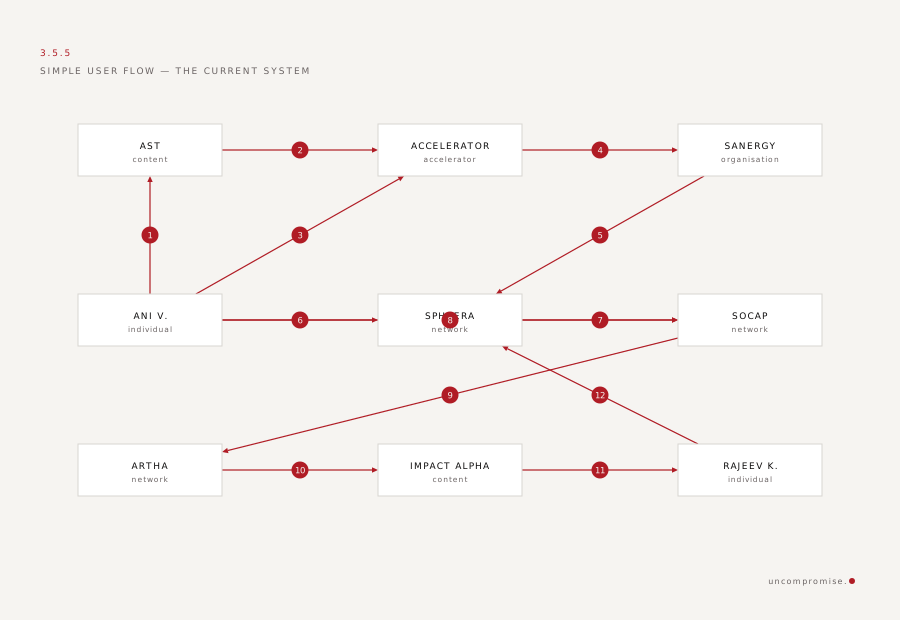
Sanitation entrepreneur Ani V. searches Accelerator Selection Tool (AST), finds Accelerator profile (manually entered by Accelerator staff)
Sanitation entrepreneur Ani V. searches Accelerator Selection Tool (AST), finds Accelerator profile (manually entered by Accelerator staff)
Ani applies to Accelerator, registering with LinkedIn credentials (if he’s lucky!)
Ani applies to Accelerator, registering with LinkedIn credentials (if he’s lucky!)
Ani manually adds extra information about himself and his company to the Accelerator application
Ani manually adds extra information about himself and his company to the Accelerator application
Ani creates Sanergy organisation profile on Accelerator, copying and pasting from whichever profile he last wrote
Ani creates Sanergy organisation profile on Accelerator, copying and pasting from whichever profile he last wrote
Ani is accepted into Accelerator, and workshops his business idea on google docs, asana, or whatever other project management tool is either proscribed, or arbitrarily determined by his team.
Ani is accepted into Accelerator, and workshops his business idea on google docs, asana, or whatever other project management tool is either proscribed, or arbitrarily determined by his team.
Sanergy graduates Accelerator, discovers Sphaera, and manually enters personal and company information, as well as information about products/services/solutions into their Sphaera profile.
Sanergy graduates Accelerator, discovers Sphaera, and manually enters personal and company information, as well as information about products/services/solutions into their Sphaera profile.
Ani attends SOCAP, and manually adds information about himself, his company, and his services and needs, copying and pasting from whichever profile he last created
Ani attends SOCAP, and manually adds information about himself, his company, and his services and needs, copying and pasting from whichever profile he last created
Ani meets impact investor at SOCAP; is advised to submit business plan and enterprise profile to Artha
Ani meets impact investor at SOCAP; is advised to submit business plan and enterprise profile to Artha
Ani signs on to Artha with LinkedIn profile; manually adds extra information about himself and his company to the Artha Platform; this information is significantly different to the information supplied when he applied to the Accelerator
Ani signs on to Artha with LinkedIn profile; manually adds extra information about himself and his company to the Artha Platform; this information is significantly different to the information supplied when he applied to the Accelerator
Sanergy receives investment. Impact Alpha discovers the investment, researches Sanergy, and copies and pastes data from wherever they find it into ImpactSpace.
Sanergy receives investment. Impact Alpha discovers the investment, researches Sanergy, and copies and pastes data from wherever they find it into ImpactSpace.
Another sanitation entrepreneur, Rajeev K., reads story on Impact Alpha
Another sanitation entrepreneur, Rajeev K., reads story on Impact Alpha
Rajeev K. navigates to Sphaera to learn more about Sanergy and connects with Ani, who refers him to the AST … and the cycle continues
Rajeev K. navigates to Sphaera to learn more about Sanergy and connects with Ani, who refers him to the AST … and the cycle continues
This diagram demonstrates the various data inputs an entrepreneur must make into disparate databases. Compound this over typical annual activity flow, and it quickly becomes clear how unwieldy the entire system becomes.
This diagram demonstrates the various data inputs an entrepreneur must make into disparate databases. Compound this over typical annual activity flow, and it quickly becomes clear how unwieldy the entire system becomes.
3.5.5
3.5.5
Simple User Flow. twelve manual entries · the same details typed into six systems compound this over a year of activity and the system becomes unworkable
Simple User Flow. twelve manual entries · the same details typed into six systems compound this over a year of activity and the system becomes unworkable
3.5.6
3.5.6
Simple Data Flow
Simple Data Flow
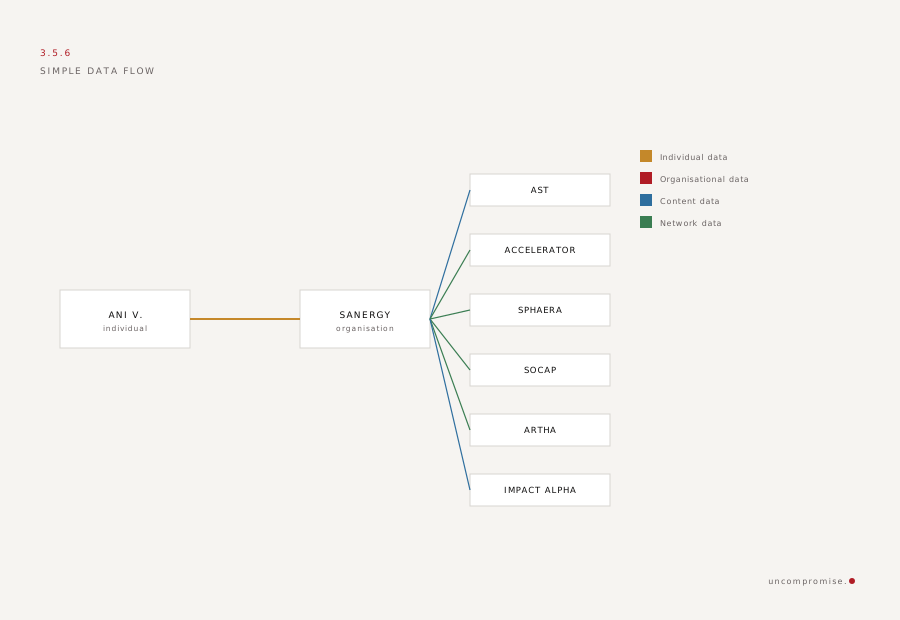
As the previous slide indicates, without standardised agreements on the nature and location of organisational data, this data is the most open to fragmentation. It is also the most valuable data in the market network. Social sign on, while decreasing some friction, results in further fragmented individual data.
As the previous slide indicates, without standardised agreements on the nature and location of organisational data, this data is the most open to fragmentation. It is also the most valuable data in the market network. Social sign on, while decreasing some friction, results in further fragmented individual data.
3.5.6
3.5.6
Simple Data Flow. without standardised agreements on the nature and location of organisational data, it is the most open to fragmentation it is also the most valuable data in the market network
Simple Data Flow. without standardised agreements on the nature and location of organisational data, it is the most open to fragmentation it is also the most valuable data in the market network
3.5.7
3.5.7
Universal Data Flows
Universal Data Flows
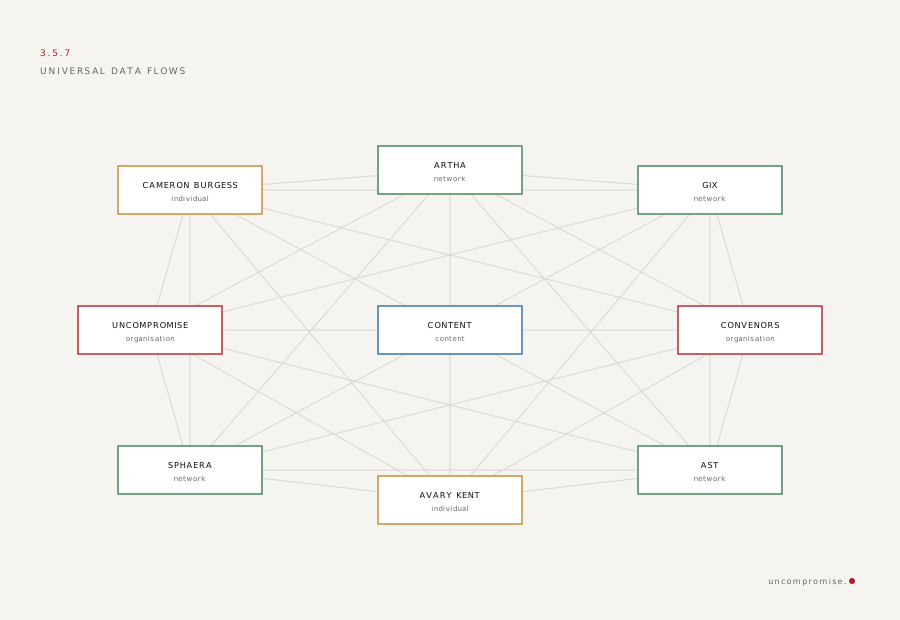
A simple schematic demonstrating how different types of data flow between different entities. When taking into account the previous slides, it becomes apparent just how this data is replicated, uncoordinated, and thus rendered redundant.
A simple schematic demonstrating how different types of data flow between different entities. When taking into account the previous slides, it becomes apparent just how this data is replicated, uncoordinated, and thus rendered redundant.
3.5.7
3.5.7
Universal Data Flows. the same data replicated between entities, uncoordinated — and thereby rendered redundant
Universal Data Flows. the same data replicated between entities, uncoordinated — and thereby rendered redundant
3.5.8
3.5.8
Data Fragmentation
Data Fragmentation
With the added the variable of time data becomes n-dimensionally fragmented.
With the added the variable of time data becomes n-dimensionally fragmented.

3.5.8
3.5.8
Data Fragmentation. with the added variable of time, data becomes n-dimensionally fragmented
Data Fragmentation. with the added variable of time, data becomes n-dimensionally fragmented
3.6
3.6
Misaligned Capital
Misaligned Capital
Humanity is better off today, overall, than at any time in recorded human history; even despite the ever growing threat from climate change. Governments and markets have been getting better at providing for our needs, with civil society stepping in where one or both fail — and those failures are pervasive.
Humanity is better off today, overall, than at any time in recorded human history; even despite the ever growing threat from climate change. Governments and markets have been getting better at providing for our needs, with civil society stepping in where one or both fail — and those failures are pervasive.
Yet the urgency of resolving basic education, health and income challenges for the bottom billions remains stark, and with an annual funding gap between $1.7 and $2.5 trillion, it is clear that investments of billions, or even hundreds of billions, are simply inadequate.
Yet the urgency of resolving basic education, health and income challenges for the bottom billions remains stark, and with an annual funding gap between $1.7 and $2.5 trillion, it is clear that investments of billions, or even hundreds of billions, are simply inadequate.
National foreign aid budgets are flat and declining as industrialised nations feel the demographic strains of increasing health and pension costs, and corporations are experiencing decreased consumer spending across the board, due to a combination of economic uncertainty, and a fundamental values shift away from consumption, and towards meaning.
National foreign aid budgets are flat and declining as industrialised nations feel the demographic strains of increasing health and pension costs, and corporations are experiencing decreased consumer spending across the board, due to a combination of economic uncertainty, and a fundamental values shift away from consumption, and towards meaning.
There are other funding sources for addressing the gaps in human wellbeing, of course, but even in totality, the most widely considered are also inadequate:
There are other funding sources for addressing the gaps in human wellbeing, of course, but even in totality, the most widely considered are also inadequate:
Globally, assets of private foundations top out at $1 trillion. Most of that is not directly invested in world positive outcomes, with less than 20% deployed annually, and less than 3% actually making it into projects on the ground.
Globally, assets of private foundations top out at $1 trillion. Most of that is not directly invested in world positive outcomes, with less than 20% deployed annually, and less than 3% actually making it into projects on the ground.
Personal giving is highly fragmented, and in the US (the largest national personal giving market) tops out at $275 billion per annum, most of which is not aligned with the SDGs.
Personal giving is highly fragmented, and in the US (the largest national personal giving market) tops out at $275 billion per annum, most of which is not aligned with the SDGs.
The capital markets of the global south have approximately $2 trillion (in local currency) in local pension funds — estimated to reach $17 trillion by 2050 — most of which is invested in cash and local government bonds, and misaligned with the social and economic imperatives of their citizens
The capital markets of the global south have approximately $2 trillion (in local currency) in local pension funds — estimated to reach $17 trillion by 2050 — most of which is invested in cash and local government bonds, and misaligned with the social and economic imperatives of their citizens
Impact investing, while estimated by GIIN at $75 billion, and growing 16% year on year would need to scale at 300% per annum in order to come close to achieving the SDGs. That’s assuming all of the required interventions are appropriate for investment, which they aren’t.
Impact investing, while estimated by GIIN at $75 billion, and growing 16% year on year would need to scale at 300% per annum in order to come close to achieving the SDGs. That’s assuming all of the required interventions are appropriate for investment, which they aren’t.
Even if we could mobilise all of the above capital, it would still leave a substantial gap in funding required to close the human wellbeing gap.
Even if we could mobilise all of the above capital, it would still leave a substantial gap in funding required to close the human wellbeing gap.
In fact, a rough back of the envelope calculation indicates that we need to mobilise roughly 5% of all global capital to achieve the SDGs by 2030
In fact, a rough back of the envelope calculation indicates that we need to mobilise roughly 5% of all global capital to achieve the SDGs by 2030
Relying solely on increased access to philosophically aligned capital would clearly be a mistake.
Relying solely on increased access to philosophically aligned capital would clearly be a mistake.
3.6.1
3.6.1
Ineffective Capital
Ineffective Capital
If our social structures are flawed, and their underlying systems, and the data moving through them, are dysfunctional, how can we expect our capital allocation practices to be effective?
If our social structures are flawed, and their underlying systems, and the data moving through them, are dysfunctional, how can we expect our capital allocation practices to be effective?
If we take the spectrum of financial returns from -100% (grants) to 10x (venture capital), individual and institutional investors are distributed along that spectrum according to their risk preference, their goals for achieving social impact, and their financial return expectations.
If we take the spectrum of financial returns from -100% (grants) to 10x (venture capital), individual and institutional investors are distributed along that spectrum according to their risk preference, their goals for achieving social impact, and their financial return expectations.
At present, this is a chaotic system where entrepreneurs and organisations that have social interventions to address wicked problems are searching for the right type of capital for the type and stage of their intervention. Similarly, investors are looking for the interventions that match their ‘theory of change’, risk tolerance, and financial return expectation.
At present, this is a chaotic system where entrepreneurs and organisations that have social interventions to address wicked problems are searching for the right type of capital for the type and stage of their intervention. Similarly, investors are looking for the interventions that match their ‘theory of change’, risk tolerance, and financial return expectation.
So how do the interventions and investors with matching impact, risk and return profiles find each other?
So how do the interventions and investors with matching impact, risk and return profiles find each other?
At present, the answer is ”through a series of costly, bilateral search and diligence processes” that create massive inefficiencies and inhibit the flow of capital to where it is needed the most.
At present, the answer is ”through a series of costly, bilateral search and diligence processes” that create massive inefficiencies and inhibit the flow of capital to where it is needed the most.
In the next two slides we consider the dynamics that lead to path dependencies, blind spots, and underserved types and stages of enterprises in mobilising capital for world positive change.
In the next two slides we consider the dynamics that lead to path dependencies, blind spots, and underserved types and stages of enterprises in mobilising capital for world positive change.
3.6.2
3.6.2
Myopic Capital
Myopic Capital
Entrepreneurs and other changemakers implementing solutions to wicked problems have capital needs that span the entire spectrum from grants to VC.
Entrepreneurs and other changemakers implementing solutions to wicked problems have capital needs that span the entire spectrum from grants to VC.
Often, their capital requirements are driven by R&D and market making activities—including intense training and awareness-building for products and services that most of us take for granted, such as sanitary practices, last mile health care, or mobile finance. These activities incur a burden that no one small enterprise can or should take on alone.
Often, their capital requirements are driven by R&D and market making activities—including intense training and awareness-building for products and services that most of us take for granted, such as sanitary practices, last mile health care, or mobile finance. These activities incur a burden that no one small enterprise can or should take on alone.
Funders, in turn, tend to shy away from the operational risk and administrative cost engendered by these market-making activities—which are cost-prohibitive for any one funder.
Funders, in turn, tend to shy away from the operational risk and administrative cost engendered by these market-making activities—which are cost-prohibitive for any one funder.
In many cases, a coordinated ecosystem of grant funding, subsidy, and concessionary debt would generate systemic benefits to a range of endeavours for both investors and implementers.
In many cases, a coordinated ecosystem of grant funding, subsidy, and concessionary debt would generate systemic benefits to a range of endeavours for both investors and implementers.
Currently, an entrepreneur looking for funding has to conform to the worldview of funders who have organised the world according to the flavour of capital they disburse, rather than the capital that’s needed. Typically in a series of bilateral conversations with different types of funders, the entrepreneur engages in a time and cost-intensive, bespoke search for the right fit capital—forced to develop fluency in the logic models and capital forms (grants, debt, equity) preferred by the funders.
Currently, an entrepreneur looking for funding has to conform to the worldview of funders who have organised the world according to the flavour of capital they disburse, rather than the capital that’s needed. Typically in a series of bilateral conversations with different types of funders, the entrepreneur engages in a time and cost-intensive, bespoke search for the right fit capital—forced to develop fluency in the logic models and capital forms (grants, debt, equity) preferred by the funders.
In the present system, there is a vast collaboration ‘margin’ that creates distortions and does not enable any kind of systematic leverage, particularly where ‘free’ money / subsidy is on the table.
In the present system, there is a vast collaboration ‘margin’ that creates distortions and does not enable any kind of systematic leverage, particularly where ‘free’ money / subsidy is on the table.
These dynamics are compounded by the fact that a vast number of individual investors and organisations follow the beacons of the ”golden herd” without benefitting from their technical and operational knowledge, local footprints, social capital or risk-mitigating programmatic work.
These dynamics are compounded by the fact that a vast number of individual investors and organisations follow the beacons of the ”golden herd” without benefitting from their technical and operational knowledge, local footprints, social capital or risk-mitigating programmatic work.
So while some of these at the top are indeed well-positioned to make change, and may be big enough (in terms of assets under management) to make a systemic impact, they do little for their field of micro-peers.
So while some of these at the top are indeed well-positioned to make change, and may be big enough (in terms of assets under management) to make a systemic impact, they do little for their field of micro-peers.
The urgency of the problems faced by the bottom billions on this planet should obviate the need for funders and service providers to struggle to identify one another, especially if they are newcomers to a given field
The urgency of the problems faced by the bottom billions on this planet should obviate the need for funders and service providers to struggle to identify one another, especially if they are newcomers to a given field
Capital-centric capital
Capital-centric capital
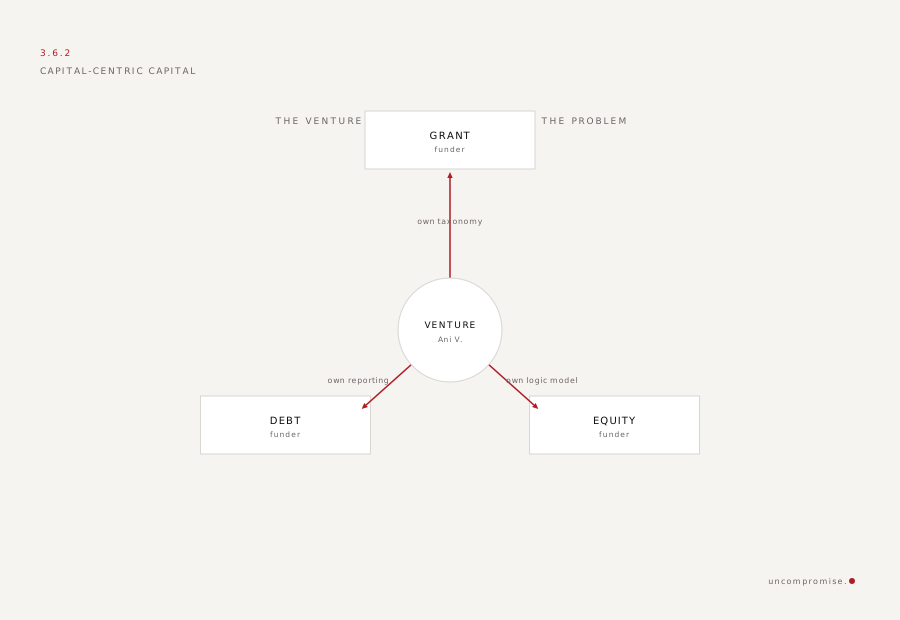
This diagram demonstrates the problem that occurs when funders put themselves at the centre of the design process. Ventures are required to input data against divergent taxonomies, and report against varying requirements, resulting in fragmentation of organisational data, duplicated due diligence, and stifled capital flows. Further, the flow of time and effort is inversely proportional to available time and capital, with ventures working for their funders - before they’re even funded - rather than the opposite.
This diagram demonstrates the problem that occurs when funders put themselves at the centre of the design process. Ventures are required to input data against divergent taxonomies, and report against varying requirements, resulting in fragmentation of organisational data, duplicated due diligence, and stifled capital flows. Further, the flow of time and effort is inversely proportional to available time and capital, with ventures working for their funders - before they’re even funded - rather than the opposite.
3.6.2
3.6.2
Capital-centric capital. ventures input data against divergent taxonomies and report against varying requirements time and effort flow inversely to available capital — ventures work for their funders before they are funded
Capital-centric capital. ventures input data against divergent taxonomies and report against varying requirements time and effort flow inversely to available capital — ventures work for their funders before they are funded
3.6.3
3.6.3
Replication of Diligence
Replication of Diligence
What about impact investing?
What about impact investing?
Impact Investing, which globally accounts for about $75 Billion available for SDG financing exemplifies the counterproductive patterns of the current system.
Impact Investing, which globally accounts for about $75 Billion available for SDG financing exemplifies the counterproductive patterns of the current system.
Currently, the closest a cautious impact investor can get to financing an ‘outcome’ per se is to engage in equity investment, preferably on the basis of convertible (preference or other) shares, whose value can be determined on the basis of achievement of performance milestones.
Currently, the closest a cautious impact investor can get to financing an ‘outcome’ per se is to engage in equity investment, preferably on the basis of convertible (preference or other) shares, whose value can be determined on the basis of achievement of performance milestones.
Performance can be assessed on the basis of turnover, EBITDA or both, as well as on the impact metrics that in themselves are frequently idiosyncratic and tough to track. Funders that focus on turnover may be driven primarily by ensuring a critical need (i.e. providing potable drinking water to marginalised remote communities) is prioritised; while those engaging in more long term, systemic solutions may be interested in operational efficiency and EBITDA. Most will fall somewhere in between, however, as they determine the risk profile of the money they disburse.
Performance can be assessed on the basis of turnover, EBITDA or both, as well as on the impact metrics that in themselves are frequently idiosyncratic and tough to track. Funders that focus on turnover may be driven primarily by ensuring a critical need (i.e. providing potable drinking water to marginalised remote communities) is prioritised; while those engaging in more long term, systemic solutions may be interested in operational efficiency and EBITDA. Most will fall somewhere in between, however, as they determine the risk profile of the money they disburse.
Debt investors may also mimic this if they tranche their secondary and tertiary debt disbursements contingent upon timely repayments, although the effort involved in setting and tracking performance and impact metrics is often untenable in line with relatively shorter time periods of engagement.
Debt investors may also mimic this if they tranche their secondary and tertiary debt disbursements contingent upon timely repayments, although the effort involved in setting and tracking performance and impact metrics is often untenable in line with relatively shorter time periods of engagement.
Currently there is little visibility on these disbursements, and no collective intelligence applied to the dynamic between funding flows, whether they are occurring in parallel (i.e., grants disbursed to non profits or raised from the crowd, and equity or debt financings completed), or over time.
Currently there is little visibility on these disbursements, and no collective intelligence applied to the dynamic between funding flows, whether they are occurring in parallel (i.e., grants disbursed to non profits or raised from the crowd, and equity or debt financings completed), or over time.
SDG solutions financing could be vastly enhanced by surfacing the diligence history along the entire capital spectrum associated with a venture.
SDG solutions financing could be vastly enhanced by surfacing the diligence history along the entire capital spectrum associated with a venture.
Some of this occurs already in a piece-meal fashion, as individual niche networks guide their members to one or another sector or geography. To date, however, we have not yet seen the alignment of incentives around one or another SDG.
Some of this occurs already in a piece-meal fashion, as individual niche networks guide their members to one or another sector or geography. To date, however, we have not yet seen the alignment of incentives around one or another SDG.
How we get there, harnessing contemporary social, financial, legal and technical innovations, forms the remainder of this paper
How we get there, harnessing contemporary social, financial, legal and technical innovations, forms the remainder of this paper
We will show how it is possible to align incentive and coordinate implementers and investors, using a unifying, dynamic legal structure that provides ecosystem stakeholders an actual ‘shareholding’ in a single vehicle dedicated to radically reduced transaction costs.
We will show how it is possible to align incentive and coordinate implementers and investors, using a unifying, dynamic legal structure that provides ecosystem stakeholders an actual ‘shareholding’ in a single vehicle dedicated to radically reduced transaction costs.
Until there is a system level ‘reward’ for reduction of those transaction costs, these remain the bread and butter of hundreds of thousands of service organisations and their intermediary advisors who draw money off the top and bottom of project budgets to reinvent the wheel at the expense of the citizen.
Until there is a system level ‘reward’ for reduction of those transaction costs, these remain the bread and butter of hundreds of thousands of service organisations and their intermediary advisors who draw money off the top and bottom of project budgets to reinvent the wheel at the expense of the citizen.
3.7
3.7
Flawed Decisions
Flawed Decisions
Institutional patterns, and normative behaviours, result in ineffective systems design, and correspondingly dysfunctional data, resulting in unnecessary friction for those most committed to doing the work.
Institutional patterns, and normative behaviours, result in ineffective systems design, and correspondingly dysfunctional data, resulting in unnecessary friction for those most committed to doing the work.
The data outputs from these systems are being used to inform our biggest bets, meaning many of our decisions are potentially misaligned with our intentions.
The data outputs from these systems are being used to inform our biggest bets, meaning many of our decisions are potentially misaligned with our intentions.
Further, the inability for disparate systems to connect means that we are a long way from leveraging our assets to greatest effect.
Further, the inability for disparate systems to connect means that we are a long way from leveraging our assets to greatest effect.
All of this results in an exponentially fragmented market that is diametrically opposed to rapid scale.
All of this results in an exponentially fragmented market that is diametrically opposed to rapid scale.
As a consequence of the lack of connectivity between systems, capital becomes trapped, and is unable to be combined to greatest effect.
As a consequence of the lack of connectivity between systems, capital becomes trapped, and is unable to be combined to greatest effect.
The good news is, it’s a solvable problem through combining contemporary innovations, new forms of social equity, and inclusive systems design, as the following sections describe.
The good news is, it’s a solvable problem through combining contemporary innovations, new forms of social equity, and inclusive systems design, as the following sections describe.
Further reading
Further reading
Continue to Part Two
Continue to Part Two
Read A Rising Tide
Read A Rising Tide
Get in touch
Get in touch
uncompromise · From Billions to Trillions © 2020 Cameron Burgess, Astrid Scholz, Arthur Wood, Audrey Selian · Copyright to the authors, separately and jointly · Written in International English · First published March 2018 · Revised March 2020 · Republished 2026
© 2026 Uncompromise Pty Ltd. All Rights Reserved · Pau, France
© 2026 Uncompromise Pty Ltd. All Rights Reserved · Pau, France
© 2026 Uncompromise Pty Ltd. All Rights Reserved · Pau, France