Concept paper — 2018, revised 2020 · Part two of two
Concept paper — 2018, revised 2020 · Part two of two
From Billions to Trillions
From Billions to Trillions
From Billions to Trillions
How a transformative approach to collaboration and finance supports citizens, governments, corporations, and civil society to share the burdens and the benefits of solving wicked problems.
How a transformative approach to collaboration and finance supports citizens, governments, corporations, and civil society to share the burdens and the benefits of solving wicked problems.
How a transformative approach to collaboration and finance supports citizens, governments, corporations, and civil society to share the burdens and the benefits of solving wicked problems.
Authors
Authors
Cameron Burgess · Astrid Scholz · Arthur Wood · Audrey Selian
Written
Written
San Francisco, CA · Portland, OR · Geneva, Switzerland
Dated
Dated
1 March 2018 · revised 31 March 2020
Contents
Contents
4.1 Innovation
4.1 Innovation
4.2 Social
4.2 Social
4.3 Financial
4.3 Financial
4.4 Legal
4.4 Legal
4.5 Technical
4.5 Technical
5.1 Transforming Social Finance
5.1 Transforming Social Finance
5.1.1 Monetise the Problem
5.1.1 Monetise the Problem
5.1.2 Align Diverse Stakeholders
5.1.2 Align Diverse Stakeholders
5.1.3 Detour: Putting the Social Back in SIBs
5.1.3 Detour: Putting the Social Back in SIBs
5.1.4 Focus on Outcomes Over Outputs
5.1.4 Focus on Outcomes Over Outputs
5.1.5 Create Social Equities
5.1.5 Create Social Equities
5.1.6 Embed Finance in a Larger System
5.1.6 Embed Finance in a Larger System
6.1 Systems Design
6.1 Systems Design
6.2 Architectural Design
6.2 Architectural Design
6.2.1 Citizens
6.2.1 Citizens
6.2.2 Communities
6.2.2 Communities
6.2.3 Capital
6.2.3 Capital
6.2.4 Sectors
6.2.4 Sectors
6.2.5 Functions
6.2.5 Functions
6.2.6 Mechanisms
6.2.6 Mechanisms
6.2.7 Markets
6.2.7 Markets
6.2.8 Market Network
6.2.8 Market Network
6.2.9 Mechanics
6.2.9 Mechanics
6.2.10 Requirements
6.2.10 Requirements
6.3 Logical Design
6.3 Logical Design
6.3.1 Logical Design Elements
6.3.1 Logical Design Elements
6.3.2 Data Classification Sample
6.3.2 Data Classification Sample
6.3.3 Sample Logic Flow
6.3.3 Sample Logic Flow
6.3.4 Sample Data Flow
6.3.4 Sample Data Flow
6.4 Physical Design
6.4 Physical Design
6.5 Market Network Prototype
6.5 Market Network Prototype
7.1 Conclusion
7.1 Conclusion
7.2 Get Involved
7.2 Get Involved
7.3 Further Research
7.3 Further Research
7.4 Authors
7.4 Authors
Section 4
Section 4
Innovation
Innovation
Innovation
4.1
4.1
Innovation
Innovation
There are four distinct streams of innovation that have been occurring in parallel over the past decade. Yet up until now, these innovations have not been effectively combined and harnessed toward the global good.
There are four distinct streams of innovation that have been occurring in parallel over the past decade. Yet up until now, these innovations have not been effectively combined and harnessed toward the global good.
While much attention is given to the evolution of financial instruments and capital markets, the rise of purpose-driven legal forms, and the rapid advances in technological infrastructure, we believe it is essential to draw attention to what lies at the root of all innovation.
While much attention is given to the evolution of financial instruments and capital markets, the rise of purpose-driven legal forms, and the rapid advances in technological infrastructure, we believe it is essential to draw attention to what lies at the root of all innovation.
People
People
All of these innovations are being fuelled by a dramatic shift in human values, resulting in significant changes in social innovation, including innovations in human behaviour, and corresponding social systems.
All of these innovations are being fuelled by a dramatic shift in human values, resulting in significant changes in social innovation, including innovations in human behaviour, and corresponding social systems.
4.2
4.2
Social
Social
Renowned futurist Faith Popcorn is tracking trends that illuminate substantial shifts in human behaviour. Each is significant in isolation, but when viewed as a whole they represent a significant change in how citizens are engaging with the world, and driving our social, economic, and political systems to respond:
Renowned futurist Faith Popcorn is tracking trends that illuminate substantial shifts in human behaviour. Each is significant in isolation, but when viewed as a whole they represent a significant change in how citizens are engaging with the world, and driving our social, economic, and political systems to respond:
Being Alive: Awareness that good health extends longevity and leads to a new way of life.
Being Alive: Awareness that good health extends longevity and leads to a new way of life.
Clanning: Belonging to a group that represents common feelings, causes or ideals; validating one’s own belief system.
Clanning: Belonging to a group that represents common feelings, causes or ideals; validating one’s own belief system.
FutureTense: Consumers, anxiety-ridden by simultaneous social, economic, political and ethical chaos, find themselves beyond their ability to cope with today or imagine tomorrow.
FutureTense: Consumers, anxiety-ridden by simultaneous social, economic, political and ethical chaos, find themselves beyond their ability to cope with today or imagine tomorrow.
AtmosFear: Polluted air, contaminated water, and tainted food stir up a storm of consumer doubt and uncertainty.
AtmosFear: Polluted air, contaminated water, and tainted food stir up a storm of consumer doubt and uncertainty.
EVEolution: The way women think and behave is impacting business, causing a marketing shift away from a hierarchical model to a relational one.
EVEolution: The way women think and behave is impacting business, causing a marketing shift away from a hierarchical model to a relational one.
Icon Toppling: A new socioquake transforms mainstream communities as the pillars of society are questioned and rejected.
Icon Toppling: A new socioquake transforms mainstream communities as the pillars of society are questioned and rejected.
Save Our Society: The country rediscovers a social conscience of ethics, passion and compassion.
Save Our Society: The country rediscovers a social conscience of ethics, passion and compassion.
Anchoring: A reaching back to our spiritual roots, taking what was secure from the past in order to be ready for the future.
Anchoring: A reaching back to our spiritual roots, taking what was secure from the past in order to be ready for the future.
Vigilante Consumer: The consumer manipulates marketers and the marketplace through pressure, protest and politics.
Vigilante Consumer: The consumer manipulates marketers and the marketplace through pressure, protest and politics.
Cashing Out: Working women and men, questioning personal/career satisfaction and goals, opt for simpler living
Cashing Out: Working women and men, questioning personal/career satisfaction and goals, opt for simpler living
4.3
4.3
Financial
Financial
On the finance side, we are seeing a plethora of financial tools and solutions that are being developed and that can be applied tactically to various social issues. Strategically, in turn, we see the development of outcome models and the ability to structure investment vehicles that make it possible to financially reward the achievement of social outcomes, or the demonstrated improvement over a baseline.
On the finance side, we are seeing a plethora of financial tools and solutions that are being developed and that can be applied tactically to various social issues. Strategically, in turn, we see the development of outcome models and the ability to structure investment vehicles that make it possible to financially reward the achievement of social outcomes, or the demonstrated improvement over a baseline.
This makes it possible to create securities that are exactly like other equities, but whose value reflects the achievement of social outcomes. These vehicles monetise the social problem—making the problem the market opportunity, and providing an avenue for attracting private and institutional capital, including the $1 trillion held by private foundations globally, 97% of whose core capital is currently unaligned with their social mission.
This makes it possible to create securities that are exactly like other equities, but whose value reflects the achievement of social outcomes. These vehicles monetise the social problem—making the problem the market opportunity, and providing an avenue for attracting private and institutional capital, including the $1 trillion held by private foundations globally, 97% of whose core capital is currently unaligned with their social mission.
It is this alignment of capital with social and economic frameworks, and the monetisation of externalities, that stands to unleash the volume of investment needed to address wicked problems.
It is this alignment of capital with social and economic frameworks, and the monetisation of externalities, that stands to unleash the volume of investment needed to address wicked problems.
We elaborate on this in the subsequent section on Social Equity.
We elaborate on this in the subsequent section on Social Equity.
We cannot complete an overview of financial innovation without addressing cryptocurrency. Cryptocurrencies, and the underlying systems that enable them, are the intersection between capital transactions, reputation management, and equitable governance.
We cannot complete an overview of financial innovation without addressing cryptocurrency. Cryptocurrencies, and the underlying systems that enable them, are the intersection between capital transactions, reputation management, and equitable governance.
4.4
4.4
Legal
Legal
The evolution of corporate forms has expanded the tool kit for creating structures that combine economic and social goals. In particular, the development of Public Benefit Corporations (PBCs) provides greater flexibility to governmental funding in partnership with the private sector. PBCs hardwire the social purpose and the interests of stakeholders other than investors into their articles of incorporation.
The evolution of corporate forms has expanded the tool kit for creating structures that combine economic and social goals. In particular, the development of Public Benefit Corporations (PBCs) provides greater flexibility to governmental funding in partnership with the private sector. PBCs hardwire the social purpose and the interests of stakeholders other than investors into their articles of incorporation.
Partnership Structures such LLCs and LLPs are now found in over 50 global jurisdictions, and allow varied economic returns to different partners (each taxed individually according to their native corporate status) that are aligned in a common purpose of the LLP / LLC.
Partnership Structures such LLCs and LLPs are now found in over 50 global jurisdictions, and allow varied economic returns to different partners (each taxed individually according to their native corporate status) that are aligned in a common purpose of the LLP / LLC.
From 2008 a social dimension was added and we now have legal structures such as the low-profit limited liability company (L3C) that adds an explicit social dimension to that structure, facilitating the layering (and the cross-subsidisation that lies at the heart of ”impact investing”) of different types of philanthropic, public, and commercial capital with different and differing risk-return expectations.
From 2008 a social dimension was added and we now have legal structures such as the low-profit limited liability company (L3C) that adds an explicit social dimension to that structure, facilitating the layering (and the cross-subsidisation that lies at the heart of ”impact investing”) of different types of philanthropic, public, and commercial capital with different and differing risk-return expectations.
Mutualistic structures — the most commonly understood of which are cooperatives — are a centuries old model for distributed and equitable ownership between parties united by common cause and mutual interest.
Mutualistic structures — the most commonly understood of which are cooperatives — are a centuries old model for distributed and equitable ownership between parties united by common cause and mutual interest.
4.5
4.5
Technical
Technical
While there are a significant number of evolutions in technology that have made it possible to consider a new infrastructure pathway - including trends in personalisation, customisation, cloud computing, mobile, and distributed registries, the three emerging mega-trends, as identified by Gartner, are:
While there are a significant number of evolutions in technology that have made it possible to consider a new infrastructure pathway - including trends in personalisation, customisation, cloud computing, mobile, and distributed registries, the three emerging mega-trends, as identified by Gartner, are:
Intelligence: AI, Intelligent apps and analytics, and intelligent things Digital: digital twins, cloud-to-the-edge models, conversational systems and immersive experience Mesh: Distributed ledgers, and continuous adaptive risk and trust
Intelligence: AI, Intelligent apps and analytics, and intelligent things Digital: digital twins, cloud-to-the-edge models, conversational systems and immersive experience Mesh: Distributed ledgers, and continuous adaptive risk and trust
These innovations make it possible to create a responsive, adaptive, modular infrastructure that organises the workflows required to scale solutions, to leverage the legal, financial and behavioural innovations outlined above, and to do so in a way that mitigates the primary challenges identified previously.
These innovations make it possible to create a responsive, adaptive, modular infrastructure that organises the workflows required to scale solutions, to leverage the legal, financial and behavioural innovations outlined above, and to do so in a way that mitigates the primary challenges identified previously.
Section 5
Section 5
Social Equity
Social Equity
Social Equity
5.1
5.1
Transforming Social Finance
Transforming Social Finance
Social Finance is finance in service of achieving the greater good. It takes the form of capital, and therein the range of diverse instruments available for its deployment. Current social finance approaches are woefully inadequate for stimulating the flow of trillions of dollars towards solving wicked problems, as previously laid out.
Social Finance is finance in service of achieving the greater good. It takes the form of capital, and therein the range of diverse instruments available for its deployment. Current social finance approaches are woefully inadequate for stimulating the flow of trillions of dollars towards solving wicked problems, as previously laid out.
Yet the now almost predictable response is to propose alternative solutions, instruments, and product variations that, while philosophically sound (on the surface at least), are largely untenable at scale.
Yet the now almost predictable response is to propose alternative solutions, instruments, and product variations that, while philosophically sound (on the surface at least), are largely untenable at scale.
The fundamental reality is that no crypto currency, crowdfunding, impact investing, or philanthropic initiative will ever be able to generate the required traction and volume in the required time frame. Nor is it likely that today’s hedge-fund managers and bankers will dramatically shift their focus away from current practices.
The fundamental reality is that no crypto currency, crowdfunding, impact investing, or philanthropic initiative will ever be able to generate the required traction and volume in the required time frame. Nor is it likely that today’s hedge-fund managers and bankers will dramatically shift their focus away from current practices.
The simple truth is that unless we can create a compelling reason for today’s primary holders of capital to shift their investment focus, and to do so in a way that supports their expectations of risk and reward, we are likely to fail.
The simple truth is that unless we can create a compelling reason for today’s primary holders of capital to shift their investment focus, and to do so in a way that supports their expectations of risk and reward, we are likely to fail.
We must hold true to our ideals, while not being blinded to the urgency of our situation.
We must hold true to our ideals, while not being blinded to the urgency of our situation.
We believe the answer lies in the creation of Social Equity—both in the justice and fairness meaning of the word, and in the financial sense of creating new, tradable securities.
We believe the answer lies in the creation of Social Equity—both in the justice and fairness meaning of the word, and in the financial sense of creating new, tradable securities.
“Social Equity is the radical idea that the citizens, communities, and organisations contributing to the solution of wicked problems participate financially in the outcomes to which they have contributed.”
“Social Equity is the radical idea that the citizens, communities, and organisations contributing to the solution of wicked problems participate financially in the outcomes to which they have contributed.”
“Social Equity is the radical idea that the citizens, communities, and organisations contributing to the solution of wicked problems participate financially in the outcomes to which they have contributed.”
Those whose experience and knowledge contribute toward the development of solutions that work, should be rewarded systematically. This is a fundamental premise about human labour as a unit of economic value; the economic value of a good or service is determined by the total amount of ”socially necessary labor” required to produce it, rather than by the use or pleasure its owner gets from it, or from giving it away at no cost. That which works should be granted rights to participatory equity.
Those whose experience and knowledge contribute toward the development of solutions that work, should be rewarded systematically. This is a fundamental premise about human labour as a unit of economic value; the economic value of a good or service is determined by the total amount of ”socially necessary labor” required to produce it, rather than by the use or pleasure its owner gets from it, or from giving it away at no cost. That which works should be granted rights to participatory equity.
Social equity, in combination with distributed ledgering technologies, and 21st century workflow tools, is the only way we can see that we can achieve the degree of financial and innovation liquidity necessary to support investments and collaboration at the unprecedented scale required to achieve the SDGs.
Social equity, in combination with distributed ledgering technologies, and 21st century workflow tools, is the only way we can see that we can achieve the degree of financial and innovation liquidity necessary to support investments and collaboration at the unprecedented scale required to achieve the SDGs.
The following slides lay out a five step process for this transformation:
The following slides lay out a five step process for this transformation:
Monetise the problem
Monetise the problem
Align diverse stakeholders
Align diverse stakeholders
Focus on outcomes over outputs
Focus on outcomes over outputs
Create social equities
Create social equities
Embed finance in a larger system
Embed finance in a larger system
5.1.1
5.1.1
Monetise the Problem
Monetise the Problem
The SDGs are associated with massive externalities, such as the $300B+ incurred due to lack of access to adequate water and sanitation.
The SDGs are associated with massive externalities, such as the $300B+ incurred due to lack of access to adequate water and sanitation.
Any given intervention can be quantified in terms of its contribution to reducing these externalities, which in turn is of interest to the philanthropic, corporate, or public actors who see a benefit in tackling a negative externality.
Any given intervention can be quantified in terms of its contribution to reducing these externalities, which in turn is of interest to the philanthropic, corporate, or public actors who see a benefit in tackling a negative externality.
For example, the tourism industry in the Caribbean has an economic interest in ecosystem restoration. Corporate employers in Africa have an economic interest in a healthy workforce that’s not suffering from waterborne diseases. And citizens—at the very least—simply want to reside in an economically productive location where basic / universal services in health and education are accessible. These actors thus have an interest to pay for the achievement of the positive outcome, contingent on its success.
For example, the tourism industry in the Caribbean has an economic interest in ecosystem restoration. Corporate employers in Africa have an economic interest in a healthy workforce that’s not suffering from waterborne diseases. And citizens—at the very least—simply want to reside in an economically productive location where basic / universal services in health and education are accessible. These actors thus have an interest to pay for the achievement of the positive outcome, contingent on its success.
This promise to pay by contingent payers can be securitised—turned into a tradable product that investors can invest in, and that trades as a function of the achievement of the social and /or environmental metric.
This promise to pay by contingent payers can be securitised—turned into a tradable product that investors can invest in, and that trades as a function of the achievement of the social and /or environmental metric.
Paying for success, or for outcomes, is not a new idea. What is different is the opportunity afforded by innovative legal frameworks to align investors with other stakeholders, including—importantly—the organisations or enterprises implementing the intervention, and the citizens in the communities that these interventions serve. All become the equivalent of equity shareholders and stakeholders in the same vehicle, whose sole purpose is to serve all involved using the principles of business management and the impetus of wealth creation; the two forces that have served the ‘top of the pyramid’ so well.
Paying for success, or for outcomes, is not a new idea. What is different is the opportunity afforded by innovative legal frameworks to align investors with other stakeholders, including—importantly—the organisations or enterprises implementing the intervention, and the citizens in the communities that these interventions serve. All become the equivalent of equity shareholders and stakeholders in the same vehicle, whose sole purpose is to serve all involved using the principles of business management and the impetus of wealth creation; the two forces that have served the ‘top of the pyramid’ so well.
We expand on this in the next two pages, and then reflect subsequently how the process we propose puts the social back into today’s most common outcome-based social finance instruments, the Social Impact Bond (SIB).
We expand on this in the next two pages, and then reflect subsequently how the process we propose puts the social back into today’s most common outcome-based social finance instruments, the Social Impact Bond (SIB).

5.1.1
5.1.1
Monetise the Problem. Worked example: Caribbean ecosystem restoration, metric of square feet of recovered coral reef.
Monetise the Problem. Worked example: Caribbean ecosystem restoration, metric of square feet of recovered coral reef.
5.1.2
5.1.2
Align Diverse Stakeholders
Align Diverse Stakeholders
Using legal innovations such as the L3C form in the United States, it is possible to create a an equity structure to incentivise different stakeholders both as investors but also the stakeholders who require funding.
Using legal innovations such as the L3C form in the United States, it is possible to create a an equity structure to incentivise different stakeholders both as investors but also the stakeholders who require funding.
As long as there is a known baseline, and a quantifiable contribution to reducing a negative externality, it is possible to measure the improvement, or delta, of an intervention towards an outcome.
As long as there is a known baseline, and a quantifiable contribution to reducing a negative externality, it is possible to measure the improvement, or delta, of an intervention towards an outcome.
That delta, while specific to a given problem area or application, serves in essence as a uniform measure of social capital. Depending on the sector, a Dollar of investment gets you more or less delta, making the incremental change exchangeable.
That delta, while specific to a given problem area or application, serves in essence as a uniform measure of social capital. Depending on the sector, a Dollar of investment gets you more or less delta, making the incremental change exchangeable.
The measurement of this impact Delta can be driven by direct feedback loops from the community, thus making them a stakeholder and shareholder in the outcome and its financial upside.
The measurement of this impact Delta can be driven by direct feedback loops from the community, thus making them a stakeholder and shareholder in the outcome and its financial upside.
Such a structure not only captures the total value of social outcomes, but also does so within a framework that becomes competitive and comparative, and that can be applied to many different sectors.
Such a structure not only captures the total value of social outcomes, but also does so within a framework that becomes competitive and comparative, and that can be applied to many different sectors.
Social R&D now has value, unlike in the traditional paradigm, and the quicker the Delta of achievement, the higher the internal rate of return (IRR).
Social R&D now has value, unlike in the traditional paradigm, and the quicker the Delta of achievement, the higher the internal rate of return (IRR).
This, in turn, allows the creation of a new range of uncorrelated equity assets reflecting the achievement of social outcomes across a range of social impact sectors — e.g. the SDGs — and serves as a channel for private and institutional capital that need not need to be aligned on impact to participate in its creation.
This, in turn, allows the creation of a new range of uncorrelated equity assets reflecting the achievement of social outcomes across a range of social impact sectors — e.g. the SDGs — and serves as a channel for private and institutional capital that need not need to be aligned on impact to participate in its creation.

5.1.2
5.1.2
Align Diverse Stakeholders. a known baseline plus a quantifiable contribution makes the improvement exchangeable the quicker the delta, the higher the internal rate of return
Align Diverse Stakeholders. a known baseline plus a quantifiable contribution makes the improvement exchangeable the quicker the delta, the higher the internal rate of return
5.1.3
5.1.3
Detour: Putting the Social Back in SIBs
Detour: Putting the Social Back in SIBs
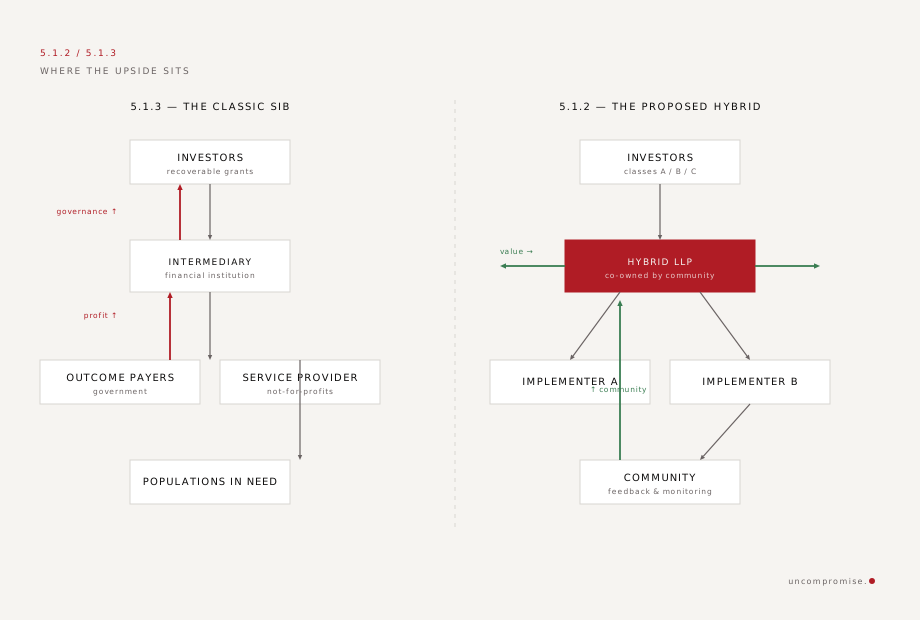
The best known model of outcome based, or pay-for-success, finance is the Social Impact Bond (SIB). The prevailing approach to SIBs is a contractual structure, coordinating contingent payers (typically government agencies), debt and grant investors, and service delivery organisations, and employing an audit mechanism to verify the performance.
The best known model of outcome based, or pay-for-success, finance is the Social Impact Bond (SIB). The prevailing approach to SIBs is a contractual structure, coordinating contingent payers (typically government agencies), debt and grant investors, and service delivery organisations, and employing an audit mechanism to verify the performance.
Technically speaking, the reliance on a contractual mechanism puts it more squarely in the realm of a structured financial product than a bond. The classic SIB has placed a financial institution at the centre of the transaction as principal, and places social stakeholders and citizens in the roles of implementers and recipients of impact, but not as owners of the financial upside created.
Technically speaking, the reliance on a contractual mechanism puts it more squarely in the realm of a structured financial product than a bond. The classic SIB has placed a financial institution at the centre of the transaction as principal, and places social stakeholders and citizens in the roles of implementers and recipients of impact, but not as owners of the financial upside created.
Social benefits flow downstream, but governance and profit flows up
Social benefits flow downstream, but governance and profit flows up
This framework has a number of issues:
This framework has a number of issues:
Limited transparency regarding the potential risk to social stakeholders
Limited transparency regarding the potential risk to social stakeholders
Given the absence of regulatory framework, potential governance and ‘moral hazard’ issues.
Given the absence of regulatory framework, potential governance and ‘moral hazard’ issues.
Reliance on scaling the innovations of a single institution, rather than adopting a hybrid, multi-stakeholder approach to wicked problems.
Reliance on scaling the innovations of a single institution, rather than adopting a hybrid, multi-stakeholder approach to wicked problems.
Reliance on government as contingent payers in times of increasing budget constraints.
Reliance on government as contingent payers in times of increasing budget constraints.
In the framework we propose, social stakeholders and citizens are central to governance, and the primary beneficiaries of both social and financial outcomes. Further, we expand the market for contingent payments to other parties in the business and civil society sectors that are equally motivated to find solutions.
In the framework we propose, social stakeholders and citizens are central to governance, and the primary beneficiaries of both social and financial outcomes. Further, we expand the market for contingent payments to other parties in the business and civil society sectors that are equally motivated to find solutions.
Source: Adapted from the OECD, 2013, ”Understanding SIBs”, p.5.
Source: Adapted from the OECD, 2013, ”Understanding SIBs”, p.5.
5.1.3
5.1.3
The classic Social Impact Bond structure. social benefits flow downstream, but governance and profit flow up stakeholders become shareholders — value flows outward, not up
The classic Social Impact Bond structure. social benefits flow downstream, but governance and profit flow up stakeholders become shareholders — value flows outward, not up
5.1.4
5.1.4
Focus on Outcomes Over Outputs
Focus on Outcomes Over Outputs
The current bilateral approaches to foundation funding and impact investment, results in a broadly dysfunctional use of capital and resources, as described in the Challenges section above.
The current bilateral approaches to foundation funding and impact investment, results in a broadly dysfunctional use of capital and resources, as described in the Challenges section above.
“That’s a bit like launching 1,000 ships to sail from London to New York in a hurricane, with only enough resources on hand for a fraction of them to make it all the way.”
“That’s a bit like launching 1,000 ships to sail from London to New York in a hurricane, with only enough resources on hand for a fraction of them to make it all the way.”
“That’s a bit like launching 1,000 ships to sail from London to New York in a hurricane, with only enough resources on hand for a fraction of them to make it all the way.”
Further, rather than incentivise them to coordinate and cooperate, we let each of them believe that they operate in a zero sum game, in which there can only be one winner. Finally, if and when they reach the other side of the Atlantic, there is no guarantee that they will be landing on fertile ground.
Further, rather than incentivise them to coordinate and cooperate, we let each of them believe that they operate in a zero sum game, in which there can only be one winner. Finally, if and when they reach the other side of the Atlantic, there is no guarantee that they will be landing on fertile ground.
Beneath all of the sophisticated models, frameworks, and metrics, it’s a crap shoot that results in a proliferation of innovation, with limited (if any) scale and collaboration.
Beneath all of the sophisticated models, frameworks, and metrics, it’s a crap shoot that results in a proliferation of innovation, with limited (if any) scale and collaboration.
By moving from funding-for-trying to funding-for-succeeding, an outcome framework is designed as a multi stakeholder ‘equity’ solution utilising a modular and open architecture framework where different players can take different and/or differing economic social returns.
By moving from funding-for-trying to funding-for-succeeding, an outcome framework is designed as a multi stakeholder ‘equity’ solution utilising a modular and open architecture framework where different players can take different and/or differing economic social returns.
The proposed mechanisms either reduce cost or a stakeholder is rewarded for their innovation as it is applied elsewhere. The key focus is to create scale and align risk on a standardised framework based on identifying and maximising social impact—where the incentives are to collaboration and scale and the quicker they are achieved in a systems approach the higher the IRR.
The proposed mechanisms either reduce cost or a stakeholder is rewarded for their innovation as it is applied elsewhere. The key focus is to create scale and align risk on a standardised framework based on identifying and maximising social impact—where the incentives are to collaboration and scale and the quicker they are achieved in a systems approach the higher the IRR.
In short, we need to move from bilateral outputs to multi-stakeholder outcomes
In short, we need to move from bilateral outputs to multi-stakeholder outcomes
The voice of community is a key part of the feedback loop.
The voice of community is a key part of the feedback loop.
5.1.5
5.1.5
Create Social Equities
Create Social Equities
The standardised process can then be applied to a range of social impact investments–increasing impact on a sustainable cost base at a much lower unit cost, and with increased transparency, especially in the way public finance is allocated.
The standardised process can then be applied to a range of social impact investments–increasing impact on a sustainable cost base at a much lower unit cost, and with increased transparency, especially in the way public finance is allocated.
This makes it possible to create social equity structures—shares of ownership in the hybrid structures that are creating beneficial social outcomes, priced by the impact created in, and validated by, the communities where social programs are implemented.
This makes it possible to create social equity structures—shares of ownership in the hybrid structures that are creating beneficial social outcomes, priced by the impact created in, and validated by, the communities where social programs are implemented.
At the core of this mechanism are not the bankers, as in the current paradigm, but rather an open architecture framework that has social mission hardwired into it, and that uses distributed ledgers for tracking and paying the granular value produced by the participation of a multiplicity of stakeholders.
At the core of this mechanism are not the bankers, as in the current paradigm, but rather an open architecture framework that has social mission hardwired into it, and that uses distributed ledgers for tracking and paying the granular value produced by the participation of a multiplicity of stakeholders.
In the proposed framework, stakeholders become shareholders, thus also advancing social equity in the traditional sense of the word
In the proposed framework, stakeholders become shareholders, thus also advancing social equity in the traditional sense of the word
The open architecture of the framework allows future proofing but also flexibility for participants to dovetail with their own theory of change and capability including their own compliance constraints. If a theory of change, once deconstructed upon assessment of (both subjective and objectively assessed) outcomes holds water, there can be no better validation of this method.
The open architecture of the framework allows future proofing but also flexibility for participants to dovetail with their own theory of change and capability including their own compliance constraints. If a theory of change, once deconstructed upon assessment of (both subjective and objectively assessed) outcomes holds water, there can be no better validation of this method.
Importantly, this framework also serves as an engine for financial innovation of interest to bankers and intermediaries.
Importantly, this framework also serves as an engine for financial innovation of interest to bankers and intermediaries.
Social Equity allows for the creation of tradable securities that will trade as a function of the social outcome. For private asset managers and pension funds it creates a range of tradable equities (with less reputational risk) where social value now has a secondary and tradable value.
Social Equity allows for the creation of tradable securities that will trade as a function of the social outcome. For private asset managers and pension funds it creates a range of tradable equities (with less reputational risk) where social value now has a secondary and tradable value.
It also provides an architecture that can be applied to a range of social impact investments on an open, modular platform that we describe further below—offering better portfolio, project, client and risk management in exactly the same way that banks increased their offerings to clients on a single integrated platform as they moved from a product focus to client focus in the late 1990s.
It also provides an architecture that can be applied to a range of social impact investments on an open, modular platform that we describe further below—offering better portfolio, project, client and risk management in exactly the same way that banks increased their offerings to clients on a single integrated platform as they moved from a product focus to client focus in the late 1990s.
The twist in 2018 is that big data, when applied to this framework and leveraged with machine learning, results in a mechanism that will become predictive as to the economic and social impact of a social intervention.
The twist in 2018 is that big data, when applied to this framework and leveraged with machine learning, results in a mechanism that will become predictive as to the economic and social impact of a social intervention.
Creating social equities makes social problems tradable market opportunities on a standard cost of social capital calculation. By definition, eliminating an externality means we have solved the problem
Creating social equities makes social problems tradable market opportunities on a standard cost of social capital calculation. By definition, eliminating an externality means we have solved the problem
Under this paradigm the issue is no longer capital, or innovation — both of which will be substantially better leveraged and focused. The issue is collaboration, and how quickly and effectively it is achieved. It will, of course, require existing institutions to adapt considerably, and we harbour no illusions that this will be easy.
Under this paradigm the issue is no longer capital, or innovation — both of which will be substantially better leveraged and focused. The issue is collaboration, and how quickly and effectively it is achieved. It will, of course, require existing institutions to adapt considerably, and we harbour no illusions that this will be easy.
5.1.6
5.1.6
Embed Finance in a Larger System
Embed Finance in a Larger System
By marrying recent technological, financial and legal innovation we have an opportunity to create win-win frameworks across the entire spectrum of financial interest—from non-profit to for profit.
By marrying recent technological, financial and legal innovation we have an opportunity to create win-win frameworks across the entire spectrum of financial interest—from non-profit to for profit.
We have shown how existing capital sources can be realigned around the purpose of solving social problems, using a framework that leverages impact tools beyond SIBs to achieve outcomes on a scalable, cost-effective architecture.
We have shown how existing capital sources can be realigned around the purpose of solving social problems, using a framework that leverages impact tools beyond SIBs to achieve outcomes on a scalable, cost-effective architecture.
While finance has consistently had a significant role to play at critical junctures in human history, it is clear that financial capital alone is incapable of achieving the SDGs.
While finance has consistently had a significant role to play at critical junctures in human history, it is clear that financial capital alone is incapable of achieving the SDGs.
Rather, it is part of a larger set of market mechanisms that have to work together to deliver the outcomes we need to achieve the SDGs.
Rather, it is part of a larger set of market mechanisms that have to work together to deliver the outcomes we need to achieve the SDGs.
We now turn to the System Design for the framework we propose.
We now turn to the System Design for the framework we propose.
Section 6
Section 6
Systems Design
Systems Design
Systems Design
6.1
6.1
Systems Design
Systems Design
It is common knowledge that the basic components of a national innovation system (in both theory and practice) are based on the existence of a proactive government, strong private sector players, and strong national academic foundations to support knowledge creation and sharing.
It is common knowledge that the basic components of a national innovation system (in both theory and practice) are based on the existence of a proactive government, strong private sector players, and strong national academic foundations to support knowledge creation and sharing.
We argue that the critical grease in the wheels of the interactions between and amidst these core stakeholders in any innovation context must be deconstructed, and its component ‘active’ ingredients laid bare to ensure that the various forms of human, social, organisational and financial capital necessary to lift humanity are unlocked. Naturally, these ‘active’ agents are human beings. Understanding the roots of their influence, and their convening power, in the context of system design that integrates social network analysis is a vital step toward ensuring that the necessary changes in human behaviour we need are going to follow smart system design.
We argue that the critical grease in the wheels of the interactions between and amidst these core stakeholders in any innovation context must be deconstructed, and its component ‘active’ ingredients laid bare to ensure that the various forms of human, social, organisational and financial capital necessary to lift humanity are unlocked. Naturally, these ‘active’ agents are human beings. Understanding the roots of their influence, and their convening power, in the context of system design that integrates social network analysis is a vital step toward ensuring that the necessary changes in human behaviour we need are going to follow smart system design.
Systems design is the process of defining the architecture, modules, interfaces, and data for a system to satisfy specified requirements. It comprises three primary areas of focus:
Systems design is the process of defining the architecture, modules, interfaces, and data for a system to satisfy specified requirements. It comprises three primary areas of focus:
architectural design; the conceptual framework
architectural design; the conceptual framework
logical design; the presumed data flows
logical design; the presumed data flows
physical design; user experience design, database design, process design
physical design; user experience design, database design, process design
The following slides express the known elements of the architectural, logical and physical design components of the overall systems design we refer to as a Market Network.
The following slides express the known elements of the architectural, logical and physical design components of the overall systems design we refer to as a Market Network.
6.2
6.2
Architectural Design
Architectural Design
6.2.1
6.2.1
Citizens
Citizens
The human individual is the core of all human experience, and is the driver of all change. The language of markets typically defines humans as ‘consumers’, while the language of social change frequently defines them as ‘beneficiaries’ or ‘customers’ - neither of which adequately defines the role we all play in the world.
The human individual is the core of all human experience, and is the driver of all change. The language of markets typically defines humans as ‘consumers’, while the language of social change frequently defines them as ‘beneficiaries’ or ‘customers’ - neither of which adequately defines the role we all play in the world.
We believe that the language of ‘citizen’ is the most respectful and accurate characterisation, as citizens are imbued with sovereignty and agency, and are recognised as valuable participants in shaping the world in which we live.
We believe that the language of ‘citizen’ is the most respectful and accurate characterisation, as citizens are imbued with sovereignty and agency, and are recognised as valuable participants in shaping the world in which we live.
A truly global system must be designed to support the participation of all citizens, regardless of location, language, economic power, or communications infrastructure.
A truly global system must be designed to support the participation of all citizens, regardless of location, language, economic power, or communications infrastructure.
6.2.2
6.2.2
Communities
Communities
Community can be defined in a number of ways, however for our purposes we consider community to include the primary ways in which humans self organise:
Community can be defined in a number of ways, however for our purposes we consider community to include the primary ways in which humans self organise:
Family
Family
Ethnicity
Ethnicity
Geography
Geography
Politics
Politics
Putting community at the centre of the design requires us to correctly identify what form of community we are discussing.
Putting community at the centre of the design requires us to correctly identify what form of community we are discussing.
6.2.3
6.2.3
Capital
Capital
There are nine primary forms of capital, only five of which are (currently) measurable, and thereby tradable:
There are nine primary forms of capital, only five of which are (currently) measurable, and thereby tradable:
Financial
Financial
Material
Material
Intellectual
Intellectual
Human
Human
Natural
Natural
There are four other forms of capital that we consider to be of equal significance, although not readily ‘transacted’ within a market:
There are four other forms of capital that we consider to be of equal significance, although not readily ‘transacted’ within a market:
Social (as distinct to ‘social finance’)
Social (as distinct to ‘social finance’)
Experiential
Experiential
Spiritual
Spiritual
Cultural
Cultural
These latter forms are essential to consider, but given their inability to be measured, they do not form part of this current model.
These latter forms are essential to consider, but given their inability to be measured, they do not form part of this current model.
6.2.4
6.2.4
Sectors
Sectors
The three sectors of society are well understood, and form the basis for considering the ‘who’ of the participants in a market. Each of these sectors can be extensively defined, however, we have included only the sub-sectors most relevant to this model.
The three sectors of society are well understood, and form the basis for considering the ‘who’ of the participants in a market. Each of these sectors can be extensively defined, however, we have included only the sub-sectors most relevant to this model.
Government Political (local, state, federal) Economic (trade alliances and treaties) Intergovernmental (UN)
Government Political (local, state, federal) Economic (trade alliances and treaties) Intergovernmental (UN)
Business Corporations Cooperatives
Business Corporations Cooperatives
Civil Society Academia Charities Foundations NGOs Professional Associations Religious Organisations Social Enterprises Trade Unions
Civil Society Academia Charities Foundations NGOs Professional Associations Religious Organisations Social Enterprises Trade Unions
6.2.5
6.2.5
Functions
Functions
There are a number of primary functions essential for a market to have structural integrity. These functions are the foundation of an organisations’ activities, with most entities focusing on one primary function, and several adjacent or overlapping ones. Understanding the functions is essential if we are to eliminate replication of effort.
There are a number of primary functions essential for a market to have structural integrity. These functions are the foundation of an organisations’ activities, with most entities focusing on one primary function, and several adjacent or overlapping ones. Understanding the functions is essential if we are to eliminate replication of effort.
Financing: investments, philanthropy, grants, and debt. Convening: conferences, professional networks etc Educating: academic and vocational education Catalysing: incubating and accelerating Implementing: the business of doing Measuring: metrics and measurements Insuring: guaranteed compensation to mitigate loss Publishing: print, tv, radio and the web Researching: academic and corporate research Commercialising: bringing products to market Advocating: seeking to influence governments and corporations Governing: Managing, legislating, regulating, and enforcing
Financing: investments, philanthropy, grants, and debt. Convening: conferences, professional networks etc Educating: academic and vocational education Catalysing: incubating and accelerating Implementing: the business of doing Measuring: metrics and measurements Insuring: guaranteed compensation to mitigate loss Publishing: print, tv, radio and the web Researching: academic and corporate research Commercialising: bringing products to market Advocating: seeking to influence governments and corporations Governing: Managing, legislating, regulating, and enforcing
6.2.6
6.2.6
Mechanisms
Mechanisms
Each of the functions have a number of mechanisms associated with them. Some of these include:
Each of the functions have a number of mechanisms associated with them. Some of these include:
Financing: financial institutions, banks Convening: conferences, events, online community Educating: courses, certifications etc Catalysing: incubation & acceleration programs Implementing: projects, products, services Measuring: metrics frameworks Insuring: insurance policies Publishing: reports, programs, stories, data Researching: quantitative research & data collection Commercialising: patent registration Advocating: lobbying Governing: passing legislation
Financing: financial institutions, banks Convening: conferences, events, online community Educating: courses, certifications etc Catalysing: incubation & acceleration programs Implementing: projects, products, services Measuring: metrics frameworks Insuring: insurance policies Publishing: reports, programs, stories, data Researching: quantitative research & data collection Commercialising: patent registration Advocating: lobbying Governing: passing legislation
6.2.7
6.2.7
Markets
Markets
The Sustainable Development Goals represent the most coherent and cohesive definition of humanity’s wicked problems.
The Sustainable Development Goals represent the most coherent and cohesive definition of humanity’s wicked problems.
Each of these segments is clearly articulated, with discretely defined outcomes, evolving metrics, and increasingly refined models of funding.
Each of these segments is clearly articulated, with discretely defined outcomes, evolving metrics, and increasingly refined models of funding.
The Global Goals are rapidly being adopted as the primary lens through which world-positive actions are being viewed. As such, they are a useful organising principal for market opportunities, both seen and unseen.
The Global Goals are rapidly being adopted as the primary lens through which world-positive actions are being viewed. As such, they are a useful organising principal for market opportunities, both seen and unseen.
While any one of these goals represents a market opportunity in the hundreds of billions to trillions, the aggregate value exceeds $50 trillion.
While any one of these goals represents a market opportunity in the hundreds of billions to trillions, the aggregate value exceeds $50 trillion.
6.2.8
6.2.8
Market Network
Market Network
A Market Network is the aggregate of all of these elements:
A Market Network is the aggregate of all of these elements:
A citizen
A citizen
Lives in a community, and
Lives in a community, and
Deploys capital to people and organisations.
Deploys capital to people and organisations.
The organisations are within a sector;
The organisations are within a sector;
And have a market function
And have a market function
and associated mechanisms
and associated mechanisms
For deploying all forms of capital
For deploying all forms of capital
into the market
into the market
Market Networks are the foundation of our approach to addressing wicked problems. They leverage the contemporary innovations described in Section 4, including the capital innovations expounded upon in Section 5, in alignment with the design principles described above.
Market Networks are the foundation of our approach to addressing wicked problems. They leverage the contemporary innovations described in Section 4, including the capital innovations expounded upon in Section 5, in alignment with the design principles described above.
Most importantly, they recognise that each human individual has a part to play in addressing these challenges, and should be appropriately incentivised by compensation and control, as the primary actors in effecting world-positive change.
Most importantly, they recognise that each human individual has a part to play in addressing these challenges, and should be appropriately incentivised by compensation and control, as the primary actors in effecting world-positive change.
6.2.9
6.2.9
Mechanics
Mechanics
Within each SDG ‘market’ is a set of mechanisms that are undertaken by a network of service providers, some of which are bolstered by public oversight, and many of which are structurally private. These mechanisms serve a series of functions as described, including convening, researching, catalysing, measuring, educating, funding and governing that which is implemented. No single stakeholder or funder is able to manage this process from soup to nuts effectively, and to say that the current Western development model which enshrines unilateralism, ‘proprietary’ approaches, and the frequent importation of untenably expensive non-local consultants and advisors is an understatement. This is because there is no reward for frugality or efficiency.
Within each SDG ‘market’ is a set of mechanisms that are undertaken by a network of service providers, some of which are bolstered by public oversight, and many of which are structurally private. These mechanisms serve a series of functions as described, including convening, researching, catalysing, measuring, educating, funding and governing that which is implemented. No single stakeholder or funder is able to manage this process from soup to nuts effectively, and to say that the current Western development model which enshrines unilateralism, ‘proprietary’ approaches, and the frequent importation of untenably expensive non-local consultants and advisors is an understatement. This is because there is no reward for frugality or efficiency.
With each stated function required for execution of solutions around an SDG, must come the machinery of relationship creation and management with local third party service providers capable of a) being identified b) submitting transparent bids comprised of c) articulate responses to requests for proposals (RFPs) on any given element of a transaction.
With each stated function required for execution of solutions around an SDG, must come the machinery of relationship creation and management with local third party service providers capable of a) being identified b) submitting transparent bids comprised of c) articulate responses to requests for proposals (RFPs) on any given element of a transaction.
In other words, a necessary use of social network technology in this context would involve supporting the emergence and creation of trust between people, on a software layer synchronous with the data being aggregated about deals, projects or organisations. This comes clearly back to citizen-centred design.
In other words, a necessary use of social network technology in this context would involve supporting the emergence and creation of trust between people, on a software layer synchronous with the data being aggregated about deals, projects or organisations. This comes clearly back to citizen-centred design.
In order for incentives to be aligned correctly and optimally around the functional work of accelerators and incubator organisations, one of the key elements about the enterprise and ‘solutions’ data that these organisations aggregate is that it be consistently and visibly attributed to them. This is particularly important in the context of their activity, which is often extremely difficult to fund and reliant on grant or ‘soft’ money. Note that attribution should not be confused, however, with ownership of data. Attribution merely refers to identifying a ‘source’, or channel of valuable and potentially finance-worthy activity.
In order for incentives to be aligned correctly and optimally around the functional work of accelerators and incubator organisations, one of the key elements about the enterprise and ‘solutions’ data that these organisations aggregate is that it be consistently and visibly attributed to them. This is particularly important in the context of their activity, which is often extremely difficult to fund and reliant on grant or ‘soft’ money. Note that attribution should not be confused, however, with ownership of data. Attribution merely refers to identifying a ‘source’, or channel of valuable and potentially finance-worthy activity.
6.2.10
6.2.10
Requirements
Requirements
Digital Identity In order to track, value and compensate the various contributions to the Market Network, it is essential that individuals, organisations and assets are able to be identified with an unique and perpetual identity.
Digital Identity In order to track, value and compensate the various contributions to the Market Network, it is essential that individuals, organisations and assets are able to be identified with an unique and perpetual identity.
Distributed Ledgering Distributed ledgers constitute the key technological innovation around which much froth, misunderstanding and speculation currently revolve. Our utilisation of these is limited to the following two elements: the ability to execute closed transactions and to track (pay and motivate) stakeholders, just as a CRM system does inside a bank; and the application of an extended distributed ledger which allows one to track granular value through a complex system and reward it, such that cross-border contributions may be identified, tracked and paid. We intend to look to the team at Holochain for this functionality.
Distributed Ledgering Distributed ledgers constitute the key technological innovation around which much froth, misunderstanding and speculation currently revolve. Our utilisation of these is limited to the following two elements: the ability to execute closed transactions and to track (pay and motivate) stakeholders, just as a CRM system does inside a bank; and the application of an extended distributed ledger which allows one to track granular value through a complex system and reward it, such that cross-border contributions may be identified, tracked and paid. We intend to look to the team at Holochain for this functionality.
Open Architecture By constructing this framework in an open manner (not open-source), the Market Network becomes a configurable framework that transparently enables other processes, entrepreneurial capability, and financing tools to be integrated, ensuring some degree of future-proofing.
Open Architecture By constructing this framework in an open manner (not open-source), the Market Network becomes a configurable framework that transparently enables other processes, entrepreneurial capability, and financing tools to be integrated, ensuring some degree of future-proofing.
Customisation Partners must be able to brand a configuration of tools, processes or competencies as their own. From a risk management perspective, this means one can control one’s own compliance and procurement as a function of one’s own brand.
Customisation Partners must be able to brand a configuration of tools, processes or competencies as their own. From a risk management perspective, this means one can control one’s own compliance and procurement as a function of one’s own brand.
Bidirectional APIs This is pretty straightforward. If you have a database that can’t be both read and written to, you’re not participating in the creation of a Market Network.
Bidirectional APIs This is pretty straightforward. If you have a database that can’t be both read and written to, you’re not participating in the creation of a Market Network.
Data Visualisation Complex data sets cannot be parsed semantically. Participants must be able to consume relevant data from the market network in a way that best supports effective decision making.
Data Visualisation Complex data sets cannot be parsed semantically. Participants must be able to consume relevant data from the market network in a way that best supports effective decision making.
Analytics As the volume and quality of data flowing through the Market Network increases, so too does its value. The ability to run a robust analysis of this data is a critical first step in maximising its benefit to all participants.
Analytics As the volume and quality of data flowing through the Market Network increases, so too does its value. The ability to run a robust analysis of this data is a critical first step in maximising its benefit to all participants.
Progressive Enhancement By developing in a ‘mobile first’ manner, the Market Network brings the ability to connect and generate feedback at a granular level and at extreme low cost, such that citizens and communities are prioritised as key participants.
Progressive Enhancement By developing in a ‘mobile first’ manner, the Market Network brings the ability to connect and generate feedback at a granular level and at extreme low cost, such that citizens and communities are prioritised as key participants.
SMS Integration Given the proliferation of mobile telecommunications in the global south, the framework must support the sending and receiving of sms messages as the baseline for market network interaction.
SMS Integration Given the proliferation of mobile telecommunications in the global south, the framework must support the sending and receiving of sms messages as the baseline for market network interaction.
Reputation Metrics While not a functional requirement at launch, the Market Network can and should begin to recognise the value of the contributions made by participating entities, and enhance their reputation in visible and beneficial ways in order to grow social capital.
Reputation Metrics While not a functional requirement at launch, the Market Network can and should begin to recognise the value of the contributions made by participating entities, and enhance their reputation in visible and beneficial ways in order to grow social capital.
Compliance The framework must be constructed, managed and hosted in such a way that it is fully in compliance with the various jurisdictions in which its participants will be active.
Compliance The framework must be constructed, managed and hosted in such a way that it is fully in compliance with the various jurisdictions in which its participants will be active.
6.3
6.3
Logical Design
Logical Design
6.3.1
6.3.1
Logical Design Elements
Logical Design Elements
When organisations reclassify their data, and focus on securing only that which is proprietary, or which their contractual agreements prohibit them from sharing, we see an immediate increase in the possible mobilisation of existing data.
When organisations reclassify their data, and focus on securing only that which is proprietary, or which their contractual agreements prohibit them from sharing, we see an immediate increase in the possible mobilisation of existing data.
Further, by supporting rightful ownership and attribution of data, individuals and organisations can maintain their own coherent records, dramatically improving the accuracy of this data, decreasing the operational burden associated with its aggregation, analysis and storage, and exponentially increasing the speed and accuracy of decision making.
Further, by supporting rightful ownership and attribution of data, individuals and organisations can maintain their own coherent records, dramatically improving the accuracy of this data, decreasing the operational burden associated with its aggregation, analysis and storage, and exponentially increasing the speed and accuracy of decision making.
The degree of shading at right indicates the portability of data at each level.
The degree of shading at right indicates the portability of data at each level.
Levels. Unique: Constrained by commercial/legal/transactional requirements. Marginal: Lacks consistent taxonomy; may be partially unique. Common: Contextual to a market or platform, but still interoperable. Universal: In consistent use across all platforms.
Levels. Unique: Constrained by commercial/legal/transactional requirements. Marginal: Lacks consistent taxonomy; may be partially unique. Common: Contextual to a market or platform, but still interoperable. Universal: In consistent use across all platforms.
Types. Individual: Specific to a human person. Organisation: Specific to an organisation. Network: Specific to a group of individuals or organisations. Content: All forms of shareable artefacts.
Types. Individual: Specific to a human person. Organisation: Specific to an organisation. Network: Specific to a group of individuals or organisations. Content: All forms of shareable artefacts.
6.3.2
6.3.2
Data Classification Sample
Data Classification Sample
Level
Level
Individual
Individual
Organization
Organization
Network
Network
Content
Content
Unique
Unique
Intellectual Property · Private Transactions
Intellectual Property · Private Transactions
Intellectual Property · Private Transactions
Intellectual Property · Private Transactions
Intellectual Property · Member Transactions
Intellectual Property · Member Transactions
Intellectual Property
Intellectual Property
Marginal
Marginal
Organisational Affiliations · Network Affiliations
Organisational Affiliations · Network Affiliations
Partners · Clients · Legal Form · Funding Events · Company Stage
Partners · Clients · Legal Form · Funding Events · Company Stage
Member Contributions
Member Contributions
Other Versions · Other Publishers · All content (if not protected)
Other Versions · Other Publishers · All content (if not protected)
Common
Common
Alias · Secondary Email · Secondary Telephone · Secondary Location · Secondary Social · Bio
Alias · Secondary Email · Secondary Telephone · Secondary Location · Secondary Social · Bio
Team · Industry · Other Locations
Team · Industry · Other Locations
Individual Members · Organisational Members · Other Locations
Individual Members · Organisational Members · Other Locations
Author(s) · Publisher(s) · Date of Creation
Author(s) · Publisher(s) · Date of Creation
Universal
Universal
Name · Email · Telephone · Location · Social · Photo
Name · Email · Telephone · Location · Social · Photo
Name · Website · Email · Telephone · Head Office · Social · Logo
Name · Website · Email · Telephone · Head Office · Social · Logo
Name · Website · Email · Telephone · Head Office · Social · Logo
Name · Website · Email · Telephone · Head Office · Social · Logo
Title · Type · Description
Title · Type · Description
6.3.2 — Data classification sample. Shading indicates portability
6.3.3
6.3.3
Sample Logic Flow
Sample Logic Flow
This diagram demonstrates how data flows more easily, and generates more value, when distributed.
This diagram demonstrates how data flows more easily, and generates more value, when distributed.
Sanitation entrepreneur Ani V. searches Accelerator Selection Tool (AST), finds Accelerator profile pulled from organisational record on the holochain (HC)
Sanitation entrepreneur Ani V. searches Accelerator Selection Tool (AST), finds Accelerator profile pulled from organisational record on the holochain (HC)
Ani applies to Accelerator, using his unique individual record on the HC as validation
Ani applies to Accelerator, using his unique individual record on the HC as validation
Ani creates an organisation record for Sanergy as part of Accelerator application, and this information forms the basis of a unique organisation record on HC.
Ani creates an organisation record for Sanergy as part of Accelerator application, and this information forms the basis of a unique organisation record on HC.
Accelerator gathers additional information about Sanergy, and adds this to their own metadata about Sanergy on HC.
Accelerator gathers additional information about Sanergy, and adds this to their own metadata about Sanergy on HC.
Ani is accepted into Accelerator, and workshops his business idea. Specific outputs - products and services defined - are stored in machine readable form, and attached to the Sanergy record on HC. Non-proprietary information is published, with Ani’s consent - to Sphaera, and linked to Ani’s individual profile and organisational profile from the HC
Ani is accepted into Accelerator, and workshops his business idea. Specific outputs - products and services defined - are stored in machine readable form, and attached to the Sanergy record on HC. Non-proprietary information is published, with Ani’s consent - to Sphaera, and linked to Ani’s individual profile and organisational profile from the HC
Ani adds more solutions to Sphaera, and this information is connected to the Sanergy record.
Ani adds more solutions to Sphaera, and this information is connected to the Sanergy record.
Ani attends SOCAP, registers with HC, and automatically populates his profile with all relevant information.
Ani attends SOCAP, registers with HC, and automatically populates his profile with all relevant information.
Ani meets impact investor at SOCAP; is advised to submit business plan and enterprise profile to Artha
Ani meets impact investor at SOCAP; is advised to submit business plan and enterprise profile to Artha
Ani joins Artha with HC, and populates individual and organisational information from HC. Artha requests additional information from Accelerator, Sphaera and SOCAP to round out the record. Artha requests deal information from Ani, and this information is attached to the Artha record for Sanergy.
Ani joins Artha with HC, and populates individual and organisational information from HC. Artha requests additional information from Accelerator, Sphaera and SOCAP to round out the record. Artha requests deal information from Ani, and this information is attached to the Artha record for Sanergy.
Sanergy receives investment via Artha. Impact Alpha is alerted to investment, researches Sanergy, and writes an article.
Sanergy receives investment via Artha. Impact Alpha is alerted to investment, researches Sanergy, and writes an article.
Impact Space is populated with details from the Sanergy record on HC, and the story is linked to the individual and organisational records.
Impact Space is populated with details from the Sanergy record on HC, and the story is linked to the individual and organisational records.
Another sanitation entrepreneur, Rajeev K., reads story on Impact Alpha, joins Impact Alpha with HC credentials to comment on the article, and auto-populates a user profile with his information. Impact Space requests permission for Rajeev’s organisational profile, and Rajeev connects this profile, adding his organisational record to the ecosystem.
Another sanitation entrepreneur, Rajeev K., reads story on Impact Alpha, joins Impact Alpha with HC credentials to comment on the article, and auto-populates a user profile with his information. Impact Space requests permission for Rajeev’s organisational profile, and Rajeev connects this profile, adding his organisational record to the ecosystem.
Rajeev K. and Ani V. connect
Rajeev K. and Ani V. connect

6.3.3
6.3.3
Sample Logic Flow. The direct counterpart to 3.5.5 — same entrepreneur, same journey, records no longer re-entered. the same journey · records resolved once, then read by every platform each entity keeps control of its primary data; value flows back to its originator
Sample Logic Flow. The direct counterpart to 3.5.5 — same entrepreneur, same journey, records no longer re-entered. the same journey · records resolved once, then read by every platform each entity keeps control of its primary data; value flows back to its originator
6.3.4
6.3.4
Sample Data Flow
Sample Data Flow
By changing the way in which data is collected, organised, stored, and shared, we see an immediate gain in the quality and quantity of information available to the market network as a whole.
By changing the way in which data is collected, organised, stored, and shared, we see an immediate gain in the quality and quantity of information available to the market network as a whole.
Every entity — individual or organisation — maintains control of their primary data, and the additional value created by other participants can also be leveraged to greater effect.
Every entity — individual or organisation — maintains control of their primary data, and the additional value created by other participants can also be leveraged to greater effect.
While the graphic at left focuses only on two entities - the individual entrepreneur and their company — every entity referenced on this slide would be treated the same.
While the graphic at left focuses only on two entities - the individual entrepreneur and their company — every entity referenced on this slide would be treated the same.
When organisations reclassify their data, and focus on securing only that which is proprietary, or which their contractual agreements prohibit them from sharing, we see an immediate increase in the possible mobilisation of existing data.
When organisations reclassify their data, and focus on securing only that which is proprietary, or which their contractual agreements prohibit them from sharing, we see an immediate increase in the possible mobilisation of existing data.
Further, by supporting rightful ownership of non-unique data, individuals and organisations can maintain their own coherent records, dramatically improving the accuracy of this data, decreasing the operational burden associated with its aggregation, analysis and storage, and exponentially increasing the speed and accuracy of decision making.
Further, by supporting rightful ownership of non-unique data, individuals and organisations can maintain their own coherent records, dramatically improving the accuracy of this data, decreasing the operational burden associated with its aggregation, analysis and storage, and exponentially increasing the speed and accuracy of decision making.
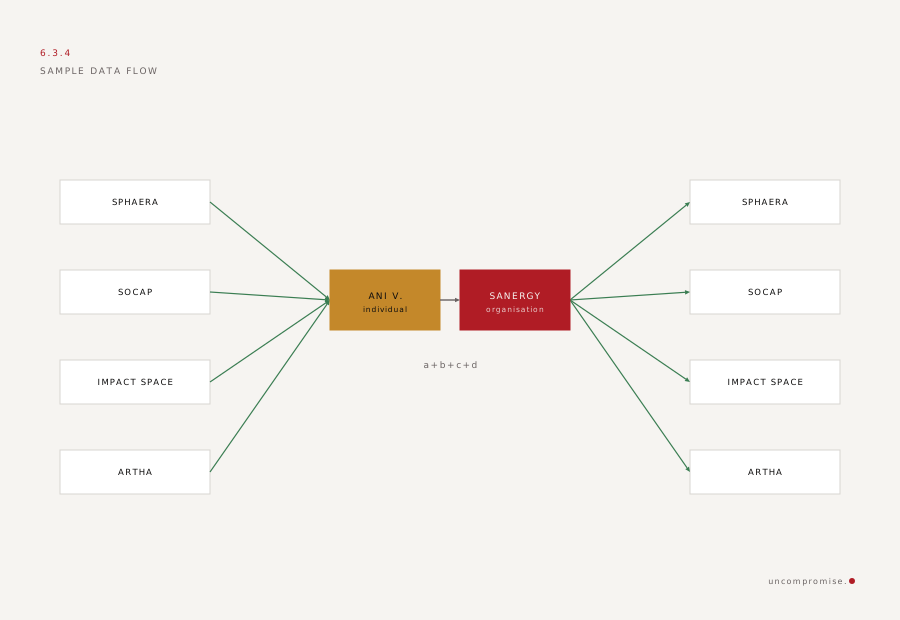
6.3.4
6.3.4
Sample Data Flow. every entity maintains control of its primary data; value created by others is leveraged, not captured secure only what is genuinely proprietary — liberate the rest
Sample Data Flow. every entity maintains control of its primary data; value created by others is leveraged, not captured secure only what is genuinely proprietary — liberate the rest
6.4
6.4
Physical Design
Physical Design
6.4.1 Physical design elements
6.4.1 Physical design elements
Citizen centered · Ubiquitous · Investible · Equitable · Distributed · Modular · Interoperable · Measurable · Adaptive · Scalable
Citizen centered · Ubiquitous · Investible · Equitable · Distributed · Modular · Interoperable · Measurable · Adaptive · Scalable
6.4.2 Physical design descriptions
6.4.2 Physical design descriptions
Citizen-centric: Citizen-centric design means designing for the needs of the individual participants and recognising their sovereignty and agency. By placing the human individual at the centre of the design experience, we ensure the design of a system that transcends organisational and political boundaries.
Citizen-centric: Citizen-centric design means designing for the needs of the individual participants and recognising their sovereignty and agency. By placing the human individual at the centre of the design experience, we ensure the design of a system that transcends organisational and political boundaries.
Equitable: All participation in the framework must be appropriately recognised, attributed, and valued, with participation in the governance of the framework in situ commensurate with one’s level of experience, investment, and/or risk.
Equitable: All participation in the framework must be appropriately recognised, attributed, and valued, with participation in the governance of the framework in situ commensurate with one’s level of experience, investment, and/or risk.
Adaptive: We are not going to get this perfectly right before we begin. Being adaptive means focusing on the development of minimum viable agreements and a minimum viable product, and iterating forward on the basis of user feedback.
Adaptive: We are not going to get this perfectly right before we begin. Being adaptive means focusing on the development of minimum viable agreements and a minimum viable product, and iterating forward on the basis of user feedback.
Distributed: The centralisation of data is one of the primary causes of dysfunction within this market. We favour a decentralised approach to both data sharing, and platform interactions, utilising technologies such as holochain to validate value creation.
Distributed: The centralisation of data is one of the primary causes of dysfunction within this market. We favour a decentralised approach to both data sharing, and platform interactions, utilising technologies such as holochain to validate value creation.
Ubiquitous: Network participants should be able to interact with the network regardless of physical or digital location, technology, bandwidth or other factors unique to their context. Further, they should be able to meaningfully interact with the entire system from any of the platforms involved.
Ubiquitous: Network participants should be able to interact with the network regardless of physical or digital location, technology, bandwidth or other factors unique to their context. Further, they should be able to meaningfully interact with the entire system from any of the platforms involved.
Modular: By developing an ecosystem comprised of multiple external platforms, each with their own business model, the components can be designed to work together, or alone, with equal effectiveness. This also minimises risk, by permitting modules to be swapped out as required.
Modular: By developing an ecosystem comprised of multiple external platforms, each with their own business model, the components can be designed to work together, or alone, with equal effectiveness. This also minimises risk, by permitting modules to be swapped out as required.
Scalable: Most ‘development’ technology platforms are designed for use in high-bandwidth, high-computing power environments, with reliable network and power access. This excludes many citizens from actively participating in, and benefiting from, the framework. For the framework to be scalable it has to work in low bandwidth settings, and allow for asynchronous operation.
Scalable: Most ‘development’ technology platforms are designed for use in high-bandwidth, high-computing power environments, with reliable network and power access. This excludes many citizens from actively participating in, and benefiting from, the framework. For the framework to be scalable it has to work in low bandwidth settings, and allow for asynchronous operation.
Interoperable: The platform, and its data, must be interoperable with all other adjacent and overlapping platforms and databases. This requires data protocols and standards, including universal taxonomies (see below), as well as the design of APIs as a functional requirement.
Interoperable: The platform, and its data, must be interoperable with all other adjacent and overlapping platforms and databases. This requires data protocols and standards, including universal taxonomies (see below), as well as the design of APIs as a functional requirement.
Measurable: The system must be designed in such a way that the flow of value is quantifiable, supporting better sense-making, decision-making and capital flow.
Measurable: The system must be designed in such a way that the flow of value is quantifiable, supporting better sense-making, decision-making and capital flow.
Investible: Monetary value must be able to be assigned to the value created within the framework. This is the only way in which the necessary level of financial capital can be brought to bear on wicked problems.
Investible: Monetary value must be able to be assigned to the value created within the framework. This is the only way in which the necessary level of financial capital can be brought to bear on wicked problems.
6.5
6.5
Market Network Prototype
Market Network Prototype
Prototyping an SDG6 market network
Prototyping an SDG6 market network
A number of aligned partners are already working to bring form to a scale expression of a Market Network, focused on SDG6 - Water, sanitation and hygiene for all. The parties referenced below have agreed, in practice, or in principal, to share data in order to accelerate the realisation of this goal.
A number of aligned partners are already working to bring form to a scale expression of a Market Network, focused on SDG6 - Water, sanitation and hygiene for all. The parties referenced below have agreed, in practice, or in principal, to share data in order to accelerate the realisation of this goal.
While we are not executing on the full scope of this vision - it will take a significant investment to digitise the entire framework - our frustration with the business-as-usual of change, and the seeming lack of urgency it demonstrates, demand we take action.
While we are not executing on the full scope of this vision - it will take a significant investment to digitise the entire framework - our frustration with the business-as-usual of change, and the seeming lack of urgency it demonstrates, demand we take action.
By nature, a Market Network is constantly evolving, and so while we have a number of confirmed partnerships, we continue to seek the development of mutually supported relationships with actors in the WASH market.
By nature, a Market Network is constantly evolving, and so while we have a number of confirmed partnerships, we continue to seek the development of mutually supported relationships with actors in the WASH market.
Identified Partners
Identified Partners
Sphaera
Sphaera
Artha Platform
Artha Platform
Kellogg Consulting
Kellogg Consulting
Impact Space
Impact Space
Non-Identified Partners
Non-Identified Partners
Major US Foundation
Major US Foundation
Global IP Registry
Global IP Registry
Global Network of Engineers
Global Network of Engineers
Global Network of Sanitation Practitioners
Global Network of Sanitation Practitioners
Section 7
Section 7
Conclusion
Conclusion
Conclusion
7.1
7.1
Conclusion
Conclusion
Addressing the most urgent issues of our time is, as we said at the beginning, an activity that hundreds of millions of people are engaged with on a daily basis. From girl guides selling cookies, to local food entrepreneurs, billion dollar green cleaning companies, and international aid organisations tackling the refugee crisis, there is no question that humanity is increasingly engaged with finding ways to live more peacefully, equitably, and lovingly.
Addressing the most urgent issues of our time is, as we said at the beginning, an activity that hundreds of millions of people are engaged with on a daily basis. From girl guides selling cookies, to local food entrepreneurs, billion dollar green cleaning companies, and international aid organisations tackling the refugee crisis, there is no question that humanity is increasingly engaged with finding ways to live more peacefully, equitably, and lovingly.
This document, while it takes the sword to many of the ways in which we work in service to humanity, is not intended to diminish the importance of the work already being done. If anything, it is to propose a path to elevating it, such that, collectively, we are able to create a better world for all.
This document, while it takes the sword to many of the ways in which we work in service to humanity, is not intended to diminish the importance of the work already being done. If anything, it is to propose a path to elevating it, such that, collectively, we are able to create a better world for all.
Like you, we are inspired by all that has been achieved, and frustrated by the gaps that still remain.
Like you, we are inspired by all that has been achieved, and frustrated by the gaps that still remain.
Solving wicked problems is no small task, we know, and we are grateful to all who are contributing their time, talent, and resources to ensuring a thrivable future for not only our species, but all species. Further, while some are looking to the stars for answers - and we laud their efforts - we are looking to the ground beneath our feet.
Solving wicked problems is no small task, we know, and we are grateful to all who are contributing their time, talent, and resources to ensuring a thrivable future for not only our species, but all species. Further, while some are looking to the stars for answers - and we laud their efforts - we are looking to the ground beneath our feet.
By 2030 there will be close to 8.5 billion people living on earth. All of them have their own lives to live, their own stories to write, their own destinies to fulfil. And yet, for too long, we have accepted the unnecessary reality that some, more than others, will have access to healthcare, housing, education, and a compelling future for themselves and their loved ones. We have become inured to the true cost of current systems, and have, to a certain extent, lost our urgency as we talk increasingly in abstractions in order that we can not only understand the true scope of the problem, but avoid being emotionally crippled by the awful realities of human suffering and environmental degradation that we seek to address.
By 2030 there will be close to 8.5 billion people living on earth. All of them have their own lives to live, their own stories to write, their own destinies to fulfil. And yet, for too long, we have accepted the unnecessary reality that some, more than others, will have access to healthcare, housing, education, and a compelling future for themselves and their loved ones. We have become inured to the true cost of current systems, and have, to a certain extent, lost our urgency as we talk increasingly in abstractions in order that we can not only understand the true scope of the problem, but avoid being emotionally crippled by the awful realities of human suffering and environmental degradation that we seek to address.
Our hope, in not only writing this document, but in continuing to forge partnerships with like minded individuals and organisations, is to explore how best we can make change at the scale and pace required. Clearly we believe that better systems are a significant part of the answer.
Our hope, in not only writing this document, but in continuing to forge partnerships with like minded individuals and organisations, is to explore how best we can make change at the scale and pace required. Clearly we believe that better systems are a significant part of the answer.
More importantly, however, is a more truthful connection with ourselves, each other, and the world at large. For it is only in honestly acknowledging that it is love, empathy and compassion that drives us to action, that we might make the necessary behavioural changes that will supercharge these systems
More importantly, however, is a more truthful connection with ourselves, each other, and the world at large. For it is only in honestly acknowledging that it is love, empathy and compassion that drives us to action, that we might make the necessary behavioural changes that will supercharge these systems
Cameron Burgess, Astrid Scholz, Arthur Wood & Audrey Selian San Francisco, CA | Portland, OR | Geneva, Switzerland · March 1, 2018
Cameron Burgess, Astrid Scholz, Arthur Wood & Audrey Selian San Francisco, CA | Portland, OR | Geneva, Switzerland · March 1, 2018
7.2
7.2
Get Involved
Get Involved
A number of individuals and organisations have both declared their intent, and begun the process of collaborating on the design of an open, modular, decentralised, digital architecture for solving wicked problems.
A number of individuals and organisations have both declared their intent, and begun the process of collaborating on the design of an open, modular, decentralised, digital architecture for solving wicked problems.
Some of those organisations can be found referenced on the Social Data Commons website.
Some of those organisations can be found referenced on the Social Data Commons website.
Others have been referenced on the WASH Market Network page, and still more will become visible over time as we continue to prototype this approach.
Others have been referenced on the WASH Market Network page, and still more will become visible over time as we continue to prototype this approach.
We are a long way from done, however. Like all humans, we are limited by both what and who we know, subject to our own confirmation bias, and patently unaware of what we don’t know.
We are a long way from done, however. Like all humans, we are limited by both what and who we know, subject to our own confirmation bias, and patently unaware of what we don’t know.
“We hold true to the notion that the smartest person in the room, is the room.”
“We hold true to the notion that the smartest person in the room, is the room.”
“We hold true to the notion that the smartest person in the room, is the room.”
And that, if anything, is the fundamental premise of this paper
To that end, the following page summarises some of the issues we know we have yet to address, absent those we don’t even know to consider. We need feedback, challenges, and hard questions. If you would like to contribute to this exploration, and explore how we can break down the silos to massively increase our impact, please get in touch.
To that end, the following page summarises some of the issues we know we have yet to address, absent those we don’t even know to consider. We need feedback, challenges, and hard questions. If you would like to contribute to this exploration, and explore how we can break down the silos to massively increase our impact, please get in touch.
Acknowledgements
Acknowledgements
This document has been informed by thousands of hours of experience, consultations and conversations over many decades.
This document has been informed by thousands of hours of experience, consultations and conversations over many decades.
We are particularly grateful to the following people who have been generous with their time and mindshare in reviewing and refining these ideas:
We are particularly grateful to the following people who have been generous with their time and mindshare in reviewing and refining these ideas:
Sam Caplan - Fluxx
Sam Caplan - Fluxx
Alf Martin Johansen - Induct Software
Alf Martin Johansen - Induct Software
Kevin Jones - Good Capital Project
Kevin Jones - Good Capital Project
Avary Kent - Conveners
Avary Kent - Conveners
Jean Russell - Holochain
Jean Russell - Holochain
7.3
7.3
Further Research
Further Research
Area
Area
Issue
Issue
Opinion
Opinion
Legal structures
Legal structures
A legal form and jurisdiction for the central organising entity of a Market Network must be established prior to successful deployment of a scale model.
A legal form and jurisdiction for the central organising entity of a Market Network must be established prior to successful deployment of a scale model.
There are likely to be three layers required, potentially a co-operative at the core, with a version of a mutual entity established for project coordination.
There are likely to be three layers required, potentially a co-operative at the core, with a version of a mutual entity established for project coordination.
Privacy, copyright, and data security
Privacy, copyright, and data security
Individual platforms, sponsors and stakeholders have legally binding agreements with users and members.
Individual platforms, sponsors and stakeholders have legally binding agreements with users and members.
Liberate data, and return control of universal and common data to the individual via holochain
Liberate data, and return control of universal and common data to the individual via holochain
Fragmented data
Fragmented data
Inconsistent social sign on and data collection protocols create incoherent data sets that cannot be normalised.
Inconsistent social sign on and data collection protocols create incoherent data sets that cannot be normalised.
Agree to data standards; utilise personal and organisational holochain to provision all non-unique data
Agree to data standards; utilise personal and organisational holochain to provision all non-unique data
Disagreement on data standards and protocols
Disagreement on data standards and protocols
Data collection, classification and storage protocols are inconsistent, and inhibit sharing, collaboration and scale.
Data collection, classification and storage protocols are inconsistent, and inhibit sharing, collaboration and scale.
Key actors to declare and adopt standard taxonomies & data collection protocols, and lead by example.
Key actors to declare and adopt standard taxonomies & data collection protocols, and lead by example.
Lack of coherence in reporting & metrics
Lack of coherence in reporting & metrics
Given that there is no universal impact standard, it is almost impossible to measure individual, let alone collective impact
Given that there is no universal impact standard, it is almost impossible to measure individual, let alone collective impact
Declare an impact standard, and then test this standard against the value proposition.
Declare an impact standard, and then test this standard against the value proposition.
Identity
Identity
Verifiable individual and organisational identities are necessary for the functioning of a market network
Verifiable individual and organisational identities are necessary for the functioning of a market network
While we are investigating the various options, it’s clear that we need an identity solution that is apolitical, universal, and scalable.
While we are investigating the various options, it’s clear that we need an identity solution that is apolitical, universal, and scalable.
7.3 — Further research
7.4
7.4
Authors
Authors
As mentioned in the notes to this document, we are standing on the shoulders of giants, who in turn are standing on the shoulders of giants … ad infinitum.
As mentioned in the notes to this document, we are standing on the shoulders of giants, who in turn are standing on the shoulders of giants … ad infinitum.
The co-authors of this document come from varied backgrounds in creating social impact. We are bullish on collaboration, and firmly believe that addressing the Sustainable Development Goals is one of the greatest challenges, and opportunities, of our time.
The co-authors of this document come from varied backgrounds in creating social impact. We are bullish on collaboration, and firmly believe that addressing the Sustainable Development Goals is one of the greatest challenges, and opportunities, of our time.
If you would like to explore the concepts we’ve discussed, or are seeking an interview with one of the authors, please get in touch with this document’s lead author, Cameron Burgess. Alternatively, you can reach each of the authors through the links provided.
If you would like to explore the concepts we’ve discussed, or are seeking an interview with one of the authors, please get in touch with this document’s lead author, Cameron Burgess. Alternatively, you can reach each of the authors through the links provided.
Cameron Burgess
Cameron Burgess
Managing Partner Uncompromise
Managing Partner Uncompromise
Astrid Scholz, Ph.D.
Astrid Scholz, Ph.D.
Managing Partner Sphaera
Managing Partner Sphaera
Arthur Wood
Arthur Wood
Founding Partner Total Impact Capital
Founding Partner Total Impact Capital
Audrey Selian, Ph.D.
Audrey Selian, Ph.D.
Co-Founder Artha Networks Inc.
Co-Founder Artha Networks Inc.
“Let’s work better together.”
“Let’s work better together.”
“Let’s work better together.”
Further reading
Further reading
uncompromise · From Billions to Trillions © 2020 Cameron Burgess, Astrid Scholz, Arthur Wood, Audrey Selian · Copyright to the authors, separately and jointly · Written in International English · First published March 2018 · Revised March 2020 · Republished 2026
© 2026 Uncompromise Pty Ltd. All Rights Reserved · Pau, France
© 2026 Uncompromise Pty Ltd. All Rights Reserved · Pau, France
© 2026 Uncompromise Pty Ltd. All Rights Reserved · Pau, France