Report — Armillaria & COBI — 2022
Report — Armillaria & COBI — 2022
A rising tide lifts all boats
A rising tide lifts all boats
A rising tide lifts all boats
How mobilising knowledge between marine conservation organisations can support large-scale marine conservation outcomes in Latin America & the Caribbean.
How mobilising knowledge between marine conservation organisations can support large-scale marine conservation outcomes in Latin America & the Caribbean.
How mobilising knowledge between marine conservation organisations can support large-scale marine conservation outcomes in Latin America & the Caribbean.
Authors
Cameron Burgess · Armillaria · Stuart Fulton · COBI
Contributors
Madelynn Martiniere · Astrid Scholz · Agon Cecilia · Scott Morris · Simon Grant
Dated
1 June 2022
Contents
Contents
Stakeholder roles
Stakeholder roles
Digital infrastructure
Data integrity
Data integrity
Data sovereignty
Data sovereignty
Conclusion
Appendices
Contributors
Contributors
Glossary
Glossary
SDG 14 targets
SDG 14 targets
Publisher’s note — Cameron Burgess, 2026 · not part of the original report
Publisher’s note — Cameron Burgess, 2026 · not part of the original report
This report was written with Stuart Fulton of COBI and published on 1 June 2022. It is reproduced here in full, as written.
This report was written with Stuart Fulton of COBI and published on 1 June 2022. It is reproduced here in full, as written.
It takes the argument that runs through Billions to Trillions and Project 1800 — that the binding constraint on collective action is infrastructure, not intent — and applies it to marine conservation organisations in Latin America and the Caribbean, and the small-scale fishing communities they work alongside.
It takes the argument that runs through Billions to Trillions and Project 1800 — that the binding constraint on collective action is infrastructure, not intent — and applies it to marine conservation organisations in Latin America and the Caribbean, and the small-scale fishing communities they work alongside.
Pau, France
Pau, France
Introduction
Introduction
“Although the degradation of marine ecosystems is a worldwide phenomenon, it is especially relevant in the Latin America and the Caribbean region, where geographic patterns of human habitation and economic development have greatly magnified the importance of islands, beaches, coastlines and marine areas.”
“Although the degradation of marine ecosystems is a worldwide phenomenon, it is especially relevant in the Latin America and the Caribbean region, where geographic patterns of human habitation and economic development have greatly magnified the importance of islands, beaches, coastlines and marine areas.”
Agardy et al. 2018 — Coastal and Marine Ecosystems and the Ecotourism Sector in Latin America and the Caribbean
According to the UNDP, the oceans contribute around US$3 trillion per year to the global market economy, or about 5 per cent of GDP — with fisheries and aquaculture contributing about 260 million jobs and US$100 billion per year. More important than this, of course, is the simple fact that over three billion people depend on marine and coastal biodiversity for their livelihoods.
According to the UNDP, the oceans contribute around US$3 trillion per year to the global market economy, or about 5 per cent of GDP — with fisheries and aquaculture contributing about 260 million jobs and US$100 billion per year. More important than this, of course, is the simple fact that over three billion people depend on marine and coastal biodiversity for their livelihoods.
Yet our oceans are at significant risk due to a range of ocean management policy and market failures leading to over-exploitation of fisheries, pollution, introduction of invasive species, habitat loss and ocean acidification.
Yet our oceans are at significant risk due to a range of ocean management policy and market failures leading to over-exploitation of fisheries, pollution, introduction of invasive species, habitat loss and ocean acidification.
Marine conservation is a multi-trillion dollar, multi-national, multi-generational, and multi-sectoral issue, influenced by a vast array of external factors — such as climate change — that are neither within the remit, nor the scope, of marine conservation organisations to address.
Marine conservation is a multi-trillion dollar, multi-national, multi-generational, and multi-sectoral issue, influenced by a vast array of external factors — such as climate change — that are neither within the remit, nor the scope, of marine conservation organisations to address.
But while direct social, legal, financial and ecological interventions into coastal communities and marine ecosystems are essential, MCOs frequently lack the incentives and mechanisms to work together at scale to affect the variety of upstream problems that impact the success of our work.
But while direct social, legal, financial and ecological interventions into coastal communities and marine ecosystems are essential, MCOs frequently lack the incentives and mechanisms to work together at scale to affect the variety of upstream problems that impact the success of our work.
On the incentives side, while it’s clear that those of us working in Latin America and the Caribbean are philosophically aligned, siloed funding means that we are frequently competing with each other for resources, with few if any opportunities for large-scale multi-stakeholder initiatives in which MCOs are primarily responsible for directing how funds are used.
On the incentives side, while it’s clear that those of us working in Latin America and the Caribbean are philosophically aligned, siloed funding means that we are frequently competing with each other for resources, with few if any opportunities for large-scale multi-stakeholder initiatives in which MCOs are primarily responsible for directing how funds are used.
Further, even if we were to suddenly gain access to all of the resources we need, the mechanisms by which we can better connect, collaborate and share resources are deficient. Digital technologies, while a boon to organisational productivity, have not been designed to interoperate, meaning that the value we collect, curate and create is not able to be shared, discovered, adopted and adapted with ease.
Further, even if we were to suddenly gain access to all of the resources we need, the mechanisms by which we can better connect, collaborate and share resources are deficient. Digital technologies, while a boon to organisational productivity, have not been designed to interoperate, meaning that the value we collect, curate and create is not able to be shared, discovered, adopted and adapted with ease.
And that, quite frankly, is the principal impediment to our collective success
And that, quite frankly, is the principal impediment to our collective success
The purpose of this document is to provide an overview of an alternative approach to how we could use digital technologies in service to marine conservation outcomes in Latin America and the Caribbean. It serves as an invitation to explore how we might all work better, together, and encourages our various funders, stakeholders and supporters to appreciate that while we are all working within institutional containers, we are bound together as scientists, conservationists and activists in our desire to protect and restore our marine ecosystems as a matter of considerable urgency.
The purpose of this document is to provide an overview of an alternative approach to how we could use digital technologies in service to marine conservation outcomes in Latin America and the Caribbean. It serves as an invitation to explore how we might all work better, together, and encourages our various funders, stakeholders and supporters to appreciate that while we are all working within institutional containers, we are bound together as scientists, conservationists and activists in our desire to protect and restore our marine ecosystems as a matter of considerable urgency.
Challenge
Challenge
“Our oceans are being degraded by human activities that harm marine life, undermine coastal communities and negatively affect human health.”
“Our oceans are being degraded by human activities that harm marine life, undermine coastal communities and negatively affect human health.”
United Nations Environment Programme, 2022
Challenge
Challenge
Challenge
The challenges in marine conservation are vast, and substantially larger than any individual, organisation or community can solve alone. Yet failure to address these challenges will have devastating consequences upon the marine environment, and for all those who rely upon it for their survival.
The challenges in marine conservation are vast, and substantially larger than any individual, organisation or community can solve alone. Yet failure to address these challenges will have devastating consequences upon the marine environment, and for all those who rely upon it for their survival.
Over the past several years we have identified that MCOs are being adversely impacted by a lack of coherence, capacity, cooperation, and coordination amongst our various stakeholders. Specifically, the lack of:
Over the past several years we have identified that MCOs are being adversely impacted by a lack of coherence, capacity, cooperation, and coordination amongst our various stakeholders. Specifically, the lack of:
Shared purpose, responsibility and action. While we are working in general towards beneficial marine outcomes, there is a lack of agreement on shared priorities, accountability, and activities.
Shared purpose, responsibility and action. While we are working in general towards beneficial marine outcomes, there is a lack of agreement on shared priorities, accountability, and activities.
Control over marine conservation outcomes. Political and economic priorities are not always aligned with ecological ones; by not working together at scale, governments and funders shape our outcomes.
Control over marine conservation outcomes. Political and economic priorities are not always aligned with ecological ones; by not working together at scale, governments and funders shape our outcomes.
Effective government participation in programs. Governments are resourced, influential, and critical for policy change; working effectively with governments requires multi-stakeholder coordination.
Effective government participation in programs. Governments are resourced, influential, and critical for policy change; working effectively with governments requires multi-stakeholder coordination.
Consistent approaches to responsible fisheries practice. There are a variety of related frameworks being implemented in a variety of ways, making it difficult to accurately gauge their effectiveness.
Consistent approaches to responsible fisheries practice. There are a variety of related frameworks being implemented in a variety of ways, making it difficult to accurately gauge their effectiveness.
Appropriate legal frameworks across differing regulatory environments. Legislation affecting marine conservation outcomes is inconsistent, as are the legal systems and structures at our disposal.
Appropriate legal frameworks across differing regulatory environments. Legislation affecting marine conservation outcomes is inconsistent, as are the legal systems and structures at our disposal.
Institutional and sectoral financial and operational capacity. There is simply not enough funding, nor robustness in our operational infrastructure, to achieve critical objectives.
Institutional and sectoral financial and operational capacity. There is simply not enough funding, nor robustness in our operational infrastructure, to achieve critical objectives.
In short, MCOs in Latin America and the Caribbean lack the necessary incentives and mechanisms to work effectively together at the speed and scale necessary to restore the health of our oceans
In short, MCOs in Latin America and the Caribbean lack the necessary incentives and mechanisms to work effectively together at the speed and scale necessary to restore the health of our oceans
As an MCO ourselves, we have experienced each of these issues firsthand, as have many of our partners. Yet without the ability to work together, long-term and at scale, our individual efforts run the risk of being cosmetic at best, or remedial at worst.
As an MCO ourselves, we have experienced each of these issues firsthand, as have many of our partners. Yet without the ability to work together, long-term and at scale, our individual efforts run the risk of being cosmetic at best, or remedial at worst.
One essential way in which we can overcome these challenges is by better sharing information across organisations — but this requires us to rethink how we use digital technology in our work, especially if we are to resolve the limitations to interoperability across the variety of tools we use on a daily basis.
One essential way in which we can overcome these challenges is by better sharing information across organisations — but this requires us to rethink how we use digital technology in our work, especially if we are to resolve the limitations to interoperability across the variety of tools we use on a daily basis.
Opportunity
Opportunity
“We have the knowledge, power and technology to put the ocean on a path to recovery. Together, we can identify solutions, scale up innovations and reverse this cycle of decline to bring about a sustainable ocean economy.”
“We have the knowledge, power and technology to put the ocean on a path to recovery. Together, we can identify solutions, scale up innovations and reverse this cycle of decline to bring about a sustainable ocean economy.”
Friends of Ocean Action, 21 July 2021
Like all of our peers, we believe there is a moral and ecological imperative to achieve marine conservation outcomes as swiftly as possible. However, as a marine conservation ecosystem, we collectively lack the adequate funding, capacity, and mandate to tackle the largest challenges in isolation.
Like all of our peers, we believe there is a moral and ecological imperative to achieve marine conservation outcomes as swiftly as possible. However, as a marine conservation ecosystem, we collectively lack the adequate funding, capacity, and mandate to tackle the largest challenges in isolation.
The core opportunity we envision is collectively mobilising knowledge, people and capital towards the resolution of marine ecosystem outcomes in Latin America and the Caribbean
The core opportunity we envision is collectively mobilising knowledge, people and capital towards the resolution of marine ecosystem outcomes in Latin America and the Caribbean
How can we, for instance, replicate and scale the successes of ecosystem initiatives such as we are seeing in the MesoAmerican Reef — including MAR Fund, The Nature Conservancy and CONANP, who designed a coral reef insurance policy — or the Caribbean Development Bank’s multiple projects impacting marine conservation in the region, including ”Financing the Blue Economy”? And at a smaller scale, how can we replicate and scale the successes of each of our organisations in a more cost- and time-effective manner?
How can we, for instance, replicate and scale the successes of ecosystem initiatives such as we are seeing in the MesoAmerican Reef — including MAR Fund, The Nature Conservancy and CONANP, who designed a coral reef insurance policy — or the Caribbean Development Bank’s multiple projects impacting marine conservation in the region, including ”Financing the Blue Economy”? And at a smaller scale, how can we replicate and scale the successes of each of our organisations in a more cost- and time-effective manner?
In fact, how can we learn from MCOs the world over, adapting their solutions for use in our particular context, and more rapidly addressing the myriad of challenges demanding our attention?
In fact, how can we learn from MCOs the world over, adapting their solutions for use in our particular context, and more rapidly addressing the myriad of challenges demanding our attention?
The focus of this report is not to advocate for any one of the aforementioned programs, but to propose an innovative infrastructure-first approach that focuses on developing shared standards, schemas and systems in order to enhance our capacity for collective impact.
The focus of this report is not to advocate for any one of the aforementioned programs, but to propose an innovative infrastructure-first approach that focuses on developing shared standards, schemas and systems in order to enhance our capacity for collective impact.
Tech-enabled, but not tech-reliant , this infrastructure could provide varying degrees of support for multiple marine conservation stakeholder groups and initiatives. Most significantly, it would not be owned or operated by a single entity, but would connect existing digital tools in such a way that we can combine our resources, as and when desired, in a more streamlined and strategically oriented way.
Tech-enabled, but not tech-reliant , this infrastructure could provide varying degrees of support for multiple marine conservation stakeholder groups and initiatives. Most significantly, it would not be owned or operated by a single entity, but would connect existing digital tools in such a way that we can combine our resources, as and when desired, in a more streamlined and strategically oriented way.
Stakeholders
Stakeholders
Stakeholders
Stakeholders
Stakeholders
We have identified five core stakeholder groups whose requirements must be considered in this work: communities, civil society, government, businesses, and consumers.
We have identified five core stakeholder groups whose requirements must be considered in this work: communities, civil society, government, businesses, and consumers.
Not surprisingly, these groups have their own unique, overlapping, and sometimes competing requirements, frequently resulting in quasi-institutional ‘meta silos’, in which normative patterns — including values, language, and socially endorsed or enforced behaviours such as the sharing or not of information across organisational boundaries — emerge.
Not surprisingly, these groups have their own unique, overlapping, and sometimes competing requirements, frequently resulting in quasi-institutional ‘meta silos’, in which normative patterns — including values, language, and socially endorsed or enforced behaviours such as the sharing or not of information across organisational boundaries — emerge.
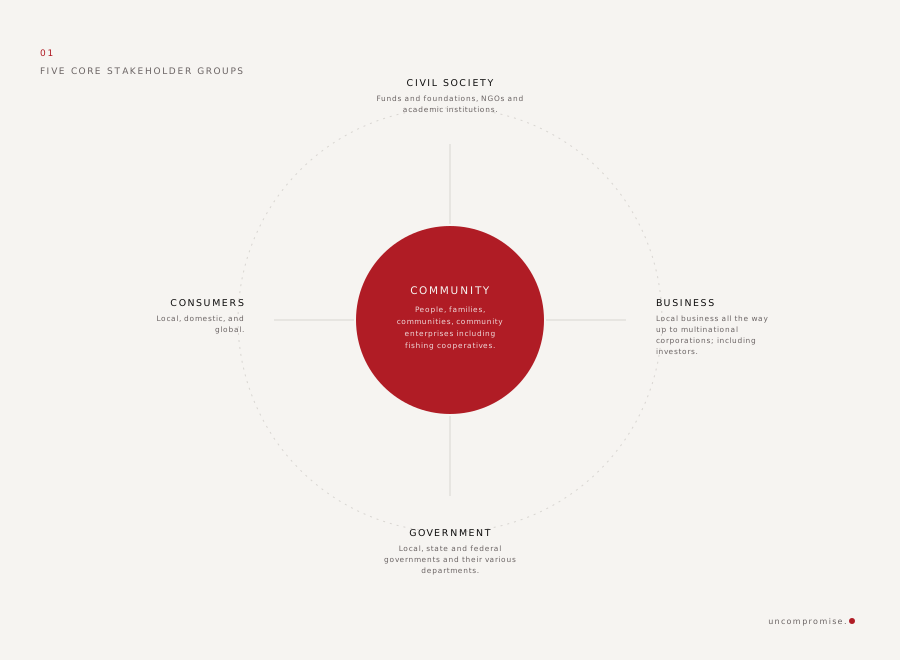
Figure 01 — Five core stakeholder groups
Figure 01 — Five core stakeholder groups
Community sits at the centre: people, families, communities, and community enterprises including fishing cooperatives. Around it, civil society, business, government and consumers — each with unique, overlapping, and sometimes competing requirements.
Community sits at the centre: people, families, communities, and community enterprises including fishing cooperatives. Around it, civil society, business, government and consumers — each with unique, overlapping, and sometimes competing requirements.
Stakeholders Roles
Stakeholders Roles
When it comes to classifying individual organisations, stakeholder groupings only represent one part of the picture. This is because the role they play in the ecosystem is of equal significance to their focus as an organisation.
When it comes to classifying individual organisations, stakeholder groupings only represent one part of the picture. This is because the role they play in the ecosystem is of equal significance to their focus as an organisation.
We believe that there are three distinct roles fulfilled by stakeholders within an ecosystem, into which any of our organisations could place their own identified stakeholder groups, producing a rich map of those within our ecosystem.
We believe that there are three distinct roles fulfilled by stakeholders within an ecosystem, into which any of our organisations could place their own identified stakeholder groups, producing a rich map of those within our ecosystem.
Contributors
Contributors
Entities contributing to the design and implementation of the system, including the fulfilment of operational roles — marine conservation organisations.
Entities contributing to the design and implementation of the system, including the fulfilment of operational roles — marine conservation organisations.
Partners
Partners
Entities that remain external to the system, but actively support it through knowledge, capital, or institutional resources — funders, governments, academics.
Entities that remain external to the system, but actively support it through knowledge, capital, or institutional resources — funders, governments, academics.
Participants
Participants
Any entity participating in the creation and transaction of value in the system — fishers.
Any entity participating in the creation and transaction of value in the system — fishers.
For example, while we might generally consider a funder to be a partner, it’s entirely possible that a specific funder may behave as a core contributor, and as such their requirements may need to be prioritised differently.
For example, while we might generally consider a funder to be a partner, it’s entirely possible that a specific funder may behave as a core contributor, and as such their requirements may need to be prioritised differently.
While the role we play in our ecosystem is of equal significance to our focus as an organisation, we must also understand what value an individual stakeholder has, and what they need, in order that we can design systems to facilitate their flow in service to the greater good.
While the role we play in our ecosystem is of equal significance to our focus as an organisation, we must also understand what value an individual stakeholder has, and what they need, in order that we can design systems to facilitate their flow in service to the greater good.
Assets & interests
Assets & interests
Assets & Interests
Assets & Interests
Assets & Interests
One of the most powerful uses of digital technology is in connecting assets and interests in order to facilitate their flow. In order to do this, however, it is essential to consistently categorise these assets and interests based on the type of value — the capital — they represent.
One of the most powerful uses of digital technology is in connecting assets and interests in order to facilitate their flow. In order to do this, however, it is essential to consistently categorise these assets and interests based on the type of value — the capital — they represent.
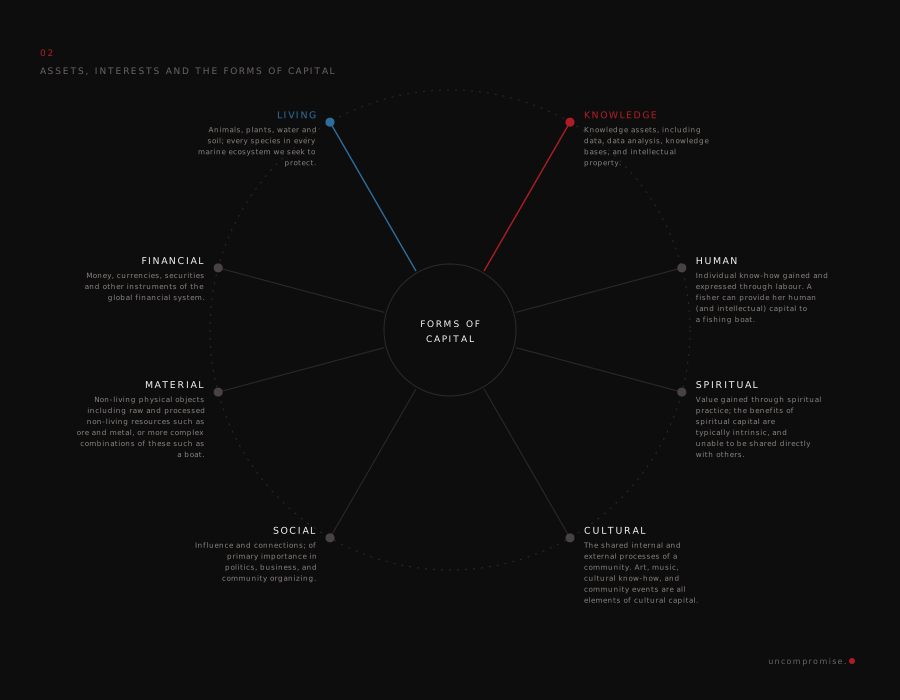
Figure 02 — Eight forms of capital
Figure 02 — Eight forms of capital
Knowledge capital is marked in red, living capital in blue — the two this report is principally concerned with. Adapted from the eight forms of capital as popularised in Regenerative Enterprise .
Knowledge capital is marked in red, living capital in blue — the two this report is principally concerned with. Adapted from the eight forms of capital as popularised in Regenerative Enterprise .
One of the most powerful assets we have is the knowledge capital trapped in our separate systems — especially given that knowledge is dynamic and ever-evolving, and the more frequently we share it, the more valuable it becomes
One of the most powerful assets we have is the knowledge capital trapped in our separate systems — especially given that knowledge is dynamic and ever-evolving, and the more frequently we share it, the more valuable it becomes
Given that we are all interested in better quality data to support our decision making, standardising how we codify our separate knowledge bases permits us to more immediately connect those assets and interests. Further, machine learning and artificial intelligence, which has already proven beneficial in a variety of marine conservation projects, can provide us with significantly more value when applied to the aggregate of our knowledge bases, rather than merely disconnected fragments.
Given that we are all interested in better quality data to support our decision making, standardising how we codify our separate knowledge bases permits us to more immediately connect those assets and interests. Further, machine learning and artificial intelligence, which has already proven beneficial in a variety of marine conservation projects, can provide us with significantly more value when applied to the aggregate of our knowledge bases, rather than merely disconnected fragments.
While it’s true that we are highly motivated to share our knowledge, and do so as frequently as possible, the absence of a coherent digital infrastructure that can organise and accelerate this sharing is an enormous gap that demands resolution.
While it’s true that we are highly motivated to share our knowledge, and do so as frequently as possible, the absence of a coherent digital infrastructure that can organise and accelerate this sharing is an enormous gap that demands resolution.
Part II
Part II
Digital infrastructure
Digital infrastructure
Digital infrastructure
Infrastructure
Infrastructure
Infrastructure
Infrastructure
Infrastructure
The most cost- and time-effective way to make knowledge more liquid and shareable is via digital infrastructure. This is not intended as a ”one platform to rule them all” solution, but involves the formal design and engineering of connections between previously unrelated tools, crossing organisational boundaries, in alignment with governing privacy laws.
The most cost- and time-effective way to make knowledge more liquid and shareable is via digital infrastructure. This is not intended as a ”one platform to rule them all” solution, but involves the formal design and engineering of connections between previously unrelated tools, crossing organisational boundaries, in alignment with governing privacy laws.
Surveys and discussions with our own stakeholders have revealed dozens of products and platforms in use. If we want our systems to be able to maximise the value of our collective knowledge, however, just building connections between them is not enough. We must agree on how we collect, categorise and store data, such that it meets the three principal requirements of integrity, sovereignty, and mobility .
Surveys and discussions with our own stakeholders have revealed dozens of products and platforms in use. If we want our systems to be able to maximise the value of our collective knowledge, however, just building connections between them is not enough. We must agree on how we collect, categorise and store data, such that it meets the three principal requirements of integrity, sovereignty, and mobility .
While it may be true that functional interoperability across platforms is rapidly emerging, core beliefs about data sovereignty — or the lack thereof — have informed the design, development and management of most technologies in use throughout the world today, resulting in extracted, fragmented, and stagnant data.
While it may be true that functional interoperability across platforms is rapidly emerging, core beliefs about data sovereignty — or the lack thereof — have informed the design, development and management of most technologies in use throughout the world today, resulting in extracted, fragmented, and stagnant data.
From our perspective, all digital infrastructure should be informed by a clear, concise, and compelling purpose, and operates at four distinct layers.
From our perspective, all digital infrastructure should be informed by a clear, concise, and compelling purpose, and operates at four distinct layers.
Products
Products
Commercially viable application of protocols, delivering value to its users.
Commercially viable application of protocols, delivering value to its users.
Programs
Programs
The software languages we are writing our code into.
The software languages we are writing our code into.
Protocols
Protocols
Shared language and agreements on how to utilize and distribute information.
Shared language and agreements on how to utilize and distribute information.
Processes
Processes
What we need to do in order to achieve our purpose.
What we need to do in order to achieve our purpose.
Systems
Systems
Systems
Systems
Systems
While there have been considerable technical advances that promise to make our individual and collective work both more efficient and effective, we cannot afford to abdicate responsibility for defining our requirements, and designing systems that address them, to the owners and providers of technology — no matter how well-intentioned they may seem.
While there have been considerable technical advances that promise to make our individual and collective work both more efficient and effective, we cannot afford to abdicate responsibility for defining our requirements, and designing systems that address them, to the owners and providers of technology — no matter how well-intentioned they may seem.
To that end, we consider four distinct and overlapping systems, each of which not only informs the others but helps to inform how technology can support interventions into all of them.
To that end, we consider four distinct and overlapping systems, each of which not only informs the others but helps to inform how technology can support interventions into all of them.
Social
Social
Systems that support the individual, family, community, and state.
Systems that support the individual, family, community, and state.
Legal
Legal
Systems that regulate the activities of individuals, organisations, and communities.
Systems that regulate the activities of individuals, organisations, and communities.
Financial
Financial
Systems that facilitate the flow of money to and between various stakeholders.
Systems that facilitate the flow of money to and between various stakeholders.
Ecological
Ecological
Includes all natural systems impacting the region of focus.
Includes all natural systems impacting the region of focus.
A considered reading of SDG 14 indicates that the goals could be broken down into these four categories as well.
A considered reading of SDG 14 indicates that the goals could be broken down into these four categories as well.

Figure 03 — Four systems over four layers
Figure 03 — Four systems over four layers
The four systems each intersect the four layers of digital infrastructure. Each system informs the others; none can be addressed in isolation. a considered reading of SDG 14 indicates the goals break down into these four categories as well
The four systems each intersect the four layers of digital infrastructure. Each system informs the others; none can be addressed in isolation. a considered reading of SDG 14 indicates the goals break down into these four categories as well
What we heard
What we heard
Systems — requirements
Systems — requirements
Systems — requirements
System
System
What we heard would be useful
What we heard would be useful
Ecological
Ecological
Externalities such as climate change are understood, measured with participatory science, and appropriate adaptive measures implemented · Ecosystem-based management supersedes single-species management for improved ecosystem outcomes · Traditional ecological knowledge and solutions are valued alongside western science, incorporated into decision-making processes, and shared for replication
Externalities such as climate change are understood, measured with participatory science, and appropriate adaptive measures implemented · Ecosystem-based management supersedes single-species management for improved ecosystem outcomes · Traditional ecological knowledge and solutions are valued alongside western science, incorporated into decision-making processes, and shared for replication
Legal
Legal
Development of legal forms that support co-ownership and co-governance for both individuals and organisations across multiple regulatory environments · Evolution of non-profit law and regulations to provide NGOs with more flexibility in establishing self-funding initiatives · Adopted or adapted data compliance frameworks serving all LAC jurisdictions
Development of legal forms that support co-ownership and co-governance for both individuals and organisations across multiple regulatory environments · Evolution of non-profit law and regulations to provide NGOs with more flexibility in establishing self-funding initiatives · Adopted or adapted data compliance frameworks serving all LAC jurisdictions
Social
Social
Fair and equal access to resources, reflecting traditional rights and customs · Effective stakeholder participation in resource management and decision making · Creation of simple, transparent processes that create trust between resource users, managers and decision makers · Highlighting the importance of small-scale fisheries as a key primary activity, and professionalisation of the sector
Fair and equal access to resources, reflecting traditional rights and customs · Effective stakeholder participation in resource management and decision making · Creation of simple, transparent processes that create trust between resource users, managers and decision makers · Highlighting the importance of small-scale fisheries as a key primary activity, and professionalisation of the sector
Financial
Financial
Access to long-term infrastructure funding that is separate and distinct from program and operations funding · Design of outcome funding that incentivises multi-stakeholder ecosystem interventions · Instantiation of investor funding opportunities into long-term, mutually beneficial projects
Access to long-term infrastructure funding that is separate and distinct from program and operations funding · Design of outcome funding that incentivises multi-stakeholder ecosystem interventions · Instantiation of investor funding opportunities into long-term, mutually beneficial projects
Table 01 — Requirements gathered across the four systems
Technical requirements
Technical requirements
Technical Requirements
Technical Requirements
Technical Requirements
It is clearly not an absence of will that stands in the way of cross-sector coordination, but the absence of systems, processes and tools designed for this purpose.
It is clearly not an absence of will that stands in the way of cross-sector coordination, but the absence of systems, processes and tools designed for this purpose.
With a focus on knowledge management over knowledge mobilisation, most of our systems have been informed by now-outmoded ideas about the ownership and control of data — both by us, and by the developers of the technology we use.
With a focus on knowledge management over knowledge mobilisation, most of our systems have been informed by now-outmoded ideas about the ownership and control of data — both by us, and by the developers of the technology we use.
In most organisations, knowledge is collected from a variety of sources, including differing individual and organisational stakeholders, through often unrelated products and platforms, and into a variety of disconnected data silos.
In most organisations, knowledge is collected from a variety of sources, including differing individual and organisational stakeholders, through often unrelated products and platforms, and into a variety of disconnected data silos.
In many cases, this knowledge is extracted — collected without appropriately recognising and compensating for its value — albeit unintentionally. Further, with most organisations operating in essentially the same way, the knowledge we have stored in our systems becomes highly fragmented , with no easy way to establish a reliable source of truth. Finally, given the different ways in which we classify and store these knowledge assets, they become stagnant , unable to move to where they are needed most.
In many cases, this knowledge is extracted — collected without appropriately recognising and compensating for its value — albeit unintentionally. Further, with most organisations operating in essentially the same way, the knowledge we have stored in our systems becomes highly fragmented , with no easy way to establish a reliable source of truth. Finally, given the different ways in which we classify and store these knowledge assets, they become stagnant , unable to move to where they are needed most.
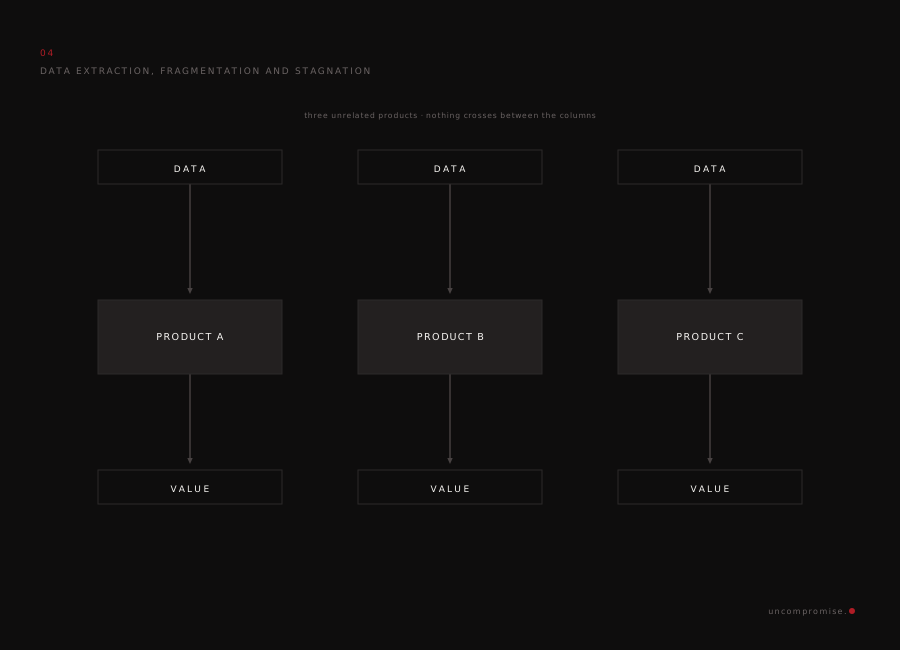
Figure 04 — Data extraction, fragmentation and stagnation
Figure 04 — Data extraction, fragmentation and stagnation
Data enters three unrelated products; value leaves three unrelated products. Nothing crosses between the columns. This is the current state, and it repeats across every organisation in the sector. Three further variants of this diagram appear in the source, showing the same structure under mobility, integrity and sovereignty conditions — see the build spec. knowledge is extracted, fragmented, and rendered stagnant
Data enters three unrelated products; value leaves three unrelated products. Nothing crosses between the columns. This is the current state, and it repeats across every organisation in the sector. Three further variants of this diagram appear in the source, showing the same structure under mobility, integrity and sovereignty conditions — see the build spec. knowledge is extracted, fragmented, and rendered stagnant
Data extraction, fragmentation and stagnation are addressable, however, by designing for mobility , integrity , and sovereignty .
Data extraction, fragmentation and stagnation are addressable, however, by designing for mobility , integrity , and sovereignty .
Data mobility
Data mobility
Data Mobility
Data Mobility
Data Mobility
Marine conservation data locked in a vault, whether by accident or design, has limited utility. It is only in sharing this data that it has the potential to provide value to others. Therefore, mobilising knowledge is essential if we are to both maximise the value of the knowledge assets we already hold, and contribute to the growth and evolution of our wider body of knowledge.
Marine conservation data locked in a vault, whether by accident or design, has limited utility. It is only in sharing this data that it has the potential to provide value to others. Therefore, mobilising knowledge is essential if we are to both maximise the value of the knowledge assets we already hold, and contribute to the growth and evolution of our wider body of knowledge.
However, while sharing knowledge directly between people is relatively straightforward — we already do this in the form of meetings, conferences, reports, and digital communications — our current mechanisms for doing so are simply not scalable. And while technology holds the promise of limitless scale, there is simply no way to mobilise data through and between multiple disparate systems without agreements on what data we want to share, how we classify it, and the mechanisms we can use to keep it accurate and up to date.
However, while sharing knowledge directly between people is relatively straightforward — we already do this in the form of meetings, conferences, reports, and digital communications — our current mechanisms for doing so are simply not scalable. And while technology holds the promise of limitless scale, there is simply no way to mobilise data through and between multiple disparate systems without agreements on what data we want to share, how we classify it, and the mechanisms we can use to keep it accurate and up to date.
If the value created through the aggregation and analysis of this data does not flow to its rightful originators, we are exacerbating the economic disparity already being experienced in small-scale fishing communities
If the value created through the aggregation and analysis of this data does not flow to its rightful originators, we are exacerbating the economic disparity already being experienced in small-scale fishing communities

Figure 05 — Data mobility
Figure 05 — Data mobility
Data moves between systems where there are agreements on what is shared, how it is classified, and how it is kept accurate and up to date. mobilising knowledge is essential if we are to maximise the value of what we already hold sharing between people is straightforward; sharing between systems is not
Data moves between systems where there are agreements on what is shared, how it is classified, and how it is kept accurate and up to date. mobilising knowledge is essential if we are to maximise the value of what we already hold sharing between people is straightforward; sharing between systems is not
Data integrity
In order for data to have integrity, it must fulfil two principal requirements — accuracy (is the data accurate and complete, or does it require recalibration to become so?) and modernity (is it up to date, or was the measurement taken at some point in the past, and should be re-measured in order to ensure its validity?).
Historical data may still meet either requirement, if the information collected at the time is considered to be sufficiently accurate based upon how it was gathered, or if it relates to something relatively static — such as the latitude and longitude of a geographical landmark.
When it comes to knowledge mobilisation, and the combining of data from multiple sources to support more effective decision making, data integrity is essential, as it helps to establish both a reliable source of truth for this data in the present day, as well as reliable sources of truth about historical data that can help with analysis and predictions.
Data sovereignty has an important role to play in maintaining data integrity, especially with data related to individuals or organisations who have a rightful claim to their own data. However, without appropriate incentives or mechanisms for the sovereign data holder to keep their information accurate and up to date, the integrity of this data will remain questionable.

Figure 06 — Data integrity
Accuracy and modernity, maintained by a return flow from the value created back to the data held. if data is not accurate and up to date, there is limited value in mobilising it
Data sovereignty
In our interactions with most digital technologies, we knowingly or unknowingly trade our data for the value we believe we will receive, without adequate care or consideration for how our data is being used. Up until relatively recently, however, the issue of sovereignty has not been core for most, leaving platform operators to implement extractive data collection and revenue models.
We believe that each individual entity must retain ownership — sovereignty — and control — agency — of their own data, and be able to expressly grant permission for its use, in order that they might participate in the value created from it
From a marine conservation perspective, this means that value is being created by and for those who are so often on the front lines in frontier and emerging markets: small-scale fishing communities, including fishers and process workers themselves. Further, if we want this data to have integrity, and be able to analyse how it changes over time, we must ensure that it can be easily maintained and updated by those to whom it either legitimately belongs, or who can be relied upon to maintain it.
While there is ostensibly much work being done within Web3 to address the issues of data sovereignty, we believe it is essential to note that the fundamental lack of interoperability across the variety of distributed ledger systems is a fundamental failure of systems design that will do little to address the issues of fragmentation and stagnation in the near term. Frankly, finding more effective ways to mobilise the data already living in our separate centralised systems is of significantly more value to all stakeholders in the near term.
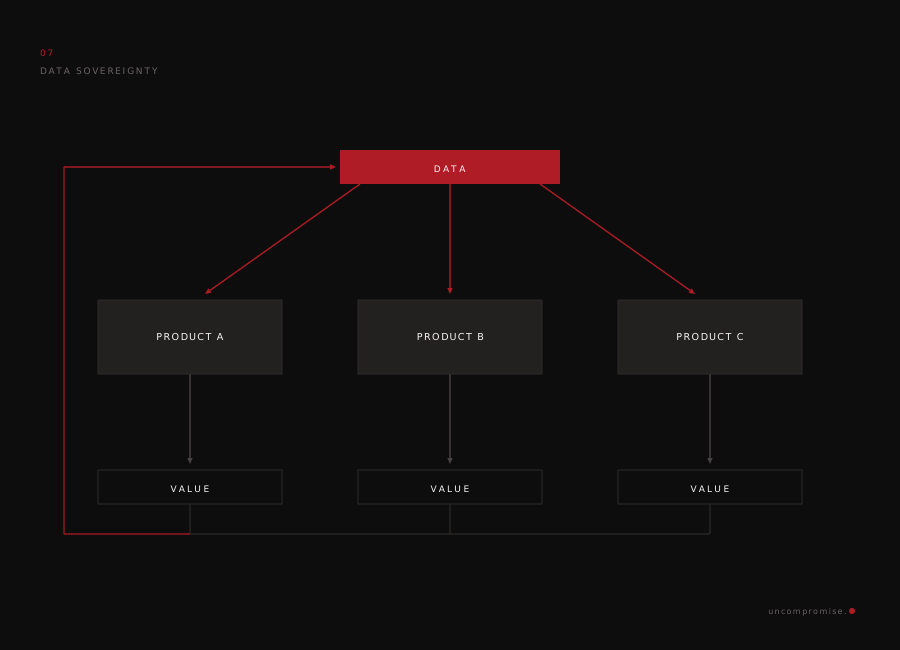
Figure 07 — Data sovereignty
Each entity retains ownership and control of its own data, and expressly grants permission for its use, in order that it might participate in the value created from it. value returns to the sovereign holder value is created by and for those on the front lines
Data equity
“There is a lot of talk about data collection … But I think we also really need to talk about how we make sure this data gets put into the right hands — enabling decision-makers to get access to that data and possibly also enabling citizens to better track and hold our decision-makers accountable. Making the whole data system more transparent is an essential part of that.”
Nina Jensen, Chief Executive Officer, REV Ocean
Digital infrastructure that embraces all three principles of mobility, integrity, and sovereignty provides an essential framework by which our collective knowledge can provide the most value to the most people, most of the time.
If we want to maximise the value of this knowledge, however — both to its owners and to our sector — we must prioritise the creation of standards that support ways in which it can become easier to share, discover and utilise, regardless of the limitations of our technology.
Standards
Standards
We clearly all understand the importance of standardised scientific data. Yet when it comes to the information we collect more broadly, there are few accepted standards for how we gather, store, protect, and share it.
The most common standards we use on a daily basis, without generally considering their import, are the standards hosted by the World Wide Web Consortium (W3C). These standards are essential for the smooth functioning of the web as a form of global digital infrastructure. Built upon these standards, Wikipedia has defined a set of scientific standards for publishing scientific information. And in marine conservation, there are clearly a variety of standards we utilise, such as species data.
But what about the rest? What if, for instance, we want to make information we gather about solutions to a variety of marine conservation problems both shareable and usable by our peers, regardless of what organisation they are affiliated with? In this example, we would need to design and adopt a ‘solutioning standard’ such that some core information can be more easily shared across knowledge systems.
But what about the rest? What if, for instance, we want to make information we gather about solutions to a variety of marine conservation problems both shareable and usable by our peers, regardless of what organisation they are affiliated with? In this example, we would need to design and adopt a ‘solutioning standard’ such that some core information can be more easily shared across knowledge systems.
Other standards we know would be useful are impact measurement standards (such as the Common Impact Data Standard developed by Common Approach), and funding application, or ”deal” standards (in order that we can more rapidly share what is essentially the same information to multiple funders simultaneously). This is another body of work Armillaria is working on, this time with Zebras Unite and the Inclusive Capital Collective.
Other standards we know would be useful are impact measurement standards (such as the Common Impact Data Standard developed by Common Approach), and funding application, or ”deal” standards (in order that we can more rapidly share what is essentially the same information to multiple funders simultaneously). This is another body of work Armillaria is working on, this time with Zebras Unite and the Inclusive Capital Collective.
Some effort has already been made to create shared language for marine conservation organisations. The Marine TLO, for instance, was developed as a ”Top Level Ontology for the marine/biodiversity domain … to tackle the need for having integrated sets of facts about marine species, and thus to assist research about species and biodiversity. It provides a unified and coherent core model for schema mapping which enables formulating and answering queries which cannot be answered by any individual source.”
Some effort has already been made to create shared language for marine conservation organisations. The Marine TLO, for instance, was developed as a ”Top Level Ontology for the marine/biodiversity domain … to tackle the need for having integrated sets of facts about marine species, and thus to assist research about species and biodiversity. It provides a unified and coherent core model for schema mapping which enables formulating and answering queries which cannot be answered by any individual source.”
While this ontology is not in wide use, it provides a compelling example of the opportunities that become available to us collectively when we are able to share data and information across organisational boundaries. Simply adopting this ontology, however, is not the answer — in large part because there is significantly more information we gather that is not marine conservation specific.
While this ontology is not in wide use, it provides a compelling example of the opportunities that become available to us collectively when we are able to share data and information across organisational boundaries. Simply adopting this ontology, however, is not the answer — in large part because there is significantly more information we gather that is not marine conservation specific.
While the co-design of a shared ontology may not look like a traditional marine conservation outcome, we consider it to be the single most important outcome we could collectively work towards for immediate benefit
While the co-design of a shared ontology may not look like a traditional marine conservation outcome, we consider it to be the single most important outcome we could collectively work towards for immediate benefit
It will serve as the scaffolding upon which we can more swiftly and easily share information in a usable way.
It will serve as the scaffolding upon which we can more swiftly and easily share information in a usable way.
Conclusion & next steps
Conclusion & next steps
Conclusion
Conclusion
Conclusion
While we applaud the variety and scope of marine conservation initiatives arising in response to the urgency this issue demands, we know that the full impact of these projects and the resources they command will never be realised without the ability to share knowledge between them.
While we applaud the variety and scope of marine conservation initiatives arising in response to the urgency this issue demands, we know that the full impact of these projects and the resources they command will never be realised without the ability to share knowledge between them.
Knowledge mobilisation, and the infrastructure required to maximise its benefits, does not look like a core marine conservation activity, and up until now has not been addressed with the immediacy and concerted attention it requires. MCOs and the communities we serve cannot be expected to address this issue in isolation; we require the active support of our funders, the variety of government departments our work intersects with, and the technologists whose tools we rely upon.
Knowledge mobilisation, and the infrastructure required to maximise its benefits, does not look like a core marine conservation activity, and up until now has not been addressed with the immediacy and concerted attention it requires. MCOs and the communities we serve cannot be expected to address this issue in isolation; we require the active support of our funders, the variety of government departments our work intersects with, and the technologists whose tools we rely upon.
Even if we collectively agree that streamlining and accelerating the mobilisation of knowledge between our initiatives is essential, without funding to support the necessary multi-stakeholder design work, we will be aligning ourselves to an idea that has limited possibility of success
Even if we collectively agree that streamlining and accelerating the mobilisation of knowledge between our initiatives is essential, without funding to support the necessary multi-stakeholder design work, we will be aligning ourselves to an idea that has limited possibility of success
As an organisation, COBI has gone all-in on taking an infrastructure-first approach, and in partnership with our colleagues at Armillaria, we have invested more than three years into this work, as we believe it is essential not only to our success, but the success of all other MCOs.
As an organisation, COBI has gone all-in on taking an infrastructure-first approach, and in partnership with our colleagues at Armillaria, we have invested more than three years into this work, as we believe it is essential not only to our success, but the success of all other MCOs.
We are in the process of documenting a ‘solutioning’ standard — a light technical document that describes the information necessary for the sharing of information between organisations like ours — and recently convened a two-day summit in Mexico City to co-design a path forward. Knowledge Mobilisation in Marine Conservation provided a forum for discussing some of the concepts in this paper, with a specific focus on how we can better share information between each other, while also calling for participation in advancing this work.
We are in the process of documenting a ‘solutioning’ standard — a light technical document that describes the information necessary for the sharing of information between organisations like ours — and recently convened a two-day summit in Mexico City to co-design a path forward. Knowledge Mobilisation in Marine Conservation provided a forum for discussing some of the concepts in this paper, with a specific focus on how we can better share information between each other, while also calling for participation in advancing this work.
We are grateful to participants who provided their time, insight and expertise to explore the overlaps in the challenges we face, and helped to generate more than 70 solutions that could be applied to more immediately and effectively meet our collective needs.
We are grateful to participants who provided their time, insight and expertise to explore the overlaps in the challenges we face, and helped to generate more than 70 solutions that could be applied to more immediately and effectively meet our collective needs.
Innovación Azul
Innovación Azul
Innovación Azul
Innovación Azul
Innovación Azul
Comunidad y Biodiversidad, A.C. is a Mexican civil society organisation with 22 years of experience in promoting marine conservation and sustainable fishing through the effective participation of fishing organisations in Mexico.
Comunidad y Biodiversidad, A.C. is a Mexican civil society organisation with 22 years of experience in promoting marine conservation and sustainable fishing through the effective participation of fishing organisations in Mexico.
Yet we have observed, like many of our peers, that the ecological issues we address are continuously impacted by upstream environmental, social, and economic challenges that are outside of our locus of control. In many cases the challenge is not that we don’t understand the problem, the influences upon it, or how to begin to successfully address it, but that we simply lack the resources and operational capacity to do so.
Yet we have observed, like many of our peers, that the ecological issues we address are continuously impacted by upstream environmental, social, and economic challenges that are outside of our locus of control. In many cases the challenge is not that we don’t understand the problem, the influences upon it, or how to begin to successfully address it, but that we simply lack the resources and operational capacity to do so.
Nothing made more apparent the fragility of our work in a globalised economy than when the COVID-19 pandemic decimated international and domestic markets for small-scale fishers, and simultaneously shut down our field operations for over twelve months. In small-scale fishing communities, the health of the community and the health of the ocean are both directly linked with fishing. It became obvious to us that creating long-term scalable change would require us to rethink our approach.
Nothing made more apparent the fragility of our work in a globalised economy than when the COVID-19 pandemic decimated international and domestic markets for small-scale fishers, and simultaneously shut down our field operations for over twelve months. In small-scale fishing communities, the health of the community and the health of the ocean are both directly linked with fishing. It became obvious to us that creating long-term scalable change would require us to rethink our approach.
We had no desire to scale up our operations and become like other big NGOs. We decided instead to rewrite our strategy and behave more like a marine conservation startup
We had no desire to scale up our operations and become like other big NGOs. We decided instead to rewrite our strategy and behave more like a marine conservation startup
We are now focused on how current and future generations of fishers might use and share their knowledge to co-design and implement solutions for resilient communities and healthy oceans. Understanding the importance of working in the intersection between environmental and social science, we consider four transversal work areas: gender equality, future generations, inter-institutional coordination, and environmental and social justice.
We are now focused on how current and future generations of fishers might use and share their knowledge to co-design and implement solutions for resilient communities and healthy oceans. Understanding the importance of working in the intersection between environmental and social science, we consider four transversal work areas: gender equality, future generations, inter-institutional coordination, and environmental and social justice.
This is why, in 2019, we began work on Innovación Azul . At maturity, it is intended to provide a framework upon which our peers can build, share information, collaborate on solutions, and ultimately seek funding for large-scale multi-stakeholder initiatives. It is being designed to function as a multi-stakeholder social enterprise, owned, controlled, and governed by fishers, fishing groups, NGOs, and other stakeholders in the ocean conservation community.
This is why, in 2019, we began work on Innovación Azul . At maturity, it is intended to provide a framework upon which our peers can build, share information, collaborate on solutions, and ultimately seek funding for large-scale multi-stakeholder initiatives. It is being designed to function as a multi-stakeholder social enterprise, owned, controlled, and governed by fishers, fishing groups, NGOs, and other stakeholders in the ocean conservation community.
Our commitment to the emergence of ecosystem infrastructure to serve our collective needs is absolute, and evidenced by the re-release of our flagship PescaData app — providing a web-based enterprise dashboard for fishing cooperatives and organisations, business operation tools for fishers, a marketplace for goods, services and ideas, and mechanisms to measure all stakeholders’ contributions to international goals such as the SDGs and the FAO’s Voluntary Guidelines for Securing Sustainable Small-Scale Fisheries.
Our commitment to the emergence of ecosystem infrastructure to serve our collective needs is absolute, and evidenced by the re-release of our flagship PescaData app — providing a web-based enterprise dashboard for fishing cooperatives and organisations, business operation tools for fishers, a marketplace for goods, services and ideas, and mechanisms to measure all stakeholders’ contributions to international goals such as the SDGs and the FAO’s Voluntary Guidelines for Securing Sustainable Small-Scale Fisheries.
Digital sovereignty is a core consideration in our app design, and we are in discussions with national and international agencies on how to best support individual ownership and cooperative governance of the data in PescaData and any other of our tools.
Digital sovereignty is a core consideration in our app design, and we are in discussions with national and international agencies on how to best support individual ownership and cooperative governance of the data in PescaData and any other of our tools.
Our overall goal is to co-create a digital ecosystem for small-scale fishers and key stakeholders in the ocean economy to collaborate, improve livelihoods, and use their resources in a sustainable manner. And we know that we cannot, and should not, seek to do this alone
Our overall goal is to co-create a digital ecosystem for small-scale fishers and key stakeholders in the ocean economy to collaborate, improve livelihoods, and use their resources in a sustainable manner. And we know that we cannot, and should not, seek to do this alone
Appendices
Appendices
Appendices
Appendices
Appendices
Supporters
Supporters
Comunidad y Biodiversidad, A.C. (COBI)
Comunidad y Biodiversidad, A.C. (COBI)
COBI was launched from the inspiration of a group of young people fascinated by marine life and concerned about the poverty levels in developing countries. COBI identified the need to promote marine conservation and sustainable fisheries management, which always needed to consider collaborative work with those who inhabit Mexico’s coastal communities.
COBI was launched from the inspiration of a group of young people fascinated by marine life and concerned about the poverty levels in developing countries. COBI identified the need to promote marine conservation and sustainable fisheries management, which always needed to consider collaborative work with those who inhabit Mexico’s coastal communities.
Currently, with a highly participatory strategy, we encourage current and future generations of fisherwomen and men to use and share their knowledge to co-design and implement solutions that achieve resilient communities and healthy oceans. For over two decades, COBI, in collaboration with women and men of 34 fishing communities in Mexico, has co-created demonstrative models to restore marine ecosystems and fishery. We have developed these models based on the questions that coastal communities have regarding the conservation and management of marine resources, and through the scientific method, they are answered with fisherwomen and men, producing robust citizen science.
Currently, with a highly participatory strategy, we encourage current and future generations of fisherwomen and men to use and share their knowledge to co-design and implement solutions that achieve resilient communities and healthy oceans. For over two decades, COBI, in collaboration with women and men of 34 fishing communities in Mexico, has co-created demonstrative models to restore marine ecosystems and fishery. We have developed these models based on the questions that coastal communities have regarding the conservation and management of marine resources, and through the scientific method, they are answered with fisherwomen and men, producing robust citizen science.
Armillaria
Armillaria
Armillaria is a living lab for the creation of critical digital infrastructure that more effectively and equitably mobilises people, knowledge, and capital towards addressing the most urgent challenges of our time.
Armillaria is a living lab for the creation of critical digital infrastructure that more effectively and equitably mobilises people, knowledge, and capital towards addressing the most urgent challenges of our time.
Integrating contemporary innovations in technology, finance, and law, we work alongside organisations using a participatory, iterative approach to ensure we are designing and building with all stakeholders in mind. Our team is multi-generational, multicultural, multi-disciplinary and woman-led, and we routinely draw on a trusted mutualistic network of partners and subject matter experts to provide specialised support. Our capabilities are broad — incorporating a range of disciplines including social finance, product and service design, community and ecosystem development, and agile technology implementation.
Integrating contemporary innovations in technology, finance, and law, we work alongside organisations using a participatory, iterative approach to ensure we are designing and building with all stakeholders in mind. Our team is multi-generational, multicultural, multi-disciplinary and woman-led, and we routinely draw on a trusted mutualistic network of partners and subject matter experts to provide specialised support. Our capabilities are broad — incorporating a range of disciplines including social finance, product and service design, community and ecosystem development, and agile technology implementation.
Our work has been supported and informed by some of the world’s largest philanthropies — including the Bill and Melinda Gates, Bertelsmann, and Rockefeller foundations — foreign aid and economic development organisations including GIZ, SDC and USAID, and large NGOs and multi-stakeholder initiatives including Mercy Corps, Oxfam, UNICEF and the Sustainable Sanitation Alliance.
Our work has been supported and informed by some of the world’s largest philanthropies — including the Bill and Melinda Gates, Bertelsmann, and Rockefeller foundations — foreign aid and economic development organisations including GIZ, SDC and USAID, and large NGOs and multi-stakeholder initiatives including Mercy Corps, Oxfam, UNICEF and the Sustainable Sanitation Alliance.
Contributors
Contributors
This document was created with contributions from a variety of individuals associated with COBI and Armillaria, and was informed by information from a diverse set of online sources.
This document was created with contributions from a variety of individuals associated with COBI and Armillaria, and was informed by information from a diverse set of online sources.
Cameron Burgess
Cameron Burgess
Lead author — Senior Partner, Armillaria
Lead author — Senior Partner, Armillaria
Stuart Fulton
Stuart Fulton
Director of Change, COBI
Director of Change, COBI
Madelynn Martiniere
Madelynn Martiniere
Managing Partner, Armillaria
Managing Partner, Armillaria
Astrid Scholz
Astrid Scholz
Managing Partner, Armillaria
Managing Partner, Armillaria
Agon Cecilia
Agon Cecilia
Senior Software Architect, Armillaria
Senior Software Architect, Armillaria
Scott Morris
Scott Morris
Co-Founder, Foxfire
Co-Founder, Foxfire
Simon Grant
Simon Grant
Partner, CETIS LLP
Partner, CETIS LLP
Glossary
Glossary
LAC
LAC
Latin America and the Caribbean.
Latin America and the Caribbean.
Marine conservation
Marine conservation
The protection and preservation of ecosystems in oceans, seas, estuaries and intertidal zones through planned management, in order to prevent the over-exploitation of these resources.
The protection and preservation of ecosystems in oceans, seas, estuaries and intertidal zones through planned management, in order to prevent the over-exploitation of these resources.
Marine conservation organisation (MCO)
Marine conservation organisation (MCO)
Any organisation working in the field of marine conservation; does not include corporations generating profits from marine activities.
Any organisation working in the field of marine conservation; does not include corporations generating profits from marine activities.
Web3
Web3
An idea for a new iteration of the World Wide Web based on blockchain technology, which incorporates concepts such as decentralisation and token-based economics.
An idea for a new iteration of the World Wide Web based on blockchain technology, which incorporates concepts such as decentralisation and token-based economics.
Blockchain
Blockchain
A decentralised, distributed digital ledger consisting of records, called blocks, that are used to record transactions across many computers, so that any involved block cannot be altered retroactively without the alteration of all subsequent blocks.
A decentralised, distributed digital ledger consisting of records, called blocks, that are used to record transactions across many computers, so that any involved block cannot be altered retroactively without the alteration of all subsequent blocks.
SDG14 Goal Targets
SDG14 Goal Targets
Conserve and sustainably use the oceans, seas, and marine resources for sustainable development
Conserve and sustainably use the oceans, seas, and marine resources for sustainable development
By 2025, prevent and significantly reduce marine pollution of all kinds, in particular from land-based activities, including marine debris and nutrient pollution.
By 2025, prevent and significantly reduce marine pollution of all kinds, in particular from land-based activities, including marine debris and nutrient pollution.
By 2020, sustainably manage and protect marine and coastal ecosystems to avoid significant adverse impacts, including by strengthening their resilience, and take action for their restoration in order to achieve healthy and productive oceans.
By 2020, sustainably manage and protect marine and coastal ecosystems to avoid significant adverse impacts, including by strengthening their resilience, and take action for their restoration in order to achieve healthy and productive oceans.
Minimize and address the impacts of ocean acidification, including through enhanced scientific cooperation at all levels.
Minimize and address the impacts of ocean acidification, including through enhanced scientific cooperation at all levels.
By 2020, effectively regulate harvesting and end overfishing, illegal, unreported and unregulated fishing and destructive fishing practices and implement science-based management plans, in order to restore fish stocks in the shortest time feasible, at least to levels that can produce maximum sustainable yield as determined by their biological characteristics.
By 2020, effectively regulate harvesting and end overfishing, illegal, unreported and unregulated fishing and destructive fishing practices and implement science-based management plans, in order to restore fish stocks in the shortest time feasible, at least to levels that can produce maximum sustainable yield as determined by their biological characteristics.
By 2020, conserve at least 10 per cent of coastal and marine areas, consistent with national and international law and based on the best available scientific information.
By 2020, conserve at least 10 per cent of coastal and marine areas, consistent with national and international law and based on the best available scientific information.
By 2020, prohibit certain forms of fisheries subsidies which contribute to overcapacity and overfishing, eliminate subsidies that contribute to illegal, unreported and unregulated fishing and refrain from introducing new such subsidies, recognizing that appropriate and effective special and differential treatment for developing and least developed countries should be an integral part of the World Trade Organization fisheries subsidies negotiation.
By 2020, prohibit certain forms of fisheries subsidies which contribute to overcapacity and overfishing, eliminate subsidies that contribute to illegal, unreported and unregulated fishing and refrain from introducing new such subsidies, recognizing that appropriate and effective special and differential treatment for developing and least developed countries should be an integral part of the World Trade Organization fisheries subsidies negotiation.
By 2030, increase the economic benefits to Small Island Developing States and least developed countries from the sustainable use of marine resources, including through sustainable management of fisheries, aquaculture and tourism.
By 2030, increase the economic benefits to Small Island Developing States and least developed countries from the sustainable use of marine resources, including through sustainable management of fisheries, aquaculture and tourism.
Increase scientific knowledge, develop research capacity and transfer marine technology, taking into account the Intergovernmental Oceanographic Commission Criteria and Guidelines on the Transfer of Marine Technology, in order to improve ocean health and to enhance the contribution of marine biodiversity to the development of developing countries, in particular small island developing States and least developed countries.
Increase scientific knowledge, develop research capacity and transfer marine technology, taking into account the Intergovernmental Oceanographic Commission Criteria and Guidelines on the Transfer of Marine Technology, in order to improve ocean health and to enhance the contribution of marine biodiversity to the development of developing countries, in particular small island developing States and least developed countries.
Provide access for small-scale artisanal fishers to marine resources and markets.
Provide access for small-scale artisanal fishers to marine resources and markets.
Enhance the conservation and sustainable use of oceans and their resources by implementing international law as reflected in UNCLOS, which provides the legal framework for the conservation and sustainable use of oceans and their resources, as recalled in paragraph 158 of The Future We Want.
Enhance the conservation and sustainable use of oceans and their resources by implementing international law as reflected in UNCLOS, which provides the legal framework for the conservation and sustainable use of oceans and their resources, as recalled in paragraph 158 of The Future We Want.
Further reading
Further reading
Read Billions to Trillions
Read Billions to Trillions
Read Impact Platforms
Read Impact Platforms
Get in touch
uncompromise · A rising tide lifts all boats — How mobilising knowledge between marine conservation organisations can support large-scale marine conservation outcomes in Latin America & the Caribbean · © 2022 Armillaria & COBI · Cameron Burgess and Stuart Fulton · 1 June 2022 · Republished 2026 · Written in International English
© 2026 Uncompromise Pty Ltd. All Rights Reserved · Pau, France
© 2026 Uncompromise Pty Ltd. All Rights Reserved · Pau, France
© 2026 Uncompromise Pty Ltd. All Rights Reserved · Pau, France